Español

Scale Modeling Supplies & Wargaming Terrain Online
- 09/13/2026 08:42:02
- Home , Assembly and Painting Guides
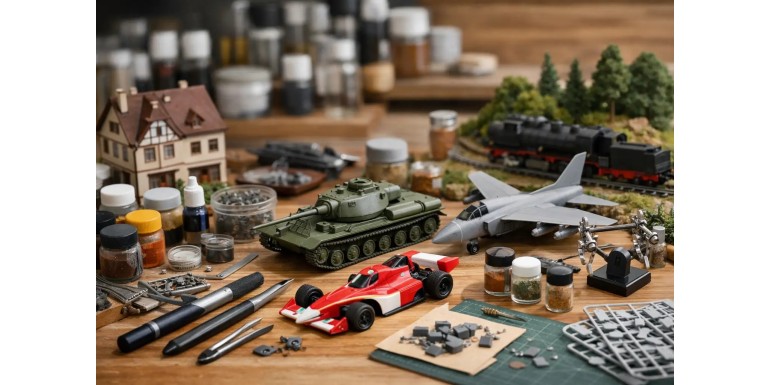
A finely assembled miniature can lose all its presence on a plain, empty base, and a gaming table full of well-painted figures falls short if the terrain fails to tell a story. That is why buying scale modeling supplies online isn't just about adding paint bottles to your cart—it is about gathering compatible materials to build, paint, repair, and display every project the way it deserves.
For tabletop wargamers, TTRPG game masters, and diorama builders, the true value of a specialized hobby shop lies in taking a single concept and converting it into a coherent list of materials. An urban display base requires textures, rubble, and grime weathering tones distinct from a desert gaming mat. An elite sci-fi unit might demand metallic details and minimal foliage, whereas a band of scouts gains immense character with realistic mud, dry autumn leaves, and standing water effects.
1. What Scale Modeling Accessories Do You Actually Need?
While scale modeling catalogs are vast, selecting the right hobby supplies depends entirely on your project stage. Buying without a clear strategy often results in duplicate paint shades, textures that clash with your model's scale, or special effects products that end up gathering dust on your workbench.
The most practical approach is to define what you want to complete first: a single miniature, a full squad, a scenic display base, a piece of wargaming terrain, or an entire gaming table.
Assembly and Repair
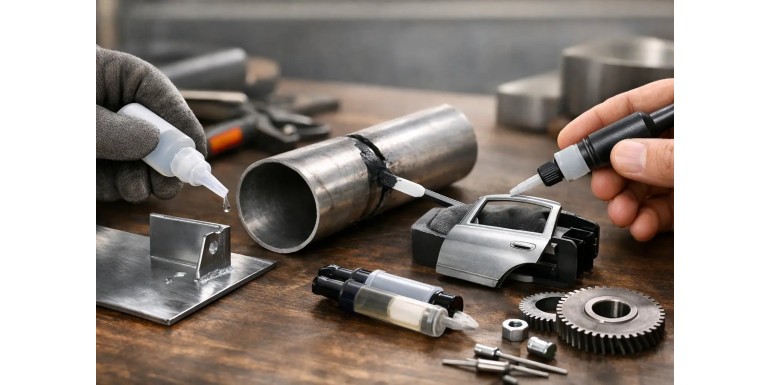
To assemble and repair models, you need the right hobby adhesives, sculpting putties, precision cutting tools, and gap fillers. Not all joints can be fixed with the same glue:
-
Plastic: Best joined with specialized plastic cement that welds the material together.
-
Resin & Metal: Require high-strength cyanoacrylate (super glue) or two-part epoxy resin.
-
Heavy parts or models frequently transported for games benefit from pinning (using wire reinforcement) rather than relying solely on surface glue.
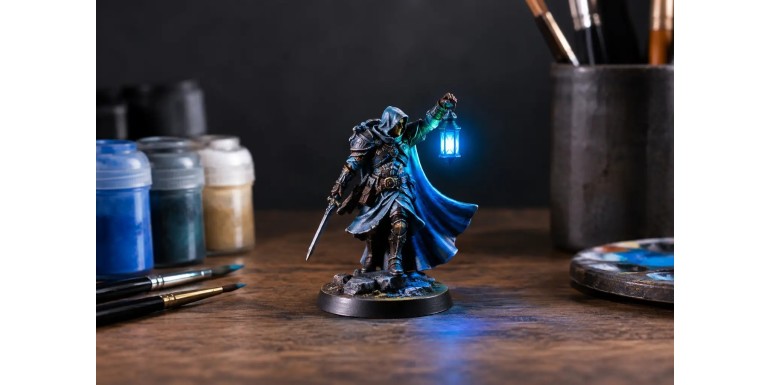
The Painting Stage
The painting phase requires surface primers, acrylic miniature paints, detail brushes, wet palettes, and finishing products. Avoid buying paints strictly by name—a shade that looks stunning on sci-fi power armor might be useless for a historical infantry regiment. It is far more efficient to build your paint collection around the color palette required by your chosen faction, army scheme, or scene.
Basing Materials and Environment Details
This final block transforms your miniature from a painted game piece into a living scene:
-
Miniature basing sands and gravels
-
Static grass tufts and flocking
-
Weathering pigments and dry powders
-
Synthetic snow and foliage
-
Artificial water effects and resin
-
Architectural ruins and scenery bits
These hobby accessories add immediate scale and context. They are also the fastest way to dramatically improve the visual impact of a miniature without requiring advanced blending or painting techniques.
2. Choosing Miniature Basing Materials That Match Your Table
A miniature base should never compete with the model for attention, but it must communicate where the character is standing. A warrior standing on a base of reddish earth, pale rock, and scorched grass immediately signals an arid wasteland before your opponent even inspects the miniature closely. Conversely, a base laden with damp foliage, roots, and dark mud works best for swamps, dense jungles, or forgotten ruins.
Consistency Across Your Army
Visual consistency is far more important than isolated detail. If every base in your army shares two or three core elements—such as dark earth, dead grass tufts, and slate grey rocks—the collection will look cohesive even if the individual miniatures feature varied unit colors. For skirmish wargames, this same basing recipe can be applied to objective markers and light terrain pieces.
Ready-to-Use Textures vs. Loose Materials
-
Texture Pastes: Ready-to-apply acrylic pastes save tremendous time and provide a uniform texture, which is ideal when speed-basing large units.
-
Loose Sands & Gravels: Loose materials give you total freedom to mix grain sizes and customize surface elevation.
Neither choice is superior in every scenario: texture pastes offer speed and reliability, whereas loose gravels permit higher customization at the cost of requiring additional layers of PVA glue, paint, and sealing.
Planning Snow and Water Effects
Special effects like snow and water demand careful prep work:
-
Snow effects: Look most convincing when accumulated in crevices, rock recesses, and corners—never as a flat, uniform sheet across the entire base.
-
Artificial water: Requires leak-proof sealed borders and a fully painted riverbed underneath, as clear liquid resin reveals everything below it.
Poor surface preparation is much more noticeable with transparent water and snow effects than with heavy layers of mud or dust.
3. Scale, Proportion, and Detail
A common mistake in miniature modeling is selecting environment details that are too large. A barrel, street sign, grass tuft, or boulder might look great individually, but it will ruin the illusion if it breaks the proportion of a 28mm or 32mm scale miniature. Always verify that your terrain bits and basing materials match the scale of your figures and the scene you are creating.
Scale also dictates detail level:
-
Tabletop Gaming Terrain: Prioritize durable, highly legible terrain pieces that are easy to move around and store.
-
Display Dioramas: Focus on delicate fine details, fragile structures, and close-up realism meant for static display.
The final use case should always dictate the density of decorative elements.
4. Purposeful Painting, Weathering, and Finishes
You don't need dozens of specialty products to make a miniature look outstanding, but a few essential accessories will dramatically streamline your workflow:
-
Surface Primer: Improves paint adhesion and prevents acrylics from chipping off metal or resin models.
-
Wet Palette: Keeps acrylic paints moist and workable throughout long painting sessions.
-
Detail Brushes: High-grade sable or synthetic detail brushes prevent struggling with eyes, insignias, and armor edges when your workhorse brush loses its tip.
Washes and Inks
Shading washes and acrylic inks are brilliant for defining depth, but they do not replace clean basecoats. When applied with control, they settle naturally into recesses, armor panels, and cloth folds. If applied recklessly without wicking away excess liquid, they pool on flat surfaces and leave unsightly tide marks.
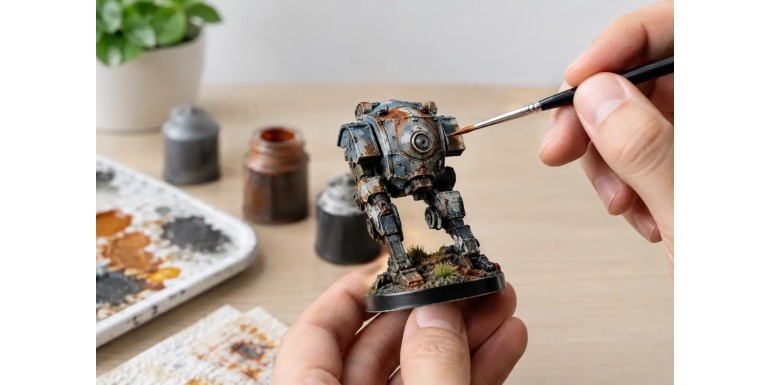
Realistic Weathering Effects
Weathering pigments, rust effects, and mud pastes tell a story when applied logically:
-
Dust & Mud: Accumulate naturally on boots, vehicle tracks, tires, and lower hemlines.
-
Rust: Develops around panel joints, rivets, and exposed metal edges.
While an entirely rusted, orange vehicle might work in an extreme post-apocalyptic display, tabletop gaming miniatures generally look best when weathering is reserved for high-wear areas.
Protective Varnishes
Varnish is an essential hobby product often bought late, but appreciated immediately. It protects painted gaming pieces from skin oils, frequent handling, and transport damage. A matte varnish finish is the industry standard for removing glare, while gloss varnish can be spot-applied to lenses, wet blood, visors, or water surfaces. Mixing finishes across a single model creates far greater realism than applying a uniform coat over everything.
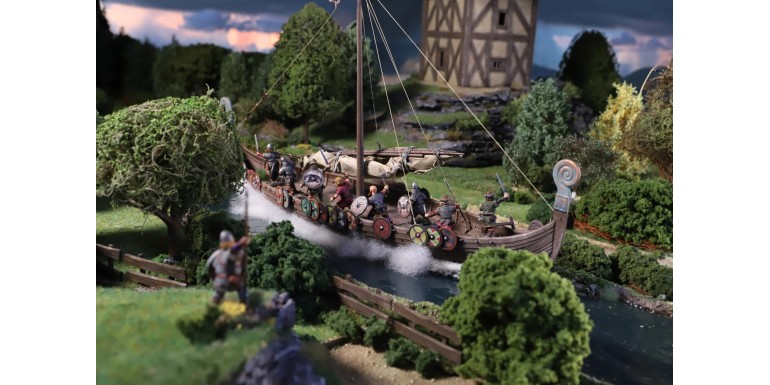
5. Functional Wargaming Terrain: Built for Playability
A magnificent ruin that completely blocks model movement or collapses at the slightest touch creates frustration during games. Wargaming terrain must be visually impressive, but it must primarily remain practical for play. Always consider where miniature bases will sit, line-of-sight rules, and how easily pieces can be stored between battle rounds.
Modular terrain pieces offer far more versatility than a single giant centerpiece:
-
Modular walls, fences, barricades, walkways, and rock formations allow you to reconfigure your gaming table layout without building from scratch.
-
For TTRPGs (such as D&D or Pathfinder), modular terrain makes it effortless to adapt the same collection from a roadside ambush to a ruined market or an improvised fortress.
Shopping at Terrainandminis.com is particularly advantageous when your project requires bringing together miniatures, bases, terrain textures, and scenery in a single order. Working with specialized hobby categories eliminates the need to adapt generic craft materials that often fail to hold up to tabletop scale, gluing requirements, or heavy gameplay.
6. How to Buy Hobby Supplies Without Hoarding
Before completing your order, set a small, attainable project goal: a ten-man squad, a ruined building, six scenic bases, or a 24" x 18" skirmish board. Then, separate your essential supplies from optional decorative accessories.
For instance, if you are building a winter gaming board, you need:
1. Base texture paste or sand
2. Ground acrylic paints
3. Synthetic snow effect
Footprints, frozen bushes, and weathered signs can easily wait for a second phase.
Always check product compatibility before purchasing:
-
Some paints and texture effects require primed surfaces.
-
Heavy resin pieces need rigid wooden or acrylic bases.
-
Solvent-based glues or spray paints can melt XPS foam and specific plastics.
Finally, buy with long-term visual continuity in mind. Sticking to a core range of ground textures, tufts, and base-rim colors across your entire army ensures future additions will blend in seamlessly. Every new accessory will then serve a clear purpose: expanding your world, not just filling a storage bin.
A successful scale modeling project doesn't start with the flashiest product on the market—it starts with a scene you can complete. Choose materials that fit your scale, your gameplay needs, and your desired finish, and let every layer, from primer to final grass tuft, bring your miniatures to life!