Español

Contrast paints vs acrylics: which one to choose
- 06/22/2026 10:35:07
- Home , Assembly and Painting Guides
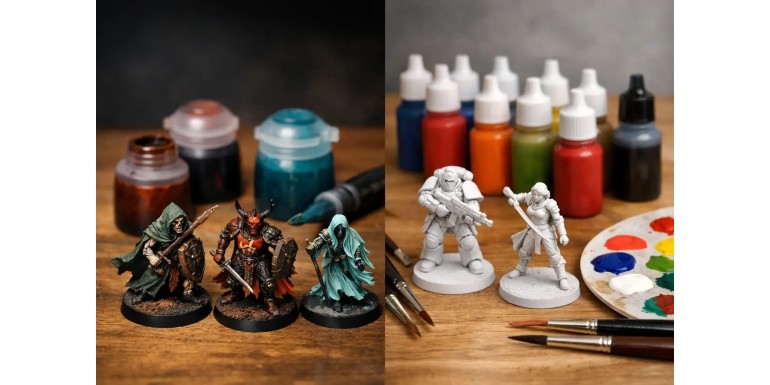
There is a difference you can notice on the gaming table from the very first miniature: with Contrast paints, you can get a playable unit ready in a single afternoon; with traditional acrylics, it usually takes longer, but you have much better control over the final finish. This is the core of the Contrast vs. acrylic paints debate, though the most useful answer isn't "one is better," but rather: "What do you want to paint, how much time do you have, and what results are you expecting?"
In miniature painting, your choice of paint completely changes your entire workflow. It affects how you prime, your brushstroke style, the amount of clean-up you'll need to do, and even the overall look of your army when placed on the tabletop scenery. If you paint to play every week, you aren't looking for the exact same thing as someone preparing a skirmish band for display or a single showpiece for a cabinet.
Contrast vs. Acrylic Paints: The Real Difference
Traditional acrylic paints have been the backbone of the hobby for decades. They offer a more predictable coverage, allowing you to work in layers, blend easily, and gain precise control over highlights, shadows, and transitions. They are the ones you reach for when you want to decide exactly where each color goes and how pronounced every volume should be.
Contrast paints, on the other hand, are formulated to flow into recesses while leaving a lighter coat on raised areas. Over a properly primed surface, they create a quite convincing automatic shadow and a brighter highlight on raised details with just a single application. This dramatically speeds up the process, especially on batch troops, skin, fabrics, leather, and organic textures.
The key lies in how they behave on the miniature. A normal acrylic paint goes exactly where you push it. A Contrast paint, to some extent, moves on its own. This is a massive advantage when you want speed, but it can also work against you if the model features large panels or flat, smooth surfaces.
When to Use Acrylic Paints
If you enjoy painting in layers, edge highlighting, correcting mistakes with precision, and building up clean highlights, acrylic paints remain the most versatile choice. They work exceptionally well on armor, weapons, vehicles, shields, and any area where you need a solid color and well-defined edges.
They are also superior when a miniature demands absolute consistency across multiple pieces. If you are painting a unit with smooth shoulder pads, armor plates, or highly visible helmets, a properly applied acrylic base coat usually leaves a more uniform finish. With Contrast, these wide surfaces can cause pigment to pool into puddles, creating coffee-stains and tide marks that are difficult to hide.
Another major benefit is correction. Acrylics are far more forgiving. If your brush slips, you just go back with the base color and fix the area. If a Contrast paint dries with a tide mark on a light coat, correcting it can take more work than the "speed-painting" method originally promised.
When to Use Contrast Paints
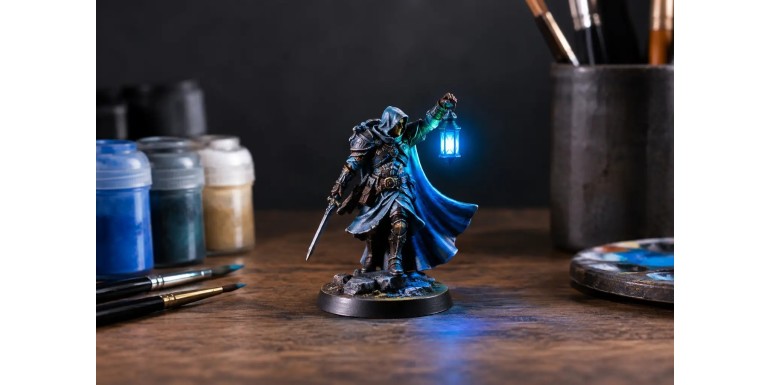
Contrast paints shine brightest when you want efficiency without your miniatures looking flat. Horde infantry, fantasy armies, creatures, leather, fur, bone, wood, folded fabrics, and skin are ideal terrains for this type of paint. In these cases, the miniature's own sculpted details help the paint do most of the heavy lifting.
They are also incredibly useful for players who want to get their army tabletop-ready in record time. And you don't have to sacrifice a great overall look. A miniature primed in a light tone, with Contrast neatly applied and a few details finished with acrylics, can look outstanding from a standard gaming distance.
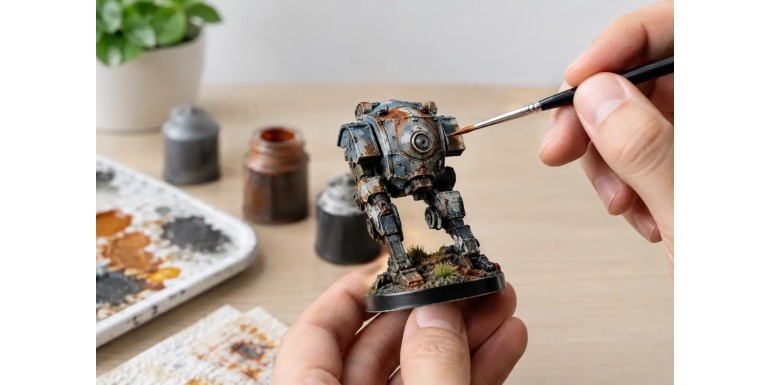
Where many hobbyists get the absolute most value is through a hybrid approach. Using Contrast paints to establish base colors and shadows rapidly, and then switching to traditional acrylics for edge highlighting, painting metallics, or reinforcing focal points. This is where they stop being just "speed paints" and become a serious, powerful tool in your overall workflow.
The Finish Doesn't Just Depend on the Paint
Comparing Contrast vs. acrylic paints without discussing miniature primers only tells half the story. Contrast paints require a light, smooth, and highly uniform base coat to perform correctly. They can behave poorly on satin or uneven primers, and they lose almost all of their magic over dark colors.
Acrylics are much more forgiving with different undercoats, though they also change significantly depending on the base. Over black, tones are more muted and require more layers to build opacity. Over white or bone, they appear much more vibrant. The difference is that an acrylic paint lets you regain control easily; a Contrast paint depends heavily on your starting point.
The texture of the miniature matters just as much. On skin, chainmail, fur, stone, or wood, Contrast usually delivers a quick and convincing result. On Space Marine shoulder pads, tank hulls, or flat capes, a standard acrylic paint gives you far fewer unpleasant surprises.
Time vs. Control
This is the ultimate trade-off. Contrast paints save time on many repetitive tasks. If you have twenty infantry miniatures and want them all on the tabletop with defined shadows and colors, they are a highly efficient solution. They cut out multiple steps, allowing you to move fast without having to go through base-coating, washing, and highlighting every single area.
Conversely, acrylics demand more time, but in return, they offer superior control. You can decide on opacity, blending, volume, and transitions with extreme precision. For a main character, a unit leader, or a miniature that will be inspected up close, that level of control usually makes all the difference.
Not every hobbyist values this trade-off the same way. Some prefer to finish more projects and play with fully painted armies. Others enjoy the slow process and pushing every single detail. Neither stance needs justification. In this hobby, finishing projects counts too.
Common Mistakes When Using Each Paint
With acrylics, the most common mistake is applying coats that are too thick. This clogs fine details, leaves unwanted brush texture, and complicates subsequent highlights. The solution is almost always the same: proper thinning, patience, and multiple thin coats.
With Contrast, the classic mistake is treating it like a standard acrylic paint. If you overwork an area while it is starting to dry, tears and texture will appear. If you overload your brush, it will pool excessively in recesses or edges. If you apply it over an unsuitable primer, the result will look patchy and uneven.
Another frequent pitfall with Contrast is assuming it works equally well for everything. It doesn't. A wrinkled cloth fabric might look excellent; a smooth, flat red armor panel, not so much. Knowing where to use it saves more time than stubbornly trying to paint the entire miniature with a single system.
The Best Option for Each Type of Project
-
For large armies, massive skirmish warbands, or projects with an upcoming gaming deadline: Contrast offers a clear advantage. It delivers color, shading, and visual cohesion fast. If you add well-made bases, clean metallics, and a few quick highlights on top, the whole army will look fantastic together.
-
For characters, centerpiece monsters, busts, or display miniatures: Acrylics usually still reign supreme. Not because Contrast is useless here, but because the ultimate finish typically requires fine blends, precise transitions, and focal highlights that traditional acrylic paint handles best.
-
For beginners: The answer depends on your goal. If you want visible, encouraging results from day one, Contrast can be incredibly motivating. If you want to learn the core fundamentals of base-coating, highlighting, glazing, and brush control, traditional acrylics teach you much more from the ground up. The smart move isn't picking one school of thought and discarding the other, but rather mastering both as soon as possible.
So, Contrast or Acrylic Paints?
If you want the short answer: for speed and volume, go with Contrast; for control and high-end finishes, stick to acrylics. But that summary falls short as soon as you have painted a few units. The majority of hobbyists who paint consistently end up combining both, because the real hobby rarely operates on absolute solutions.
A practical workflow can be very straightforward: use Contrast for skin, fabrics, and organic elements, and acrylics for armor plates, weapons, crisp details, and final highlights. This breakdown capitalizes on the strengths of each paint type without forcing them into roles where they don't perform as well.
In a specialized hobby shop like
The best choice isn't the one that wins debates on the internet—it's the one that keeps your project moving forward without turning every stage into a battle. If a paint helps you finish more miniatures and you love how they look on the tabletop, it's already doing its job perfectly.