Español

Why choose a dwarf in DnD ?
- 06/19/2026 10:57:43
- Home , Tabletop Miniatures
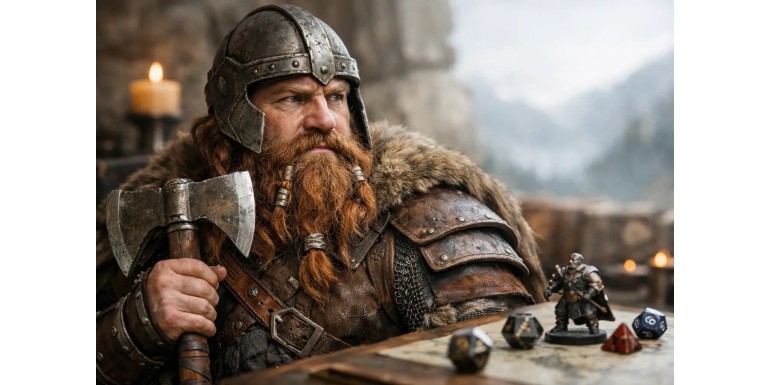
If you are reading this, you are probably staring at a blank character sheet, chewing on your pencil, and wondering: “Is it really worth playing a Dwarf in this campaign, or should I just play it safe with an Elf or a Human?”
Let’s skip the suspense: Yes, it is absolutely worth it. In fact, choosing a Dwarf is one of the best tactical, narrative, and aesthetic decisions you can make in Dungeons & Dragons Fifth Edition (D&D 5e).
Dwarves aren't just "shorter humans with beards who drink ale." They are the ultimate backbone of any adventuring party—the rock against which enemy waves break. They are divine artisans, living tanks, and keepers of a pride as deep as the roots of the mountains.
In this premium e-commerce guide, we are going to break down the Dwarf race completely. We will cover their mechanical advantages, their few drawbacks, how to optimize them for every D&D class, their best ability scores, and how to give them a unique personality that goes way beyond traditional fantasy clichés. Grab your battleaxe and your tankard—let’s dive in!
1. Dwarf Racial Traits: What the Bloodline Grants You
Before looking at class combinations, let’s talk about what comes fresh out of the forge. Dwarf physiology and culture grant you some of the best racial traits in the Player’s Handbook (PHB).
-
Ability Score Increase: Base Dwarves get a +2 to Constitution. In D&D 5e, Constitution is the one stat no character can afford to dump. It means more Hit Points (HP) and better Saving Throws to maintain concentration on your spells.
-
Speed: You have a base walking speed of 25 feet (instead of the usual 30 feet for Humans or Elves). “Wait, isn't that a downside?” you might ask. Hold on. The magic of the Dwarf is that your speed is not reduced by wearing heavy armor, even if you don't meet the Strength requirement. This is a massive tactical advantage for Clerics or Wizards who want to walk around fully armored.
-
Darkvision: Up to 60 feet. Essential for any dungeon crawl. While the party's Human is wasting a hand holding a torch, you have both hands free to wield a warhammer.
-
Dwarven Resilience: You have advantage on saving throws against poison, and resistance against poison damage. Poison is one of the most common damage types in early to mid-game encounters (monsters, traps, assassin daggers). This trait saves lives constantly.
-
Dwarven Combat Training: You gain proficiency with the handaxe, battleaxe, light hammer, and warhammer. If your class doesn't inherently grant these (like a Rogue or a Wizard), your dwarven heritage has you covered.
-
Tool Proficiency: You gain proficiency with your choice of artisan’s tools: smith’s tools, brewer’s supplies, or mason’s tools. Perfect for flavor and utility downtime.
-
Stonecunning: Whenever you make an Intelligence (History) check related to the origin of stonework, you add double your proficiency bonus to the check. You are the ultimate underground geologist and historian.
2. The Subraces: Choose Your Dwarven Lineage
The Player’s Handbook splits dwarves into two main subraces (and while settings like Eberron or Forgotten Realms add more, we will focus on the core options and their evolution with modern rules).
Hill Dwarf
-
Extra Attribute: +1 to Wisdom.
-
Dwarven Toughness: Your hit point maximum increases by 1, and it increases by 1 every time you gain a level.
-
Why choose it? This is the ideal subrace for Wisdom-based classes (Cleric, Druid) or for anyone who wants to be a walking meat shield. That extra HP per level is essentially a half-price Tough feat for free.
Mountain Dwarf
-
Extra Attribute: +2 to Strength. Yes, a total of +2/+2 in core stats! They are one of the very few races to offer this.
-
Dwarven Armor Training: You gain proficiency with light and medium armor.
-
Why choose it? It is the perfect choice for optimizing traditional martial classes under classic rules, or for building wild hybrid builds like an Abjuration Wizard clad in medium breastplate armor.
A Note on Tasha’s Cauldron of Everything: If your Dungeon Master allows the customized origin rules from Tasha’s, you can swap these +2 and +1 racial stat bonuses to any attributes you want. This makes the Mountain Dwarf one of the most powerful races in the game, allowing you to start a campaign with a +2 to Intelligence and a +2 to Constitution.
3. Pros and Cons of Playing a Dwarf
Like everything in tabletop RPGs, choosing a race comes with trade-offs. Let's weigh them so you know exactly what you are getting into.
Major Advantages
1. Unmatched Durability: Between the +2 to Constitution, poison resistance, and the Hill Dwarf’s extra HP, you are incredibly difficult to kill.
2. Armor Flexibility: Ignoring heavy armor speed penalties opens the door for spectacular hybrid builds.
3. Tool Economy: A highly rewarding race for crafting items during campaign downtime.
4. In-Universe Respect: In almost any fantasy lore, dwarves possess ancient empires, major banks, legendary forges, and solid alliances. You will rarely be a social outcast.
Major Disadvantages
1. Short Strides (25 ft. Speed): If combat takes place on a massive open field and enemies flee or attack from range, it will take you longer to close the distance.
2. Vertical Mobility Deficit: You don't possess any native climbing, jumping, or flying abilities like more exotic races (Tabaxi, Aarakocra).
3. Sizing Quirks: Even though you are technically a "Medium" creature, your short stature can lead to minor environmental hurdles depending on your DM.
4. Roleplaying and Personality: Breaking the "Gimli Clone" Mold
It’s easy to fall into the classic stereotype: a faked Scottish accent, complaining about Elves, obsessing over gold, and wanting to chug ale at every tavern. There is nothing wrong with that (classics are classics for a reason), but a great roleplayer looks to add layers to their character.
Here are three unique personality archetypes to inspire your next character sheet:
-
The Scholar of Stone: A dwarf who isn't gruff or foul-mouthed, but a meticulous academic. They view architecture and smithing as exact sciences. They speak calmly, analyze dungeon structures to predict traps, and treat their weapons with the clinical respect a surgeon reserves for a scalpel.
-
The Exiled / Beardless Dwarf: In dwarven culture, your beard and your clan are everything. What happens if your character committed a taboo, had their beard shaved off as punishment, and was cast out? You get a melancholic, resentful dwarf looking for redemption—or one who has chosen to embrace superficial human customs to forget their painful past.
-
The Young Revolutionary: Dwarves live for centuries, and their societies are usually ultra-conservative gerontocracies. Your character could be a young dwarf (barely 40 or 50 years old) who is sick of hearing the elders talk about the "glorious past under the mountain." They want to see the world, they accept arcane magic (which their uncles view as "weak Elf stuff"), and they prefer city wine over heavy mountain stout.
5. D&D Class Sinergies: The Ultimate Breakdown
Now for the pure optimization. How well does a Dwarf perform across the different professions of D&D 5e? Let’s break it down category by category.
Fighter
-
Rating: 5/5
-
Synergy: Flawless.
The Dwarven Fighter is a timeless archetype. If you play a Mountain Dwarf, that +2 to Strength and +2 to Constitution puts you in the pole position to be the ultimate frontline vanguard.
-
Recommended Subclasses: Rune Knight (from Tasha’s). It is thematically perfect. Activating your dwarven runes to grow into a giant and smash enemies fits the race's aesthetic like a glove. Champion also works wonders if you want a simple build, maximizing your critical hits with a two-handed battleaxe.
-
Fighting Style: Defense (to become untouchable) or Great Weapon Fighting.
Paladin
-
Rating: 4/5
-
Synergy: High, but requires smart stat management.
Paladins need Strength, Constitution, and Charisma. The Dwarf gives you the first two right out of the gate. Your innate poison resilience combined with the Paladin’s Aura of Protection at level 6 transforms you into a walking fortress against saving throws and spell effects.
-
Recommended Subclasses: Oath of the Crown (ideal for a dwarf dedicated to their king or clan) or Oath of Devotion.
-
Optimization Tip: If using standard rules, your Charisma will start slightly lower than a Human or Half-Elf Paladin, but you compensate with a massive pool of Hit Points to keep delivering Divine Smites on the front line.
Cleric
-
Rating: 5/5
-
Synergy: The Gods of Forge and War highly approve.
The Hill Dwarf was practically born to be a Cleric. It gives you +1 to Wisdom (your spellcasting stat) and the extra HP offsets the Cleric’s standard d8 hit die. Furthermore, thanks to the dwarf's unique armor speed rule, you can choose a Domain that grants heavy armor proficiency (like Life, War, or Tempest), put it on without meeting the Strength requirement, and still move at your full speed. A true frontline healing tank!
-
Recommended Subclasses: Forge Domain (from Xanathar’s Guide to Everything). There is nothing more dwarven than praying to the god of the forge, imbuing your own armor with magic, and setting your enemies ablaze.
Bard
-
Rating: 3/5
-
Synergy: Average but incredibly fun.
This isn't the most optimized build on paper because standard dwarves don't get a Charisma bonus. However, a Dwarven Bard is incredibly fun to roleplay. Think of a percussionist who uses their shield as a drum, or a deep-mountain skald singing ancestral Norse sagas and odes to precious gemstones.
-
Recommended Subclasses: College of Valor or College of Swords. Because Mountain Dwarves give you medium armor proficiency for free, you can build a melee-focused Bard much more safely than other races.
Wizard
-
Rating: 4.5/5 (Using Tasha’s rules), 3/5 (Classic rules).
-
Synergy: Surprisingly competitive.
A Dwarven Wizard? Yes. Historically a rare sight, but in 5e it is a lethal combination. If you pick a Mountain Dwarf, you get free light and medium armor proficiency. A standard Wizard has miserable Armor Class (AC) and must waste spell slots on Mage Armor. You don't. You can walk around in scale mail or a breastplate, saving your spell slots for raw firepower.
-
Recommended Subclasses: School of Abjuration. The Dwarven Abjurer (often called a "Battle Mage") combines the subclass's arcane ward with dwarven Constitution. You are a Wizard who can stand on the front lines without worrying about a goblin knocking you down in one hit.
Rogue
-
Rating: 3.5/5
-
Synergy: Moderate with niche utility.
At first glance, a 25-foot movement speed hurts a class that relies heavily on positioning like the Rogue. However, the Dwarf grants proficiency with the light hammer and handaxe, which have the thrown property (though note they lack the Finesse property required for Sneak Attack—you'll still want a dagger or rapier for that).
The real benefit here is building a Scout or Inquisitive Rogue, using your Stonecunning trait to be the ultimate dungeon delver who finds secret passages and hidden traps before anyone else.
Barbarian
-
Rating: 5/5
-
Synergy: Pure brute force.
Barbarians want two things in life: Strength and Constitution. The Mountain Dwarf gives you both. Additionally, the race's innate poison resistance stacks beautifully with the physical damage resistance (bludgeoning, piercing, slashing) granted by the Barbarian's Rage. You become an absolute titan that soaks up damage like water.
-
Recommended Subclasses: Path of the Berserker (a classic) or Path of the Ancestral Guardian (where the spirits protecting you are the ancestors of your dwarven clan—a perfect aesthetic match).
Monk
-
Rating: 2/5
-
Synergy: Low.
This is arguably the toughest combination to pull off. Monks critically depend on high Dexterity and Wisdom, and they thrive on mobility. The dwarf's 25-foot speed actively hinders one of the monk's biggest strengths (Unarmored Movement). While a Hill Dwarf provides +1 to Wisdom and extra HP (great for a traditionally squishy Monk), you will be swimming upstream mechanically unless you use Tasha’s rules to relocate your stats to Dexterity.
6. Best Feats and Ability Scores for a Dwarf
Regardless of your class, if you want your Dwarf to excel at the gaming table, you need to pay attention to your stat array and feat selection.
Ability Score Distribution (Classic Style)
-
Constitution: Never leave this below 14 (ideally 16 after racial modifiers). You want your health pool to be high from level 1.
-
Strength / Wisdom / Intelligence: Depending on whether you choose the path of weapons (Strength), faith (Wisdom), or the arcane (Intelligence), this should be your second-highest stat.
-
Dexterity: You can comfortably leave this at 10 or 12 if you plan to wear heavy armor, as it ignores your Dexterity modifier for AC calculations.
Top Dwarven Feats
If your DM allows feats instead of Ability Score Increases (ASI), these options change the game for a Dwarf:
1. Dwarven Fortitude: A dwarf-exclusive feat (found in Xanathar’s Guide). It gives you +1 to Constitution and allows you to expend a Hit Die to heal yourself whenever you take the Dodge action in combat. Combined with a Monk (who can Dodge as a bonus action) or a front-line Fighter/Barbarian in a pinch, it offers incredible self-sustain.
2. Great Weapon Master (GWM): If you are a Fighter or Barbarian wielding a greataxe, this feat is mandatory for shredding bosses and maximizing damage output.
3. Heavy Armor Master: Grants +1 to Strength and reduces all non-magical bludgeoning, piercing, and slashing damage you take by 3 points. Combine this with your poison resistance and massive HP pool, and low-level enemy hordes (like goblins or orcs) will literally barely scratch you.
7. Metagame Summary Table: Dwarves at a Glance
| Subrace | Key Attributes | Best Party Role | Ideal Class |
| Hill Dwarf | Con +2, Wis +1, Extra HP | Divine Tank, Frontline Healer | Cleric, Druid, Defensive Fighter |
| Mountain Dwarf | Con +2, Str +2, Armor Prof. | Melee Striker, Armored Spellcaster | Fighter, Barbarian, Wizard (Abjuration) |
Conclusion: Why Your Next Character Should Wear a Beard
Choosing a Dwarf in D&D 5e means choosing reliability. It means knowing that no matter how well the Dungeon Master rolls, your character has the mechanical tools, the hit points, and the resistances required to survive one more round and shield the party.
But beyond the numbers and optimization, the Dwarf offers a spectacular wealth of roleplaying opportunities. Loyalty to the clan, the weight of ancient traditions, a passion for crafting, and the fire of battle are narrative engines that guarantee memorable moments in any campaign.
Are you ready to forge your own legend under the mountain? Visit our miniatures store page to find the perfect set to honor your next bearded hero. May the dice roll in your favor, and may your axes never lose their edge!
What do you think of this guide? What has been your favorite Dwarven character in your past campaigns? Leave us a comment below and share your best tavern and dungeon stories!