Español

Historical miniatures for wargames: how to choose
- 07/05/2026 18:01:13
- Home , Tabletop Miniatures
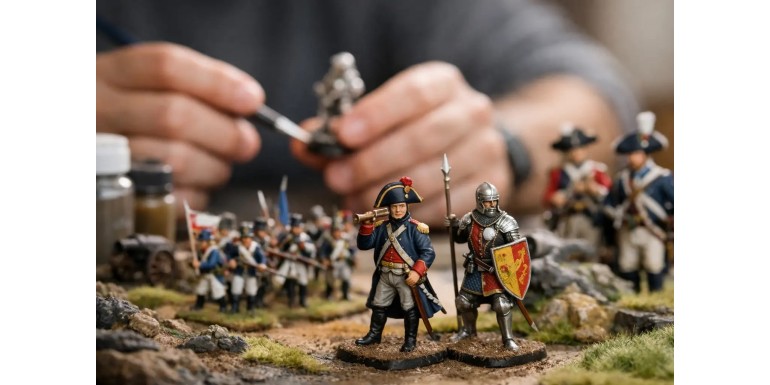
There is nothing more frustrating than starting a historical army only to discover—after buying several boxes—that the scale doesn't fit, the bases don't match your rulebook, or your chosen period requires vastly different uniforms than you expected. With historical wargaming miniatures, these details matter much more than in other gaming systems. Here, setting, visual coherence, and compatibility between ranges carry just as much weight as sculpt quality.
If you are transitioning from fantasy or sci-fi, diving into historical gaming comes with a clear advantage: there is a massive variety to choose from. However, it also brings an obvious challenge: it is not enough for a miniature to just "look good." It needs to fit the specific era, scale, unit type, and, in many cases, a particular rulebook. Choosing wisely from the start saves money, painting time, and plenty of accidental duplicate purchases.
What to Decide Before Buying Historical Wargaming Miniatures
The first filter isn't the brand—it’s the historical period. Napoleonic, World War II, Ancients, Medieval, American Civil War, or Romans vs. Carthaginians do not share the same tabletop needs. They differ in figure count, terrain types, and painting pace. A historical skirmish project can easily work with a few highly detailed miniatures. Conversely, a mass-battle army demands the exact opposite: volume, consistency, and practical planning.
Next comes the scale. This is where most hobbyists make mistakes. In historical gaming, 28mm, 20mm, 15mm, and 10mm are not just different sizes; they completely alter the gaming experience:
-
28mm: Best for enjoying sculpt details, poses, and intricate paintwork, but requires more table space and a higher investment per unit.
-
15mm & 10mm: Ideal for deploying massive forces with a true "battlefield feel," though you sacrifice some individual figure detail.
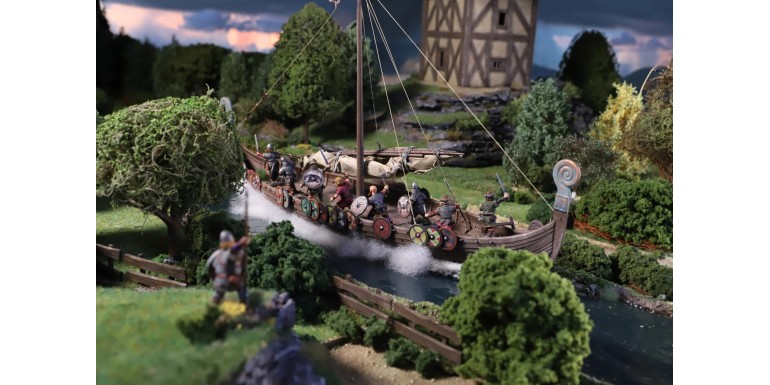
It is also wise to decide whether your priority is gaming, collecting, or painting. It sounds obvious, but it isn't. If your main goal is playing campaigns, you will want a broad, easily restocked range that includes command options, infantry, cavalry, artillery, and support units. If you are aiming for display cabinets or dioramas, a range with more character in its sculpting might be worth it, even if it has fewer references. If you want both, you'll need to find a comfortable middle ground.
Scales and Rulebooks: The Combinations That Work Best
Not every scale fits every rulebook perfectly. This is one of the real secrets to smart buying. A skirmish rulebook usually looks best in 28mm, where every miniature has a strong presence and individual equipment stands out. On the other hand, grand battles from the Ancient or Napoleonic eras benefit immensely from 15mm or 10mm, as they allow you to represent formations and tactical depth without needing a massive table.
Basing size matters too. Some rulebooks are highly flexible, while others are quite rigid. If you buy without checking this detail, you might end up rebasing entire units or forcing awkward adaptations. While not catastrophic, it is easily avoidable. The smartest move is to pick your rulebook first or, at the very least, adopt a basing standard compatible with multiple rulesets for your favorite period.
28mm, 15mm, or 10mm
-
28mm: The hobby shines brightest here during the assembly and painting phases. Fabrics, webbing, facial expressions, and uniform variations are easily visible. It is a highly rewarding scale for skirmishes, detailed terrain, and immersive tables. The downside? Building large armies can become slow and expensive.
-
15mm: Offers a very solid balance between cost, space, and battlefield scale. It is an exceptionally comfortable scale for players who want to see full units maneuvering convincingly. It still allows for an attractive paint job, but you must accept that the visual impact depends on the whole unit rather than individual figures.
-
10mm: Makes perfect sense if you love grand formations. When well-painted, it delivers spectacular, dense tabletops. However, it requires a different approach: less obsession over fine details and more focus on block colors, contrast, and readability from a gaming distance.
Materials: Plastic, Metal, or Resin
The material dictates both your budget and your workflow:
Plastic is usually the most flexible choice for large armies. It generally offers the best value for money, diverse assembly options, and easy conversions. For line infantry, common troops, or massive projects, it remains a highly practical foundation.
Metal holds its ground for several reasons. Many classic historical ranges are still produced in metal, often featuring niche references that don't exist in plastic. Command packs, characters, specialists, or low-population units frequently come in this material. The trade-offs are the weight, assembly prep, and part pinning.
Resin typically enters the equation when you want sharper detail or specific vehicle, artillery, building, and terrain references. It delivers excellent results but requires careful cleaning, straightening, and handling. It isn't inherently better; it simply depends on the project and how much assembly complexity you want to take on.
How to Choose a Period Without Buying Blindly
Many hobbyists get into historical gaming purely for the aesthetics, and that is a perfectly valid reason. You might be drawn to Corinthian helmets, Tercios, mid-20th-century armor, or Napoleonic uniforms. The problem arises when that visual enthusiasm doesn't align with your actual gaming or painting habits.
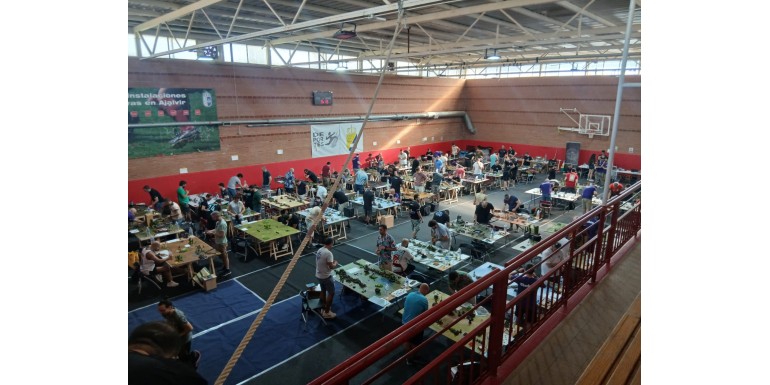
If you are a slow painter, starting a period where a convincing tabletop requires hundreds of miniatures might not be the best idea. If you enjoy building terrain, look for eras where the landscape plays a starring role, such as certain Medieval, Colonial, or WWII campaigns. If you mostly play at a local club, check which periods are already popular in your community so you don't always have to build and paint both sides of the conflict yourself.
Ancients, Medieval, and the 20th Century
-
Ancients: Great for players who want visually striking armies that are relatively easy to organize in block formations.
-
Medieval: Offers immense variety but demands more attention to heraldry and regional nuances if you want historical accuracy.
-
20th Century (especially WWII): Attracts players with its recognizable mix of infantry, vehicles, support weapons, and iconic terrain.
There is no universal "best" option. There is only the best option for your hobby pace, available space, and gaming group.
Painting and Basing: Giving Your Historical Army Credibility
In historical wargaming, your painting doesn't need to win competitions to look good on the table. It just needs coherence. Units with a consistent color palette, well-integrated bases, and easily identifiable commanders look much better on the tabletop than an inconsistent collection of highly detailed figures with no unifying theme.
Research and documentation help, but you don't need to turn every unit into a history thesis. The key is deciding on your level of accuracy early on. Some players want to replicate exact uniforms down to the specific campaign or year. Others prefer a plausible approach that is "good enough for gaming." Both viewpoints are valid, as long as you don't accidentally mix standards within the same army.
Basing deserves far more attention than it usually gets. In historical games, the terrain does a lot of the heavy lifting to sell the era. Dust, mud, snow, dead grass, cobblestones, or Mediterranean soil completely transform the look of your forces. This is where you notice the difference between using generic flock and working with textures, vegetation, and effects designed for tabletop immersion. If you are building a complete project, sourcing your miniatures, bases, paints, and weathering products from a single specialized shop simplifies the entire process.
Brand and Range Compatibility
A common trap in historical gaming is assuming that all miniatures of the same scale fit together. They don't. In 28mm, there are distinct differences in proportions, bulk, actual height, and sculpting styles. Some ranges are highly realistic, while others lean toward "heroic" proportions. Mixing them within the same unit can break the visual cohesion.
This doesn't mean you can't combine brands. It just means you need to do it smartly. Sometimes it works best to separate brands by unit, by battlefield role, or even by nation. Other times, unifying their bases, color palettes, and visual height is enough to blend them together. The approach that usually fails is impulse buying for months, only to realize the miniatures are incompatible when it’s time to deploy them.
If you have doubts, the safest route is to establish a single brand as the baseline for your main army and save alternative brands for support elements, commanders, or less prominent models. It might feel restrictive at first, but it yields much better results in the long run.
When is it Worth Investing More?
Not every single miniature needs to be a premium product. In fact, in historical wargaming, it usually isn't cost-effective. Your line troops should be efficient in terms of both cost and painting time. Where it does make sense to spend more is on the pieces that give your army its personality: generals, banner bearers, unique artillery pieces, flagship vehicles, or elite units that will naturally draw the eye.
Tabletop terrain follows the exact same logic. A lackluster historical table can detract from even the most beautifully painted armies. Conversely, a few well-chosen pieces of period-accurate terrain instantly elevate the game. Houses, stockades, ruins, plowed fields, stone walls, or dirt roads aren't just decorative additions—in most rulebooks, they are an active part of the tactical experience.
Choosing historical miniatures wisely isn't about buying the prettiest or the cheapest options. It is about building a project that makes sense when you put it on the table, keeps you motivated through months of painting, and allows you to expand without having to redo your basic decisions. If you get that right, the rest of the hobby flows effortlessly.