Español

How to paint miniatures easily and better
- 05/12/2026 07:36:25
- Home , Assembly and Painting Guides
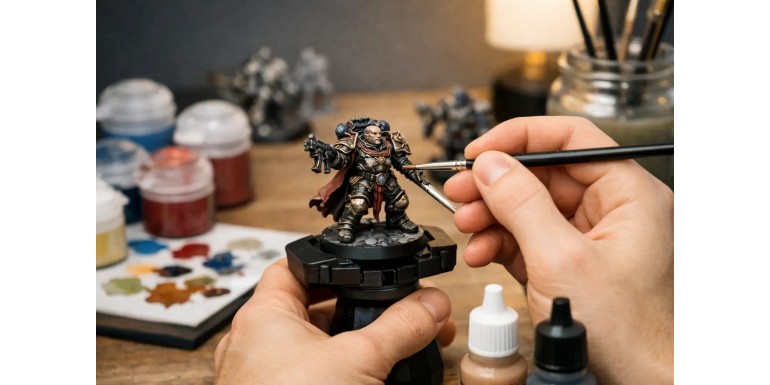
The difference between a half-finished miniature gathering dust and one that makes it to the tabletop isn't usually talent. It’s the method. If you’re wondering how to paint miniatures easily, the answer isn't buying a hundred paints or mastering advanced zenithal highlighting. It’s about reducing decisions, following a clear order, and choosing products that let you progress without fighting every step of the way.
Many hobbyists get stuck for the same reasons: they prime in black, hesitate over color choices, over-correct mistakes, and end up clogging details with thick paint. The good news is that "tabletop quality" doesn't require a crystal display case level of skill. It requires cleanliness, contrast, and a repeatable process.
How to Paint Miniatures Easily from Your First Attempt
If you’re looking for a simple system, aim for three goals: the miniature must be "readable" from a distance, the process must be fast, and it must be repeatable across multiple figures. This mindset changes how you paint. Instead of chasing perfect wet blends, focus on clean base coats, easy shading, and simple but visible highlights.
1. Preparation is Key: Before reaching for the brush, remove mold lines. You don’t need to obsess over every millimeter, but visible lines on shoulder pads or helmets will ruin a good paint job.
2. Priming Matters: Your primer dictates the difficulty of the project. For a beginner-friendly experience, use white, light grey, or a zenithal prime. While black looks cool, it punishes beginners by requiring more coats and dulling your colors. A neutral grey is usually the "sweet spot" for speed and coverage.
The Easiest Method: Base, Shade, and Highlight
The most practical way to paint for gaming remains the classic trio: Base Color, Shading, and one or two Highlights. This works for fantasy, sci-fi, and historicals alike.
-
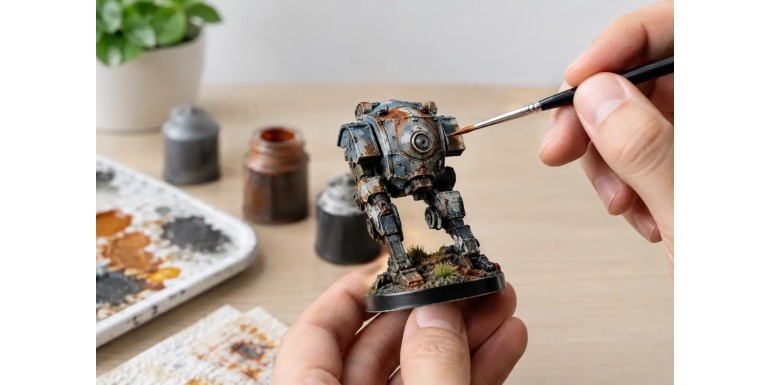
Base Coats: Apply your main colors using slightly thinned paint. It should flow smoothly without obscuring detail. Remember: two thin coats are always better than one thick one. Clogged texture is much harder to fix than a slightly transparent layer.
-
Shading (The "Liquid Talent"): Apply a wash or shade to the recesses. Don't treat every surface the same—washes look great on metals and textures but can leave "tide marks" on large, flat armor panels. For flat surfaces, try "recess shading" (applying shade only into the cracks).
-
Highlighting: This makes the miniature pop. Don't overcomplicate it. Drybrushing is perfect for hair, stone, fur, and chainmail. For armor edges and weapons, a simple edge highlight adds massive definition.
Less Colors, Better Results
A common mistake is using too many colors. On a small scale, this creates visual noise. A limited palette provides cohesion and speeds up your workflow.
Try this reliable scheme:
-
One dominant color.
-
One secondary color.
-
One tone for leather/gear.
-
One metallic.
-
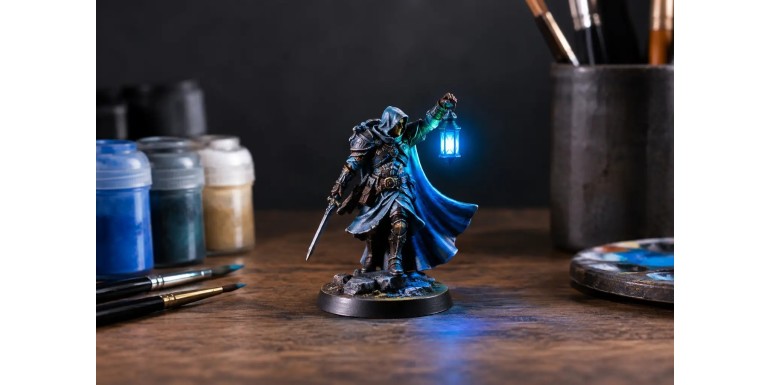
One "pop" color for small details (eyes, gems, or cables).
Speed Painting Without Looking "Rushed"
To get an army ready for the table, efficiency is your best friend. Work in small batches (5 to 10 models). Any fewer and you lose rhythm; any more and you’ll burn out.
Paint one color across the entire batch before moving to the next. This builds muscle memory and ensures visual consistency. Another pro tip: save your effort for the focal points. A helmet or a glowing sword deserves more time than the underside of a cloak that no one will see during a game.
Essential Tools for an Easier Hobby
You don't need a professional studio, but the right tools remove friction:
-
The Brush: A medium-sized brush (Size 1 or 2) with a sharp point is better than a tiny "000" brush. Small brushes hold very little paint, which dries before it hits the model.
-
The Wet Palette: This keeps your paint usable for longer and helps you control dilution automatically.
-
The Lighting: Most "mistakes" happen because you simply can't see the detail. A strong white light is a game-changer.
-
Specialized Paints: While craft acrylics are cheap, hobby-specific paints (available at stores like Terrainandminis.com) are formulated with higher pigment density for miniatures, making your life significantly easier.
Common Mistakes to Avoid
-
Impatience: Not letting layers dry before the next step can tear the previous coat of paint.
-
Over-correction: Don't try to fix a "slip-up" while the paint is wet. Let it dry, then go back with the base color.
-
Ignoring the Base: A mediocre paint job on a great base looks intentional. A great paint job on a bare plastic base looks unfinished. Use sand, texture pastes, or tufts to finish the look.
Final Thoughts: The "Gaming Distance" Rule
When learning how to paint miniatures easily, remember the half-meter rule. At ten centimeters away, every flaw is visible. At gaming distance (about half a meter), what matters is contrast and cleanliness.
If your method allows you to sit down for an afternoon, finish a handful of models, and feel proud putting them on the table, you’ve mastered the most important skill in the hobby.