Español

Flawless Miniature Priming Guide
- 05/11/2026 10:20:08
- Home , Assembly and Painting Guides
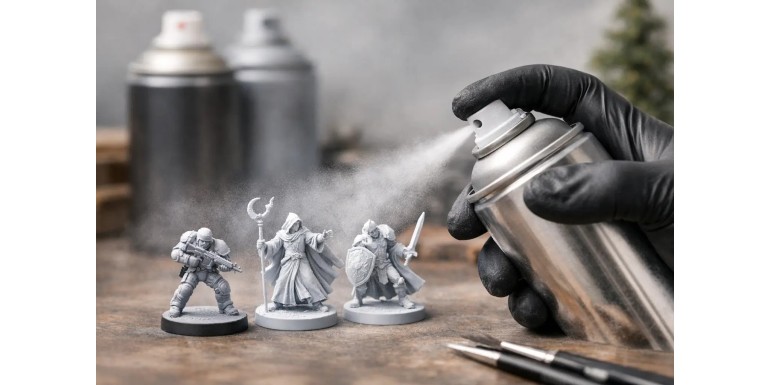
Priming is one of those steps that seems optional—until a layer of paint flakes off the edge of a helmet or your wash behaves strangely on an overly smooth surface. This miniature priming guide gets straight to the point: what priming actually does, which type suits your project, and how to avoid the typical mistakes that ruin your work before you even pick up a brush.
What Priming Actually Does for Miniatures
Priming isn’t just "applying a base coat." A primer creates a surface that paint can grip effectively, unifies different materials, and provides a coherent visual starting point. This is especially noticeable in mixed-material projects—for example, a miniature featuring plastic, resin, 3D-printed parts, and putty on the base.
It also influences how you "read" the volumes of the sculpt. A miniature primed in black is not painted the same way as one primed in light grey, even if you use the same palette later. The primer is already defining contrast, luminosity, and even the pace of your painting session.
For those on the gaming side of the hobby, the main benefit is durability. For tabletop miniatures handled weekly, a good prime significantly reduces early chipping. It won’t work miracles if you don't varnish or if the mini takes a hard hit, but it helps immensely.
Priming Guide by Material
Not all materials respond the same way, and this is where many hobbyists overcomplicate things.
-
Injected Plastic: Most hobby primers work perfectly as long as the miniature is clean.
-
Resin: Be more careful with pre-washing. Any leftover mold release agent can cause the primer to retract or become uneven.
-
Metal: Priming is crucial here. Paint applied directly to metal chips easily, so a thin but well-applied coat is mandatory.
-
3D Printed Parts: This depends on the print quality. A primer won’t magically hide layer lines. It might smooth them slightly, but for a clean finish, you'll need to sand, fill, or use specific products first.
-
Terrain: An MDF wall, a resin ruin, and a foam rock shouldn't be primed with the same recklessness. For porous or delicate materials, check compatibility; some solvent-heavy sprays can melt foam or soak too deeply into MDF.
Spray, Airbrush, or Brush?
Spray cans remain the fastest option for most painters. They provide great coverage and are perfect for large batches of infantry or terrain. The downside is control: if you get too close, you lose detail. If the humidity or temperature isn't right, you might end up with a "fuzzy" or grainy finish.
The airbrush offers excellent control and is the best option for regular indoor painting. It allows for ultra-thin layers and base color transitions, and it’s less dependent on the weather. However, it requires equipment, maintenance, and practice.
Brush-on primer has its place, even if it’s nobody’s favorite for entire armies. It’s great for touch-ups, single pieces, or parts assembled after the main painting is done. The key is avoiding texture: work in thin layers and accept that achieving a uniform finish on large surfaces takes more effort.
Choosing the Right Primer Color
The color of your primer changes the final result more than you might think:
-
Black: The most forgiving for tabletop gaming and dark schemes. It hides missed spots in deep recesses and works beautifully for armor, leather, and grimdark aesthetics. The downside? Bright colors like yellow or red take much longer to cover.
-
White: Essential for clean, vibrant colors. It’s the perfect base for Contrast paints, Speedpaints, and bright schemes. The catch? It’s unforgiving. If you miss a spot, it stands out immediately.
-
Grey: The sensible middle ground. It’s versatile, allows you to see details clearly, and doesn't darken the palette as much as black. If you only own one can, grey is usually the best bet.
-
Colored Primers: Great for speeding up the process. An olive green for vehicles or bone white for undead can save hours of work—but only if they truly match your intended scheme.
How to Prime Correctly Without Losing Detail
-
Clean the miniature: Especially for resin and metal, a quick wash with warm soapy water and a full dry prevents many headaches.
-
Shake well: Shake the can or bottle longer than you think is necessary. Poorly mixed product is the leading cause of bad finishes.
-
Thin layers: It’s better to apply two light passes than to bury rivets and facial features under a thick cloud of primer.
-
Distance and bursts: With sprays, work at a moderate distance in short bursts. Rotate the mini to cover all angles rather than drenching it from the front.
Common Mistakes to Avoid
-
Priming in bad weather: High humidity or extreme temperatures affect the drying process and cause that dreaded "sandpaper" texture.
-
Using primer to hide flaws: If the mini has mold lines or visible print layers, the primer will only make them more obvious. Fix the surface first.
-
Over-priming: If the miniature looks glossy or "filled in" before you start, you’ve used too much. Good priming should be almost unnoticeable to the touch—changing the grip and finish without erasing the sculpt.
When is Zenithal Highlighting Worth It?
Zenithal priming isn't just a trend. By applying a dark base followed by a lighter color from above, you pre-highlight the volumes. It works exceptionally well for speed-painting with translucent paints. It saves time and provides a useful lighting reference, though it may not be necessary if you plan to cover everything with thick, opaque layers.
Conclusion: Which Primer Do You Need?
For gaming reliability, go with black or grey spray. For indoor control, go airbrush. For speed-painting techniques, off-white or zenithal is the way to go.
At a specialized shop like Terrainandminis, where you can find primers, paints, and basing materials in one place, the best tip is to plan your entire project before choosing your can. Priming isn't a separate step—it dictates how you paint and how long the process will take. Focus on the material, the scheme, and the intended use of the mini, and you’ll get it right every time.