Español

Well-chosen fantasy ranger miniatures
- 05/08/2026 09:49:38
- Home , Tabletop Miniatures
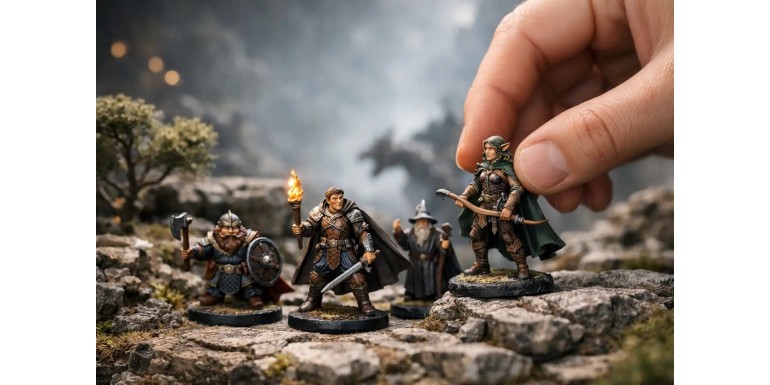
Not every warband needs another fully armored knight. Sometimes what your table really calls for is the opposite: a lighter figure, carrying a backpack, cloak, rope at the belt, and the look of someone who hasn’t slept in camp for three nights.
Fantasy ranger miniatures bring a narrative quality that many line troops simply don’t offer—and that’s exactly why they work so well for gaming, painting, and terrain alike.
The role of fantasy scouts on the tabletop
In fantasy settings, a scout often fills several roles at once. They might be the forward pathfinder in a campaign, a raider searching ruins, a ranger guarding a pass, or an adventurer accompanying a group of heroes.
On the tabletop, this translates into something very useful: a recognizable silhouette, strong personality, and the flexibility to fit into almost any faction, warband, or diorama.
That said, not all scout miniatures serve the same purpose—and that’s where it’s worth being selective before buying or starting to paint.
What defines a good fantasy scout miniature
A scout isn’t defined just by wearing a cloak. The key is a mix of visual mobility, practical gear, and a pose with intent.
Short bows, daggers, light axes, lanterns, maps, backpacks, canteens, ropes, or spyglasses all help tell the story at a glance. Without that visual language, a miniature can end up looking like just an under-equipped warrior.
Pose matters too. A scout works best when advancing, tracking, observing, or preparing an ambush. Highly static poses can look great in a display case if the sculpt is exceptional—but on the tabletop, they lose readability.
By contrast, a forward-leaning stance, a visible secondary weapon, or a turned head immediately conveys movement and awareness.
Then there’s the balance between realism and fantasy. Some miniatures lean toward a grounded, almost historical look with subtle fantasy elements. Others go more heroic, with oversized gear, trophies, and exaggerated details.
Neither approach is inherently better—it depends on your system, your collection’s visual style, and how much you want the miniature to stand out within a unit or warband.
Scale, proportions, and compatibility
This is where most mistakes happen. A scout miniature can look perfect in photos and feel completely out of place next to the rest of your army.
It’s not enough to check whether it’s 28 mm or 32 mm. Body proportions, head and hand size, and equipment thickness all matter.
If your collection leans toward heroic proportions, a slimmer scout may look off. If your style is more realistic, an overly bulky or exaggerated miniature can feel like it belongs to a different range altogether.
This becomes especially noticeable with humans, elves, or halflings, where the eye quickly compares volumes and height.
The base can help adjust things slightly—adding cork, rocks, or texture can improve integration—but it won’t fix a fundamentally incompatible scale. That’s why it’s worth thinking in terms of the whole: miniature, base, terrain, and the rest of the warband.
Individual scouts vs. group units
If you’re looking for a characterful piece for a roleplaying campaign, a narrative skirmish, or a display shelf, an individual miniature is usually the way to go.
Here, character matters most: a well-defined face, recognizable gear, and a clear pose carry more weight than modularity or repetition.
On the other hand, for units like skirmishers, trackers, or light shooters, it makes more sense to think in cohesive groups. The miniatures don’t need to be identical—but they should share a visual language.
Similar cloaks, consistent weapon types, unified basing, and a coherent color palette do far more for the unit than forcing exact duplicates.
It’s also worth considering how much time you want to invest. A single miniature can handle extra detail, freehand work, and weathering effects. A group of five or ten scouts benefits from more efficient choices.
If every figure has ten pouches, five straps, and four different leather tones, the project can drag on without necessarily improving tabletop impact.
Equipment and design: where the narrative lives
With scout miniatures, secondary gear often matters as much as the main weapon.
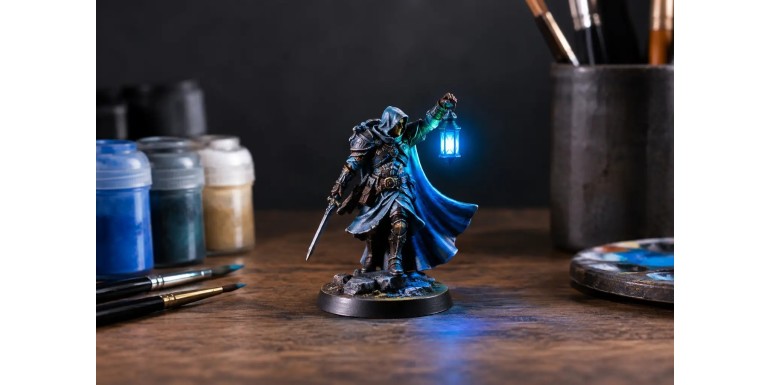
A sword or bow defines the basic role—but it’s the accessories that tell the story. A torch suggests underground exploration. Rope and grappling hooks point to ruins and climbing. A book, compass, or map hints at a more scholarly or adventurous profile.
This level of detail also makes scouts ideal for hobby customization. Swapping a head, adding a pouch, hanging a lantern from the belt, or replacing a weapon with a pointing hand can turn a generic figure into a recognizable character.
You don’t need a complex conversion to achieve that.
That said, there’s a practical limit. Overloaded sculpts slow down painting and make the silhouette harder to read on the tabletop. A good scout doesn’t need twenty trinkets—just enough to communicate the concept clearly.
Painting fantasy scouts efficiently
These miniatures work well with natural color schemes—but that doesn’t mean everything should be brown-on-brown.
If everything is leather, muted cloth, and dull metal, the figure can end up looking flat. A better approach is to build on earthy tones and add one or two accents to break things up: a cool green cloak, a desaturated red scarf, or a grey-blue underlayer.
The key is material separation. Leather, cloth, wood, skin, and metal should read as distinct—even within a muted palette. A well-painted scout stands out not because of bright colors, but because each surface has its own logic.
Weathering works great—but in moderation. Dust on lower areas, mud on boots, small scratches on sheaths, and subtle grime on cloaks go a long way.
Too much weathering, though, can obscure the very details that make the miniature interesting. If the figure carries maps, vials, or knives, those elements should remain visible.
For skin and faces, it’s usually worth pushing contrast slightly higher than you would on regular troops. Scouts often have partially obscured faces—hoods, hair, or high collars—so they need extra definition to maintain expression.
Why the base matters more than you think
A scout miniature on a plain base feels incomplete. Its natural place is terrain that reinforces the idea of movement, tracking, or frontier environments.
Forest, ruins, mountains, snow, swamps, or dusty paths can completely change how the miniature reads.
It’s worth aligning this with your gaming table or diorama. Forest boards call for leaves, logs, and damp earth. Desert settings benefit from sand, broken stone, and warm pigments. Snow, mud, or stagnant water all provide different context.
The base isn’t just decoration—it’s storytelling.
Scouts also work very well with subtle scenic basing. A low rock, a root, or a piece of wall can elevate the pose and guide the viewer’s eye without interfering with gameplay.
Go too far, and the miniature may look great for display but lose stability or practicality in-game. As always, it depends on how you plan to use it.
Choosing differently for gaming, collecting, or dioramas
If your priority is gaming, focus on durability, readability, and compatibility with your existing miniatures. Thin weapons, extreme poses, or very delicate details may not hold up well with regular use.
For painting or collecting, you can afford to go for more ambitious sculpts. Here, sculpt quality, expression, and originality matter more—even if the miniature is less practical on the table.
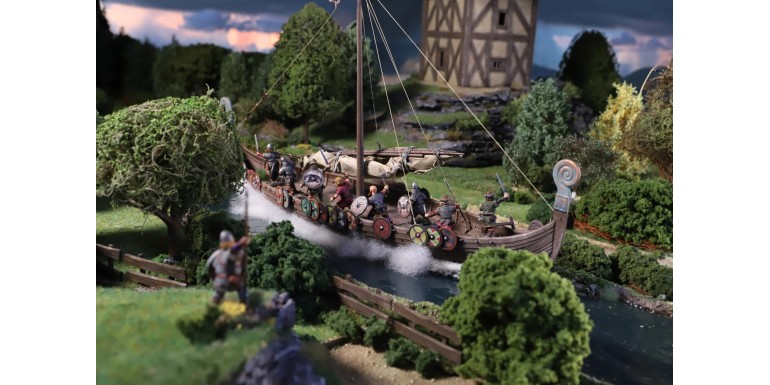
In a diorama, the criteria shift again. The goal isn’t for the miniature to stand alone, but to interact with its environment.
A scout looking into the distance, crouching beside a footprint, or pushing through foliage can tell a stronger story than a dramatic combat pose.
That’s why it often makes sense to rely on a specialized store that brings together miniatures, terrain, textures, bases, and effects in one place. When you can plan the whole project from the start, you get more consistent results and avoid mismatched materials.
Fantasy ranger miniatures offer something not every figure achieves: they tell a story before a single dice is rolled.
Choose the right scale, equipment, base, and painting approach, and you won’t just have a good-looking miniature—you’ll have a piece that truly fits your table and the way you enjoy the hobby.