Español

Wet Palette Review for Miniature Painting: Complete Guide
- 10/06/2026 09:04:23
- Home , Assembly and Painting Guides
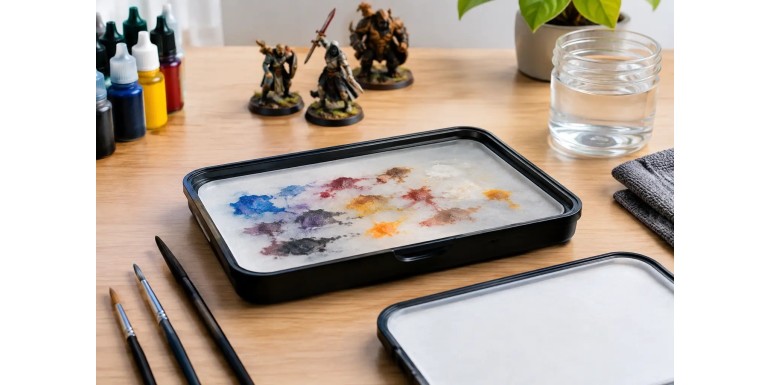
A perfect flesh-tone blend, a smooth transition across a cape, or a shadow mixed for an entire unit can dry out and vanish in just a few minutes on a dry palette. This wet palette review addresses that exact challenge: keeping acrylic miniature paint workable for longer without turning your painting station into a laboratory or altering the finish of your coats.
A wet palette doesn’t replace proper paint dilution, fix an un-shaken paint bottle, or work miracles on pots that have been open for years. However, when chosen well and properly maintained, it is one of the most noticeable upgrades you can make for painting thin layers, glazes, smooth gradients, and custom mixes. For wargaming hobbyists, it also reduces paint waste when repeating schemes across an entire squad.
What a Wet Palette Brings to Miniature Painting
The way it works is simple. An absorbent sponge or foam pad retains water inside a sealed or semi-sealed container, topped with a sheet of permeable paper. Moisture passes gradually through the paper, preventing acrylic paint from drying as quickly as it would on plastic, ceramic, or paper surfaces.
The primary benefit isn’t keeping paint liquid indefinitely—it’s giving you more working time. You can return to a custom mix after finishing a section, tweak the ratio of a shade, and keep multiple colors ready while applying successive layers. This is especially useful for highly pigmented paints, bright colors that require multiple thin coats, and wet-blending techniques on the palette itself.
It also improves consistency across shorter painting sessions. If you are painting ten squad members in the same color scheme, you can batch your paint comfortably without repeatedly opening and closing paint pots. On the flip side, managing moisture is a skill you’ll need to master: too much water can separate the paint binder, cause chalky application, or make the paint overly translucent.
Wet Palette Review: Key Features of a Great Model
Not all wet palettes perform equally, even though the core concept remains the same. The right choice depends on how often you paint, your desk space, and whether you need a portable option. For 28–32 mm miniatures, you don’t need a massive surface, but you do need enough room to organize base tones, shades, highlights, and a couple of active mixes without crowding.
Usable Surface Area Matters More Than Exterior Dimensions
A compact wet palette works brilliantly for single figures or sub-assembly painting. It has a small footprint, consumes less paper, and cleans up quickly. Its limits become clear when painting a full unit, a large creature, or a vehicle requiring multiple colors. If paint pools touch, colors easily contaminate each other, losing your mix references.
Medium formats offer the sweet spot for most hobbyists. They provide ample space to work through a skirmish band or squad while remaining manageable on a desk crowded with lamps, brushes, and handle mounts. Large palettes excel in long sessions, display projects, or batch painting, though they require more active moisture control and consume replacement paper faster.
A Secure Lid Prevents Surprises
The lid isn't a secondary detail. A secure, tight-fitting lid lets you save mixes for the next day while keeping dust out. Keep in mind, however, that leaving a palette sealed for too long doesn't guarantee the paint will stay pristine. Paint can separate, form a skin, or spoil if the sponge and paper aren't kept clean.
For painters on the go, a firm seal and a low-profile design are essential. A palette with flimsy hinges or a loose lid can spill water or run paints together during transport. When traveling, always keep it level and avoid relying on a simple drop-on lid.
Sponges Should Distribute Moisture, Not Flood the Paper
The absorbent base dictates the system's overall stability. A sponge that is too thin dries out quickly. A very thick one holds plenty of water, but can make control difficult and increase the risk of oversaturating the paper. Models featuring dense, easy-to-rinse foam deliver consistent moisture and a longer lifespan.
Some painters substitute the sponge with dishcloths or alternative materials. While this can work, performance varies widely depending on thickness, fiber content, and water retention. If you want repeatable results, using dedicated replacement sponges avoids unnecessary guesswork. If you prefer a budget DIY approach, test it with a single paint color before committing to an important mix.
The Paper Defines the User Experience
The palette paper must allow moisture to pass through without tearing, warping heavily, or bleeding excess water into the paint. Paper that is too impermeable barely keeps the mix alive; paper that is too porous dilutes paint from underneath over time. This is why standard baking paper can be hit-or-miss—some brands feature non-stick silicone coatings that block moisture flow entirely.
Dedicated wet palette paper costs a bit more, but it offers far greater consistency and comes pre-cut to size. For frequent painters, that convenience is well worth it. For occasional projects, pre-tested, parchment paper can suffice—provided it doesn't leave your paint watery after thirty minutes.
When to Use a Wet Palette (and When Not To)
A wet palette excels when working with water-based acrylic paints. It is ideal for glazes, diluted base coats, progressive highlighting, and custom color blending. When painting skin tones, for instance, it keeps mid-tones available on the palette while you adjust shadows and highlights. For terrain and scenery, it helps with fine detail work, though it isn't necessary for slathering broad coats across massive scenery pieces.
It isn't the right tool for every job:
-
Metallic paints: Metallic flakes can seep into the paper and contaminate subsequent paint mixes. It’s best to reserve a isolated corner, change the paper afterward, or use a traditional dry palette for metallics.
-
Washes and shades: Highly fluid washes don't require a wet palette and perform better in a well palette where they won't absorb extra water.
-
Solvent-based products: Oils, enamels, and solvent-based paints cannot be used on a standard wet palette. These require non-porous surfaces and proper ventilation.
-
Adhesives & FX: Do not use wet palettes for glues, dry pigments, or water-effect resins.
Common Wet Palette Mistakes to Avoid
-
Overwatering the sponge: The sponge should be fully damp, but there shouldn't be free-standing water pool on top. If water seeps up around the edges or the paper floats, you have too much water. Drain the excess, place your paper down, and smooth out any air bubbles for flat, uniform contact.
-
Assuming paint stays identical indefinitely: Just because paint stays wet doesn't mean its formula remains unchanged over hours. Certain paint lines separate or thin out faster than others—especially colors heavy in white, yellow, or transparent pigments. Always test consistency on a thumb nail, palette edge, or unseen area before jumping back into a saved mix.
-
Neglecting maintenance: Cleanliness directly dictates the lifespan of your palette. After each session, remove leftover paint, rinse the sponge, and allow the container to dry out completely if you won't be painting for a few days. Leaving moisture trapped for extended periods leads to odors, mold, and paint contamination. Replacing paper frequently is cheap compared to ruining an advanced painting project.
Choosing the Right Wet Palette for Your Style
-
Beginners: A compact or medium wet palette with a lid and readily available refill sheets is the most sensible starting point. You don't need the largest model or the most complex setup—prioritize a flat surface, a washable sponge, and a seal that preserves paint between sessions.
-
Army & Batch Painters: Look for enough surface area to maintain your main scheme's base, shade, and highlight mixes across several models at once.
-
Display & Competition Painters: Choose a larger working surface paired with high-consistency paper, as your workflow will involve multi-tone gradients and fine glaze work.
-
Travel & Event Painters: Portability is king. Focus on a low-profile design with a tight, secure lid and a rigid base that packs easily into a bag.
At Terrain and Minis, a quality wet palette is a natural pairing alongside premium acrylic paints, detail brushes, and refill packs. Having the right tools on hand streamlines your hobby workflow, but the ultimate choice should align with your desk setup, session length, and the types of projects you love to paint.
A great wet palette doesn't need to be flashy. It simply needs to ensure that when you return your brush to the tray after highlighting a shoulder pad, your mix is still right there—at the exact consistency you need to lay down the next layer.