Español

Which size of base to choose without making a mistake
- 06/01/2026 09:04:30
- Home , Assembly and Painting Guides
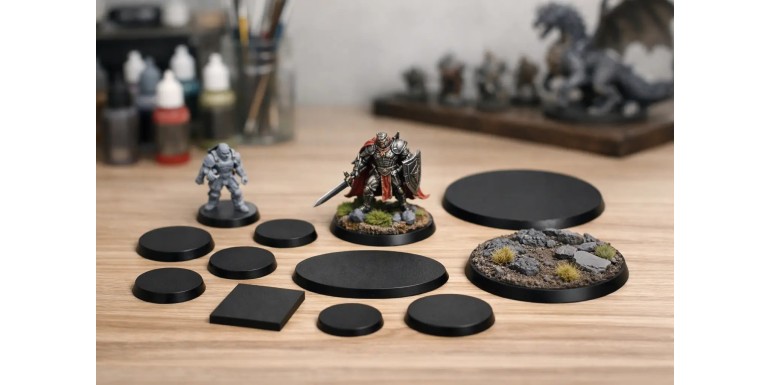
When assembling a miniature and the time comes to decide on a base size, you are not just resolving a minor detail. The base affects stability, tabletop footprint, visual readability, and—in many games—the rules themselves. Choosing correctly from the start prevents redoing work, repainting rims, or discovering too late that a miniature doesn't fit where it should.
How to Choose a Base Size Based on Actual Use
The first question isn't how large the miniature is, but what you are going to use it for. A figure intended for competitive play is not the same as a display miniature, a roleplaying character, or a piece of terrain integrated into a scene. On the tabletop, the base serves a very clear practical function: marking occupancy, providing stability, and maintaining consistency with the rest of the army or warband.
If the miniature will be used in a specific game system, that game's rulebook should always be your primary reference. Many rulesets assume a specific base diameter or shape; altering it changes distances, lines of sight, base-to-base contact, or deployment space. Sometimes the change seems minor, but jumping from 25mm to 32mm is highly noticeable when multiple figures are locked in combat or when a unit needs to fit into cover.
If you aren't tied to a strict ruleset, then balance three factors: visual proportion, physical stability, and room for decoration. A base that is too small makes the miniature look cramped and easier to tip over. A base that is too large creates the opposite effect: the figure looks isolated, loses presence, and takes up more space than necessary.
Base Size and Miniature Scale
Scale offers guidance, but it doesn't dictate the decision on its own. For 28mm or 32mm miniatures, you will typically find infantry on 25mm or 32mm round bases. The difference between the two isn't just aesthetic. On a 25mm base, the miniature remains compact—ideal for rank-and-file troops or models with closed poses. On a 32mm base, it has more room to breathe, especially if it features a cape, outstretched weapons, or a dynamic pose.
With large miniatures, the criteria shift quickly. A heavy figure with a high center of gravity or one standing on a single leg usually requires a larger base, even if it could physically fit onto a smaller one. Here, you need to think like a modeler, not just a player. If the miniature topples easily, the joints, paint job, and base decor will ultimately suffer.
The model's silhouette also plays a role. Two miniatures of the same height might need different bases if one carries a horizontal spear, a tail, wings, or a wide stance. That is why simply measuring the feet isn't enough; you must evaluate the actual volume the miniature occupies once fully assembled.
Common Base Sizes That Work
Generally speaking, 25mm is a great fit for compact human or humanoid infantry. 28mm and 30mm sizes appear in ranges seeking a middle ground or specific compatibility. 32mm has become the standard for modern heroic infantry. From 40mm and up, you enter the realm of bulky characters, heavy infantry, or small creatures with a prominent tabletop presence.
For oval or rectangular bases, the logic is the same, but you must also factor in the direction of movement and the miniature's length. A mount, an elongated creature, or a model with an aggressive forward pose usually benefits from an oval base because it distributes the volume nicely without making it unnecessarily wide.
When to Respect Official Base Sizes (And When Not To)
If you play a game with official measurements, sticking to them is usually the wisest choice. You avoid disputes, maintain compatibility with tournaments, and ensure the miniature behaves on the tabletop as intended. This is especially true in wargames where combat, aura abilities, or cover mechanics depend heavily on the base.
That said, there are times when changing the base size makes sense. A very common scenario is upgrading older model ranges. Vintage miniatures often came on smaller bases than modern versions, and rebasing them significantly improves their tabletop look. Another case is that of the painter or collector who prioritizes the final finish and composition over strict gameplay. If the miniature is headed to a display cabinet, you have more leeway to give it breathing room, add scenic elements, or enhance the overall vignette.
The key is to avoid mixing criteria without planning. If an entire army uses one size and a couple of minis are on another just because "they looked better," the final result will look inconsistent. It is always better to decide on a clear approach from the beginning.
How to Choose Base Sizes for Characters and Monsters
Characters usually demand a slightly larger base than standard troops, even when the rules don't strictly require it. This is not only to help them stand out, but also because they typically feature wider poses, scenic elements, or fragile parts. A major character squeezed onto a minimal base can look visually underwhelming.
With monsters and large creatures, the most common mistake is undersizing the base to save space. This ultimately ruins stability and composition. A large creature needs a base that can support its weight, allow for secure pinning, and leave enough room to integrate the model with the terrain. If the paws or supports are glued right up to the rim, the piece looks forced.
For these miniatures, it is best to do a dry fit before gluing. Place the figure on various bases, looking at it from above and from a tabletop perspective. If the miniature overpowers the base or looks like it's about to step off, go up a size. If it looks lost in an empty field, go down a size or plan your basing materials more carefully.
How the Base Changes Painting and Presentation
Choosing a base is more than just an assembly decision; it affects the final finish. On a small base, any thick texture, rock, or decorative element instantly competes with the miniature. On a wider base, you can tell a bit more of a story: a section of ruins, built-up mud, snow, foliage, or battlefield debris. However, more space does not automatically mean a better result.
An overly busy base can swallow the figure if there is no visual hierarchy. This happens a lot with rank-and-file troops. If you are painting an entire army, you want a base design that you can replicate consistently without blowing out your project timeline. For display or dioramas, on the other hand, a larger base opens up creative opportunities and rewards the extra effort.
The base rim matters too. A clean, well-proportioned rim goes a long way in making a miniature look finished. If the base is too small, the rim draws too much attention. If it is too large, the overall piece can look heavy. This balance is more noticeable than it seems when you line up several models together.
Frequent Mistakes When Choosing Miniature Base Sizes
One of the most common pitfalls is basing a decision solely on what "fits." Just because a miniature physically fits onto a base does not mean it is the correct size. Another mistake is copying measurements between different game systems without looking at the actual proportions. Not all 32mm scales behave the same way, and not all heroic sculpts share the same volume.
It is also wise to avoid impulsive rebasing. Changing a base for aesthetics can force you to adapt movement trays, transport foam cases, or how models fit inside terrain. Furthermore, if the miniature is already painted, the risk of damaging the feet, ankles, or rim paint is high.
The final mistake is leaving this decision until the very end of the project. The base influences pinning, posing, weight distribution, and composition. The earlier you decide on it, the better everything else will fall into place.
A Practical Way to Decide Without Complicating It
If you are unsure which base size to choose, use this simple checklist:
1. Check the Rules: Find out if the game specifies a concrete size. If it does, that is your baseline.
2. Evaluate the Model: Assess whether the miniature has a compact or wide pose, and if it needs extra support due to its weight or height.
3. Define the Purpose: Think about how much prominence the base will have in the final finish.
For line infantry, prioritize uniformity and functionality. For characters, you can afford a bit more presence as long as it doesn't break game compatibility. For display pieces, composition is king. And if you are assembling a varied range for casual play, maintaining consistency across similar profiles usually yields a better result than tailoring every single miniature individually.
In a specialized catalog like Terrainandminis, where miniatures, texturing materials, and terrain accessories coexist, it becomes very clear that the base is not an isolated add-on. It is the physical and visual foundation upon which all your subsequent hard work rests.
If you are still in doubt, picture the completed miniature placed on the tabletop alongside the rest of your collection. That mental image usually provides a more reliable answer than any ruler.