Español

Synthetic vs. natural brushes for miniatures
- 07/12/2026 09:54:36
- Home , Assembly and Painting Guides
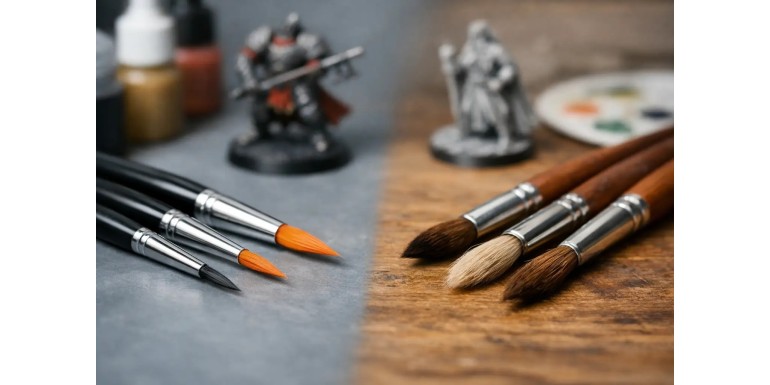
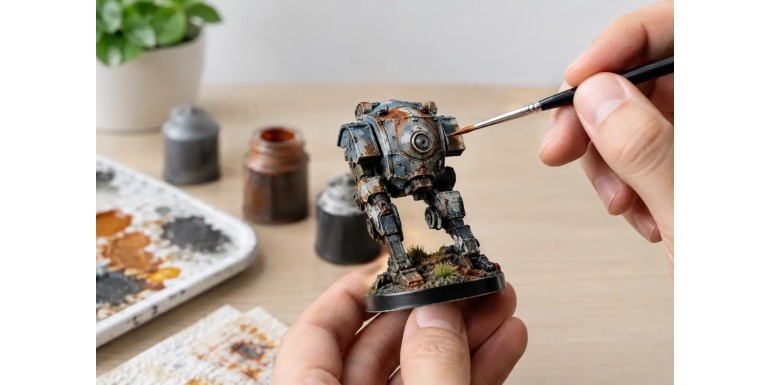
A brush that splits while highlighting a shoulder pad, dumps paint too quickly during a base coat, or leaves streaks in a wash can ruin a painting session. Choosing between synthetic and natural brushes isn't about prestige: it determines how much paint you control, how long you can work before reloading, and how much maintenance your gear will need.
For miniature painting, there is no absolute winner. A good synthetic brush is often the most practical choice for many tasks, while a quality natural hair brush still offers clear advantages for details, glazing, and techniques where paint loading matters. The key is assigning each type to the right task.
Synthetic vs. Natural Brushes: The Real Difference
Synthetic brushes use man-made fibers, usually polyester or nylon, treated to mimic the spring and shape of natural hair. They tend to be more uniform, durable, and affordable. They also tolerate heavy use with dense paints, mediums, pigments, glues, and scenery products much better.
Natural brushes use animal hair, with Kolinsky sable being the standard for fine painting. Natural fibers have a structure that retains more water and pigment. In practice, this allows you to load the brush with more paint without losing a sharp point—something incredibly valuable when painting tiny details or smooth transitions.
The difference isn't just the material. A quality brush also depends on the belly shape, bristle firmness, ferrule securement, and its ability to snap back into a point. A cheap natural brush can perform worse than a well-made synthetic, and a poor-quality synthetic will lose its shape even if you save it for simple tasks.
When to Use a Synthetic Brush
Synthetics are the workhorses of the hobby. For base coats, drybrushing, washing, metallics, textures, and painting scenery, they are usually the smartest choice. It doesn't hurt as much to replace them when they wear out, and they handle materials that ruin bristles much better.
Their main feature is snap—the elastic rebound. After pressing down on the miniature, the brush quickly snaps back into shape. This helps with short, controlled strokes, like applying a clean base coat on armor plates, straps, or terrain pieces. It is also great for beginners because it provides a firm, predictable feel.
However, that springiness can work against you when aiming for very smooth transitions. Synthetics carry less paint in the belly and can dry out faster at the tip. If you are painting with highly diluted layers, you will need to reload more frequently and watch out for pigment pooling at the tip.
Synthetics for Fast Work and Terrain
For drybrushing, synthetics are the standard choice. The technique wears down fibers by repeatedly rubbing against edges, stone, fur, ruins, or vegetation. Using a natural brush for this wastes its lifespan on a task that doesn't benefit from its best qualities. The same goes for glues, texture pastes, mud, artificial snow, or resins applied to bases and terrain.
On a well-organized hobby desk, it helps to have several synthetics of different sizes: a medium one for base coats, a larger one for vehicles and scenery, and older, worn-out ones for textures and drybrushing. They don't all need a perfect point.
They are also highly recommended for metallic paints. Flakes can get trapped between the fibers and contaminate other colors, especially if your rinsing isn't thorough. Keeping a dedicated synthetic brush for steel, gold, bronze, and metallic effects prevents surprises when you go back to painting lighter tones.
When a Natural Brush Is Worth It
A natural brush shines when you need to combine paint capacity and precision. When painting eyes, freehand insignia, gems, armor trim, or 28mm details, a stable tip allows you to work with less pressure and fewer corrections. But its value grows even more on larger miniature surfaces like capes, skin, or organic plates, where you want to apply glues without cutting off the paint flow every few seconds.
The belly of a good sable brush holds a larger reservoir of paint than an equivalent synthetic. This gives you time to draw a long line, blend a gradient, or place a controlled mix exactly where you want it. The paint flows out gradually instead of dumping all at once, provided your dilution is correct.
This doesn't mean a natural brush paints by itself. If you load it up to the ferrule, let paint dry in the bristles, or use it to mix paints on the palette, the tip will split. It is a precision tool, not a consumable for every phase of the project.
For most miniature painters, keeping one or two good natural brushes for fine work is enough. A size 1 or 2 with a generous belly usually handles more situations than an extremely small 000. In fact, a tiny brush dries out faster and holds less paint, which can actually make details harder to paint.
Natural Hair Is Not Mandatory
You do not need a full set of natural brushes to achieve solid results on miniatures. Many painters get excellent finishes using high-end synthetics, good paint, a wet palette, and consistent technique. The quality jump comes from mastering dilution, wiping off excess paint, and caring for the tip—not from buying the most expensive brush available.
Natural hair starts paying off when you enjoy glazing, smooth gradients, and sustained detail work, or when you paint frequently and feel that synthetics are slowing your rhythm down. If you only paint tabletop armies or large terrain pieces, the expense makes less sense.
Which Brush to Choose for Each Technique
-
Standard Base Coats: A round synthetic with a good tip offers control and durability. For large areas, size up instead of struggling with a small brush; the paint will look smoother and you will finish faster.
-
Washes and Inks: Use a brush with a good belly—synthetic or natural depending on your budget. The key is that it can move the product around without forcing it aggressively into the recesses. If you use a lot of wash, a dedicated synthetic brush keeps you from ruining your detail brush.
-
Edge Highlighting and Freehand: For highlights, simple freehand, pupils, and small faction markings, a natural brush with a good tip offers a clear advantage. Still, a fine synthetic can work very well if it isn't deformed. The key is stabilizing your hands, using paint with enough body, and not trying to draw a line in a single pass if the surface requires multiple steps.
-
Drybrushing, Scenery, and Basing: Choose durable synthetics or old, retired brushes. Flat or short-bristled brushes are especially useful for catching edges on stone, wood, ruins, chains, and rocky terrain.
-
Contrast, Speedpaints, and High-Fluidity Paints: There is no single rule. A synthetic works great and is easy to maintain, but a natural brush helps distribute color across complex areas thanks to its paint capacity. Test both on a test miniature to see which one leaves fewer pools.
Maintenance: What Determines Their Lifespan
Most brushes get ruined by bad habits, not by hours of use. Never leave a brush resting with its bristles at the bottom of the water pot. The tip will bend and the pressure can loosen the ferrule. Also, never load paint past the halfway point of the bristles; when pigment dries near the ferrule, the brush loses flexibility and the tip splits.
Rinse it frequently, but without banging it against the container. Afterward, wipe the excess water on a paper towel and gently reshape the tip. At the end of your session, use a dedicated brush soap or a mild cleaner, rinse well, and store it flat or with the bristles pointing down.
Natural brushes require more attention because a damaged tip is a bigger loss. Synthetics also appreciate the care, though you can replace them with less regret when they no longer hold their shape. Keeping your detail, metallic, drybrush, and texture brushes separate extends the life of all of them.
A Useful Selection for Your Hobby Desk
Instead of hoarding tiny sizes, build a setup that matches your actual workflow. A medium synthetic for base coats, a large synthetic for terrain and vehicles, a synthetic reserved for metallics and drybrushing, and one or two natural brushes for detail and glazing will cover almost any army, warband, or diorama.
Terrainandminis.com provides materials for every phase of your project, and that is the most practical way to think about brushes: as part of a system alongside paints, palettes, primers, textures, and basing effects. An excellent brush cannot make up for poorly diluted paint, but the right brush does make every step more controllable.
Before choosing, think about the miniature you are painting this week, not your dream display cabinet. Save natural hair for the stages where its paint capacity and precision make a difference, and let synthetics handle the heavy lifting. Your best brush will always be the one that makes it to the next project clean, pointed, and in good condition.