Español

Pillage by Victrix: Factions, Rules, Miniatures & Terrain Guide
- 09/26/2026 08:57:58
- Home , Miniature Wargames
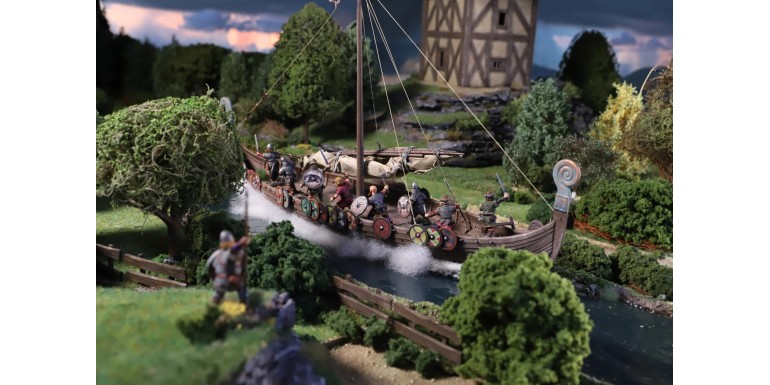
Pillage by Victrix: A Guide to the Dark Age Miniatures Game Where Terrain Comes to Life
If you enjoy historical miniatures, skirmish games and battles set during the Early Middle Ages, you may already have heard of Pillage by Victrix.
Pillage is a historical skirmish game set during the Dark Ages and Viking Age, designed around small groups of warriors, narrative objectives and scenarios where the battlefield is much more than decoration: terrain is part of the game.
The system, written by Guillaume Rousselot, recreates the kind of raids and conflicts associated with the period. Players can raid a village, defend its treasures, search for objectives, rescue civilians, set buildings on fire or fight over strategic locations.
And this is one of Pillage's greatest attractions: a well-designed gaming table can completely change the experience of a battle.
What Is Pillage by Victrix?
Pillage is a historical and narrative skirmish game set mainly between the raid on Lindisfarne in AD 793 and the Battle of Hastings in 1066.
Unlike wargames focused primarily on two armies fighting across an open battlefield, Pillage places a strong emphasis on raids, objectives and interaction with the environment.
Games are designed around approximately 15–30 warriors, with an average playing time of around 1–2 hours and a recommended gaming area of 48 × 48 inches, approximately 122 × 122 cm.
This makes Pillage particularly appealing to players who want to enjoy a collection of miniatures without having to build and transport a huge army.
How Does Pillage Play?
One of the defining characteristics of Pillage is that games do not necessarily revolve around destroying every enemy miniature.
The system allows for different types of objectives and scenarios, including situations involving looting buildings, capturing treasures, searching for objects, rescuing hostages and defending specific locations.
This changes the way players approach the game.
Instead of simply asking:
How do I destroy my opponent's warband?
you also have to consider:
- Where is the objective?
- What is the safest route?
- Which buildings can I use?
- Where can I find cover?
- Can I reach the objective before my opponent?
- Is the reward worth the risk?
- Should I defend my position or move forward?
This approach turns every game into a small story.
Miniatures and Equipment Matter
One of the interesting features of Pillage is the importance of warrior equipment.
The game uses a WYSIWYG — What You See Is What You Get — approach, where the equipment represented on the miniature has an impact on the game. Swords, javelins, Danish axes, crossbows and other equipment options have different characteristics.
Better equipment also comes at a cost.
Players must choose between a smaller, better-equipped warband or a larger force with lighter equipment. Armour and equipment can increase combat effectiveness, but they can also affect movement and the overall cost of the warband.
This means that building and painting your miniatures is not simply an aesthetic choice.
The way your miniatures are equipped helps identify their weapons and capabilities during the game.
Pillage Factions
The first Pillage book includes seven Western factions:
- Vikings
- Franks
- Anglo-Saxons
- Normans
- Bretons
- Welsh
- Irish, including Picts and Scots
Each faction has its own characteristics, and equipment costs can vary between factions.
This allows two players to approach the same scenario with very different styles of play.
Vikings
The Vikings are probably the faction most people immediately associate with Pillage.
They are particularly well suited to scenarios involving raids, coastal villages, monasteries and settlements.
A gaming table featuring wooden houses, palisades, docks, boats, barrels, animals and scattered objectives can turn a Viking game into an authentic raiding scene.
Anglo-Saxons
The Anglo-Saxons are an excellent choice for representing defenders protecting a village or territory threatened by a raid.
They are particularly well suited to narrative scenarios where a force must protect buildings, civilians, treasures or important locations.
Normans
The Normans allow players to explore the period immediately before and after the Norman Conquest of England.
The presence of cavalry also creates interesting possibilities for gaming tables combining open spaces with buildings, roads and obstacles.
Franks
The Franks expand the possibilities for representing conflicts in Western Europe and allow players to create gaming tables that go beyond the classic Viking village setting.
Bretons, Welsh and Irish
These factions allow players to explore other areas and conflicts of the Early Middle Ages while creating gaming tables with their own distinctive visual identity.
Hills, forests, villages, roads and rural buildings can all help represent these conflicts and give each warband its own atmosphere.
Terrain in Pillage: Much More Than Decoration
If there is one aspect of Pillage that deserves special attention, it is terrain.
In many wargames, terrain mainly provides cover or modifies movement. In Pillage, however, the game's narrative philosophy gives the battlefield a particularly important role.
The game includes situations in which warriors can climb, cross rivers, explore buildings, rescue civilians and start fires.
This means that an empty gaming table can take away much of the personality of the game.
What Terrain Should You Use for Pillage?
A good Pillage battlefield can combine several different types of terrain.
Medieval Buildings
Houses and other buildings are among the most important elements.
A small village with several buildings can create combat zones, obstacles, alternative routes and narrative objectives.
Forests and Vegetation
Forests provide visual cover and help break up lines of advance.
They can also create opportunities for ambushes and force players to decide which routes they want to use.
Rivers and Water Features
Water is particularly appropriate for a game inspired by medieval raids and conflicts.
A river can become a barrier, an approach route or an important scenario objective.
Palisades and Walls
These are perfect for representing fortified villages, settlements and defensive positions.
They also create a clear distinction between the outside and inside of a settlement.
Barrels, Sacks, Carts and Market Stalls
Small terrain accessories are important because they add scale and personality.
A market, barrels next to a house or sacks surrounding a cart can transform an otherwise empty surface into a believable settlement.
Farm Animals
Chickens, pigs, sheep, cattle and other animals may seem like minor details, but they add a huge amount of character to a medieval gaming table.
Victrix also produces specific Pillage-related scenery and accessories such as Dark Age Huts, Medieval Farm Animals, Market Stalls, Treasures & Chests and other terrain pieces.
Why Is Terrain So Important in Pillage?
There is a difference between playing on a surface with miniatures and actually playing inside a scenario.
Pillage allows terrain to do both jobs: improve the visual appearance of the table and create meaningful decisions during the game.
Imagine a village with five buildings.
One contains the main objective. Another provides access to higher ground. A narrow street runs between them, while a small river lies behind the houses.
Suddenly, the table is no longer an abstract battlefield.
Players have to decide which route to take, which building to control, where to position their warriors and when to risk crossing dangerous terrain.
This is one of the great strengths of narrative skirmish games: the terrain tells the story alongside the miniatures.
Fires, Weather and Naval Battles
Pillage goes beyond conventional combat.
The system includes elements such as weather, spreading fires and naval battles, as well as scenarios involving boats, raids and the defence of sacred places.
This opens up many possibilities when designing scenarios.
For example:
The Raid on a Village
An attacking warband enters a settlement and must collect a certain amount of loot before escaping.
The defenders must prevent the attackers from searching the buildings.
Defending a Settlement
The defenders must maintain control of several locations while the attackers attempt to break through.
Terrain can represent houses, palisades, barns and other buildings.
The River Raid
A river divides the battlefield and forces players to decide how they are going to cross it.
Bridges, boats, docks and marshes can become key elements of the scenario.
The Burning Village
The attackers start a fire while the defenders try to react and protect specific objectives.
Here, terrain stops being static and becomes part of the story.
Pillage and the WYSIWYG Approach
One of the particularly interesting aspects for hobbyists is Pillage's attention to the equipment represented on the miniatures.
The WYSIWYG — What You See Is What You Get — approach creates a direct relationship between the miniature and the warrior it represents.
This makes assembly and customisation an important part of the hobby.
You can create a warband that not only has a distinctive visual identity but also reflects the equipment choices you have made.
For historical miniature painters and model builders, this combination of modelling, painting and gaming is particularly appealing.
What Scale Are Pillage Miniatures?
Pillage is designed for historical-scale miniatures and uses 25 mm round bases for infantry and 40 mm round bases for cavalry. Victrix also states that 25 × 50 mm cavalry bases are compatible.
This is useful when planning your terrain.
Buildings, doors, roads, walls and other scenery should be appropriately sized for the miniatures while still allowing enough space for players to move their models comfortably.
How to Build a Great Pillage Gaming Table
You do not need to cover every square inch of the table with terrain.
In fact, a good gaming table needs both open areas and densely built sections.
A balanced setup could include:
- Several houses or buildings.
- A forest area.
- A main road.
- A small water feature.
- A wall or palisade.
- Small terrain accessories.
- Clearly visible objectives.
- Open areas for movement.
- Vertical elements that give the table character.
The key is to create multiple possible routes.
If every route leads to the same place, the game can become predictable. Different routes, obstacles and objectives force players to make meaningful decisions.
Pillage: An Ideal Game for Terrain Enthusiasts
One of Pillage's greatest strengths is the way it combines two hobbies that naturally complement each other: miniatures and terrain building.
You can build a relatively small collection of warriors while investing time in creating a complete medieval gaming table.
A village, river, forest, farm, market and coastal area can all be reused across multiple scenarios.
Victrix itself offers terrain and accessories designed to support the Pillage setting, including Dark Age buildings, farm animals, market stalls, treasure chests and other scenery.
This means you can approach the project as more than just a single game.
Start with one warband, add some terrain, build a second faction and eventually create a complete Dark Age gaming table.
How Many Miniatures Do You Need to Play Pillage?
A typical warband contains between 15 and 30 warriors, meaning that Pillage does not require a huge collection.
This can be particularly attractive to players who are new to historical wargaming.
A warband of this size allows you to focus on:
- Assembly.
- Painting.
- Customisation.
- Terrain.
- Scenario design.
- Narrative gaming.
It also makes it easier to complete a playable force in less time than a large-scale army.
Is Pillage Suitable for New Players?
Victrix presents Pillage as a system designed for both new and experienced players.
Games last approximately 1–2 hours and use a relatively small number of miniatures.
This makes it an interesting option for anyone who wants to get into historical miniature gaming without immediately starting a huge collection.
At the same time, the system leaves plenty of room for experienced players through equipment customisation, different scenarios and the importance of terrain.
Pillage and Victrix: A Natural Combination for Historical Hobbyists
Victrix is well known for its historical miniatures, and its range allows players to build forces from different periods.
For Pillage, Victrix offers products including the rulebook, Viking, Anglo-Saxon, Norman and Rus warbands, along with different gaming and terrain accessories.
This makes it possible to approach Pillage as a long-term hobby project rather than simply a single game.
You can start with one warband, add scenery, build a second faction and eventually create a complete gaming table representing the Dark Ages.
Tips for Getting Started with Pillage
If you are thinking about starting Pillage, a good approach is not to try to buy everything at once.
1. Choose a Faction
Start by deciding which faction appeals to you most from a historical and visual perspective.
2. Build and Paint Your Warband
With 15–30 warriors, you can have a complete force ready for gaming.
3. Start with Basic Terrain
A small settlement, some vegetation and a few accessories can quickly transform your gaming table.
4. Add Objectives
Treasure chests, buildings and other objectives help turn the table into an actual scenario.
5. Expand Gradually
Once you have some games under your belt, you can add rivers, palisades, forests, markets, animals, boats and other terrain pieces.
This allows your collection to grow alongside your gaming experience.
Frequently Asked Questions About Pillage
What is Pillage?
Pillage is a narrative historical skirmish game by Victrix set mainly during the Dark Ages and Viking Age. It is designed for warbands of approximately 15–30 warriors and games lasting around 1–2 hours.
How many factions does Pillage have?
The first Pillage book includes seven Western factions: Vikings, Franks, Anglo-Saxons, Normans, Bretons, Welsh and Irish, including Picts and Scots.
What size table do I need for Pillage?
The official recommendation is a 48 × 48 inch gaming area, approximately 122 × 122 cm.
How many miniatures do I need to play?
Pillage is designed for warbands of approximately 15–30 warriors.
Is terrain important in Pillage?
Yes. The system includes objectives and scenarios that interact with the battlefield, including buildings, terrain, rivers, fires and other environmental elements.
A well-designed gaming table can therefore have a significant impact on both the narrative and the decisions players make during a game.
What bases does Pillage use?
Infantry uses 25 mm round bases, while cavalry uses 40 mm round bases. Victrix also states that 25 × 50 mm cavalry bases are compatible.
Build Your Own Story with Pillage
Pillage is much more than placing two groups of miniatures opposite each other.
It is a system designed to represent raids, looting, desperate defences and conflicts in the Early Middle Ages, using objectives and terrain to create different games every time.
And this is where terrain really comes into its own.
A house can become an objective. A river can change an attack route. A forest can hide an ambush. A treasure chest can tempt a warrior away from his unit. A palisade can transform a village into a defensive stronghold.
The miniatures tell you who is fighting. The terrain tells you where — and why — the battle is taking place.
If you are building a gaming table for Pillage by Victrix, Terrain And Minis is the perfect place to explore the combination of historical miniatures, buildings, vegetation and accessories needed to create a memorable Dark Age battlefield.
Explore our selection of historical miniatures and tabletop terrain and start building your own Dark Age gaming table.