Español

Miniatures guide for beginners
- 06/18/2026 10:07:21
- Home , Tabletop Miniatures
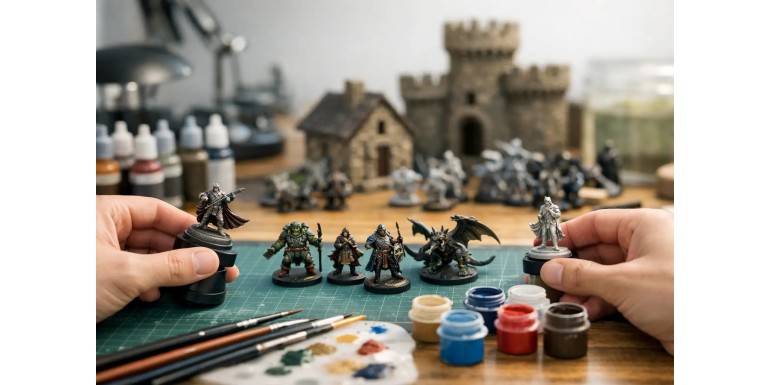
Starting out in this hobby usually goes something like this: you buy a box that catches your eye, open the blister pack or the sprue, look at the tiny components, and wonder if all that material was truly necessary. The short answer is no. This miniature guide for beginners is designed to help you enter the hobby smart, without overspending, and while avoiding the typical mistakes made during your first assembly, your first priming, and your first base.
What You Truly Need to Get Started
The most common mistake isn't painting poorly; it's buying without direction. Many people start by hoarding paints, tools, and miniatures from completely different game systems before completing a single figure. For a solid start, you need just a few things, but they must be well-chosen.
The foundation is simple: a single miniature or a small squad, sprue cutters, a hobby knife or moldline remover, appropriate glue, primer, and a tight selection of paints. If you also want a cleaner result, add a fine brush, a medium brush, and basic basing materials. There is absolutely no need to set up a full professional workshop with your very first purchase.
The type of miniature dictates your workflow here. You don't handle plastic, resin, or metal the same way. Plastic is usually the friendliest entry point because it cuts, cleans, and glues with relative ease. Resin offers incredible detail, but demands more attention when cleaning flash, straightening warped pieces, and dry-fitting parts. Metal is durable, but heavier and may require sturdier pinning or fixing. If you are new, your best bet is starting with plastic or simple resin models with fewer pieces.
How to Choose Your First Miniatures Without Overcomplicating Things
A great miniature guide for beginners doesn't start with painting; it starts with selecting the right model. Your first miniature should meet three conditions: you must like it, it shouldn't require excessive assembly, and it must feature clearly defined areas to paint.
If you pick an overly busy figure—cluttered with a thousand straps, chains, pouches, and overlapping capes—you won't learn any faster. Quite the opposite. You will spend more time cleaning mold lines, more time assembling, and more time trying to figure out where one color zone ends and another begins. For beginners, standard-sized infantry, heroes with a clear pose, or small terrain pieces work wonderfully for practicing drybrushing, washes, and textures.
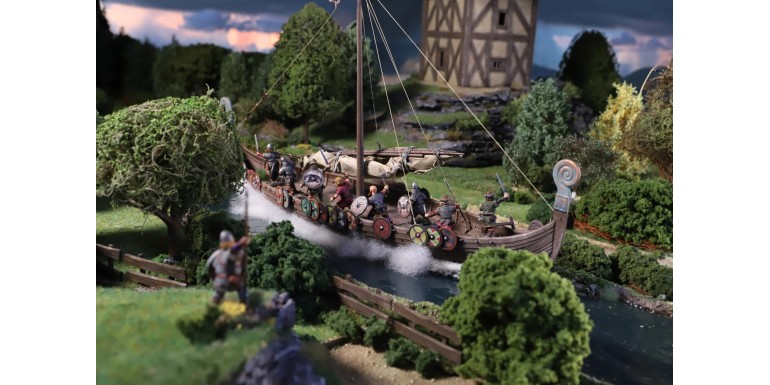
It is also wise to consider the intended use. If you plan to play, you might want a core unit from your chosen faction. If you are painting purely for enjoyment, a single miniature with personality is usually a better choice. If tabletop terrain is what draws you in, a small scenery piece can teach you priming, base coating, weathering, and basing without the added pressure of painting eyes or faces.
Clean Assembly Beats Fast Assembly
Assembling a miniature correctly saves you massive headaches down the line when painting. Rushing to cut pieces and gluing them without checking the fit usually leaves ugly mold lines, visible gaps, and crooked poses that are much harder to fix later.
Start by clipping the pieces off the sprue using cutters—never snap them off by hand. Then, carefully clean up attachment points and flash. You don't need to make every piece flawless on your first pass, but do remove anything that will look glaringly obvious once painted. Always do a dry fit before applying glue. This simple step prevents countless misaligned joints.
The type of glue matters too. For plastic models, specific plastic cement offers a cleaner bond because it slightly melts the surfaces together. For resin or metal, you will typically need cyanoacrylate (super glue). Using too much glue is just as problematic as using too little. It overflows, ruins fine detail, and complicates your subsequent paint layers.
If a miniature has very hard-to-reach areas, it might be worth painting in sub-assemblies. However, this isn't always worth the effort. For a basic troop option, separating too many pieces needlessly drags out the process. For a character with a cape, a shield, or a weapon crossing tightly over the torso, it can make your life significantly easier.
Priming: The Step That Dictates Paint Behavior
Primer is not there to provide color; its sole purpose is to give the paint something to grip onto so it behaves predictably. Skipping this step usually results in patchy coats, paint slipping off the surface, and a fragile finish that easily chips.
Your primer color choices matter. Black is ideal if you want a darker, more forgiving finish with natural shadows. White or light grey is best if you want vibrant, bright colors. Medium grey provides a balanced middle ground. There is no single universal option—it depends entirely on the color scheme you have in mind and how much you want to struggle with the opacity of certain paints.
Apply thin coats. If you oversaturate the miniature, you will clog the details. If you spray too little, you leave surfaces unprepared. The secret lies in multiple light, sweeping passes, rather than a single thick cloud. Keep in mind that humidity and temperature affect the spray; priming in poor weather conditions can ruin the texture and finish before you even touch a brush.
Good Painting for Beginners Means Structure, Not Complexity
Many beginners get frustrated because they confuse an eye-catching result with advanced techniques. To get a playable miniature or a clean display piece, you don't need a twenty-step process. You just need order.
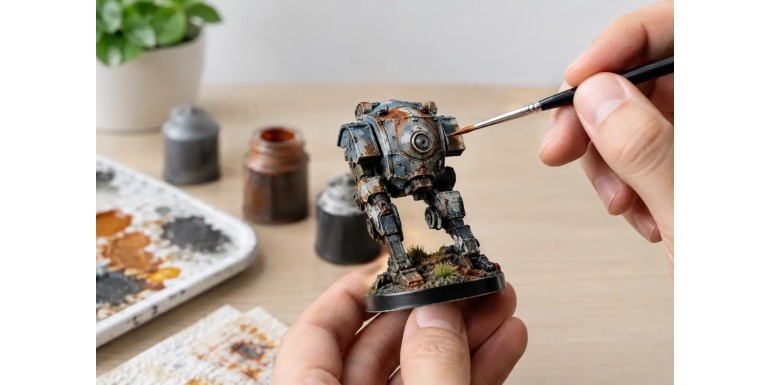
Start with well-defined base coats: armor, fabric, leather, metal, skin. Work on each area using paint that is thinned down enough to avoid leaving clumps, but not so watery that it runs out of control. Two thin coats will almost always look better than one thick, heavy layer.
Next comes shading. Shading washes remain an excellent learning tool for beginners. They help define volume and recess details with minimal effort. However, avoid letting the wash pool uncontrollably. If you leave heavy puddles, they will dry poorly and leave coffee stains on flat surfaces. Washes work brilliantly on heavily textured areas, but require a lighter, more controlled touch on flat armor plates or large panels.
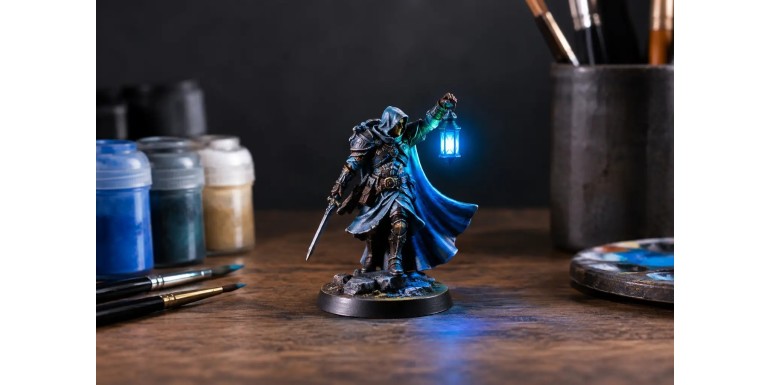
The next logical step is to reapply your base color to the prominent areas and add a simple highlight to edges or raised volumes. You don't need complex blending or smooth transitions to notice a massive improvement. With just a base coat, shade, clean-up, and a simple edge highlight, you can achieve a highly striking miniature on the tabletop.
Be aware that certain colors carry hidden traps. Pure white, bright yellow, and some reds require a lot of patience and multiple layers. When you are just starting out, there is no shame in picking a more forgiving color scheme. Blues, muted greens, browns, greys, and metallics make the entire process significantly smoother.
The Base Isn't an Extra—It Is Part of the Miniature
A beautifully painted miniature sitting on an unworked plastic base always looks incomplete. You don't need to turn every single base into an elaborate diorama, but you must give it context. Sand, texture pastes, tiny pebbles, static grass, or snow completely transform the final presentation.
Furthermore, the base helps tell the story of your army or character's environment. It establishes whether they are standing on urban ruins, desert sands, muddy fields, or snowy tundra. If you are playing a specific faction, maintaining thematic consistency across your bases gives your collection a powerful, cohesive presence on the table, even while your painting skills are still developing.
To start, the most practical approach is using easy-to-apply texture pastes finished with a quick drybrush. It is fast, consistent, and highly rewarding visually. Later on, you can add tufts, pigments, puddles, or advanced terrain effects once you have more control. In a specialized shop like Terrainandminis.com, that is exactly what you should look for: basing materials and effects scaled precisely for miniatures, rather than generic alternatives that don't translate well to the hobby scale.
Common Mistakes Worth Avoiding
There are errors almost everyone commits at the beginning. Buying too many projects at once is a classic trap. Another is starting with the most important, expensive character model in your army. It is also incredibly common to use paint straight from the pot without thinning it, rushing into the next layer before the previous one is fully dry, or trying to constantly fix minor details until you accidentally ruin what already looked perfectly fine.
Another classic mistake is failing to separate your objective from your finish. A gaming miniature needs neatness, clear readability from a distance, and durability. A display-case miniature demands far more time and precision. If you try to paint every single core troop model as if it were entering a world-class competition, you will burn out long before finishing a single squad. Pacing matters just as much as technique.
It is also helpful to accept that some tools drastically elevate the experience right away, while others can wait. A high-quality sprue cutter, reliable glue, and a consistent primer will do far more for you than buying ten specialized effect paints that you don't yet know how or when to use.
How to Assemble a Sensible Starter Kit
If your goal is to start with a smart approach, think of your setup as a complete toolkit rather than random individual purchases. Secure a single miniature or small squad, basic cleaning and cutting tools, the correct glue for the material, a reliable primer, a short selection of versatile colors, a shading wash, a metallic paint if required, and simple basing material.
From there, expand based on what you actually find yourself painting. If you discover a passion for building terrain, invest in textures, pigments, and environmental weathering effects. If you enjoy building massive armies, you will appreciate buying high-use colors in bulk and assembly aids. If you get hooked on individual character models, you will naturally find yourself refining your brush selection and exploring premium paint lines.
This is the strategy that yields the best results over time: buy according to the actual needs of your current project, not out of impulse. There is an incredible amount of amazing products in this hobby, but not all of them are useful to you at the exact same time.
When Is It Time to Level Up?
You will know it's time to take the next step when the challenges you face begin to change. At first, your main hurdles will be getting a clean assembly and smooth base coats. Later on, you might find yourself focusing on cleaner edge highlights, working with smoother layers, or injecting more variety into your bases. There is no need to rush.
Improving at miniature painting is about chaining together small victories rather than taking massive evolutionary leaps. A single cleanly finished unit teaches you more than five half-started projects. A cohesive base elevates an entire army. And the right tool used at the right moment saves a world of frustration.
If you are just starting out, keep this in mind: you don't need to master everything on day one. You just need a miniature you are excited to finish, compatible materials, and a simple, repeatable process. Everything else falls into place once your hands understand the basics and you naturally start asking them for a little bit more.