Español

Best glues for miniatures
- 05/31/2026 08:14:52
- Home , Assembly and Painting Guides
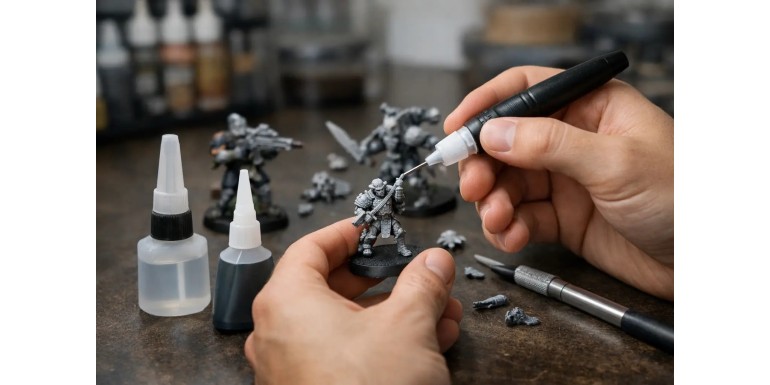
When a miniature is poorly glued, it shows long before you even pick up a paintbrush. Drooping arms, wobbly bases, frosty white residue, or resin parts snapping off at the slightest bump. That’s why choosing the best glues for miniatures isn't about grabbing "the strongest one," but about using the right adhesive for each material and assembly.
In the tabletop hobby world, this matters more than it seems. A hard plastic Space Marine doesn't glue the same way as a resin figure, an old-school metal piece, or a massive terrain feature. Similarly, a display piece doesn't demand the same durability as a skirmish warband that goes in and out of a transport case every single week. If you get the glue right, the assembly is cleaner, sturdier, and a whole lot less frustrating.
How to Choose the Best Glues for Miniatures
1. The Material
The first key factor is the material. In miniatures and terrain making, you’ll typically work with polystyrene plastic, resin, metal, PVC, and— for wargame terrain —MDF, cork, or foam. Each responds differently. The classic mistake is trying to solve everything with a single bottle, which is exactly how you end up with weak bonds or stubborn marks that are tough to fix.
2. The Type of Joint
The second factor is the type of joint. Gluing two perfectly flat halves together is a world away from attaching a tiny arm with a minimal contact point. For wide joints, a specific glue can weld or grab beautifully. For tiny joints, it’s often better to prioritize speed or reinforce the connection by pinning.
3. Work Flow and Pace
Lastly, consider your workflow. Some hobbyists want a few seconds of wiggle room to reposition parts, while others prefer a flash-freeze bond for assembly lines. Neither option is inherently better; it depends on how you build, how steady your hands are, and the type of miniature.
Plastic Cement – The Cleanest Option
If you are working with hard plastic sprues, plastic cement (or plastic glue) is usually the ultimate choice. Technically, it doesn't "glue" in the traditional sense; instead, it slightly melts the material to create a chemically welded bond. This results in incredibly strong joints and, when applied correctly, a much cleaner finish than other adhesives.
Two formats tend to work best here:
-
Thin Liquid Cement: Applied with a brush or a needle applicator, this is excellent for small parts and precise fits. It flows via capillary action, leaves minimal residue, and allows for fine detail work.
-
Thick/Thicker Cement: This gives you a bit more working time and fills small gaps better, though it can get messy if you overapply.
Limitation: Plastic cement only works on compatible plastics, typically polystyrene. It won't do anything for resin, metal, or PVC. Be careful with the amount you use, as an excess can melt away surface detail or leave unsightly marks on visible areas.
For infantry, plastic vehicles, and multi-part kits, it’s hard to argue against this being one of the top categories among the best glues for miniatures. It provides strength, precision, and a seamless bond if the parts fit well.
Cyanoacrylate (Superglue) – The Hobby All-Rounder
Cyanoacrylate, universally known as superglue, is the most versatile adhesive on any hobby desk. It works for resin, metal, many PVC parts, magnets, basing materials, and the vast majority of quick fixes. If you build across different game systems or mix miniatures with terrain, a bottle of superglue is absolutely indispensable.
Its main advantage is obvious: it bonds almost anything. Plus, it cures rapidly, which is incredibly useful when a piece has a tiny contact surface or when you don't want to sit there holding a part in place for minutes. For metal or resin miniatures—where plastic cement is useless—superglue is always the go-to choice.
However, not all superglues behave the same way:
-
Liquid Superglue: Extremely fast and seeps easily into tight joints, but it can run wild and ruin details if you lose control.
-
Gel Superglue: Offers much more control, fills gaps slightly better, and is far less risky on delicate parts. For anyone assembling character models, banners, thin arms, or terrain accessories, gel is usually much easier to manage.
The downside? The bond can be brittle against sharp impacts, especially on heavy parts. It can also leave that dreaded white frost (blooming) if you use too much, lack ventilation, or misuse superglue activators/accelerators. And if you accidentally get it on a detailed texture, it’s not very forgiving.
Two-Part Epoxy – When a Model Has Serious Weight
Some builds demand more than just speed. Large miniatures, monsters, heavy kits, terrain pieces under structural stress, or joints where the fit is far from perfect are much better suited for two-part epoxy. It’s not the most convenient adhesive for everyday tasks, but when you need it, it makes a world of difference.
Epoxy takes longer to set, and that works in your favor. It allows you to adjust the pose, correct angles, and fill minor gaps. Once fully cured, it offers an incredibly rock-solid bond. For massive resin or metal models—especially when paired with pinning—it is the definitive solution.
The trade-off is prep time and patience. You have to mix it thoroughly, apply it mindfully, and wait. It’s completely impractical for a squad of twenty infantry models, but for a massive resin dragon, a centerpiece model, or terrain that needs to travel to tournaments, it is often the smartest choice.
What Glue to Use by Material: A Quick Reference
| Material | Primary Choice | Alternative / Notes |
| Hard Plastic (Sprues) | Plastic Cement | Welds the pieces for the cleanest, most stable joint. |
| Resin | Superglue (Cyanoacrylate) | Use Two-Part Epoxy for large, heavy, or centerpiece parts. |
| Metal | Superglue (Cyanoacrylate) | Highly recommended to pin high-stress joints. |
| PVC / Board Game Plastics | Superglue (Cyanoacrylate) | Test first; some flexible plastics require washing off mold release agents. |
| Terrain (MDF, Cork, Flock) | PVA Glue / Wood Glue | Use superglue for small resin or plastic details on the terrain. |
Common Miniature Gluing Mistakes to Avoid
-
Using Too Much Product: With miniature glues, more is rarely better. It usually leads to squeeze-out, ruined details, longer drying times, and a messy finish. A tiny, well-placed amount is always better than a massive blob that ends up on your fingers and across the model.
-
Skipping Surface Prep: Resin often carries leftover mold release agent, metal sometimes needs a light wash or filing, and parts frequently have mold lines or uneven contact points. Even the best adhesive cannot compensate for a poorly prepared surface.
-
Underestimating Cure Time: Just because a piece "holds" after ten seconds doesn't mean it’s ready for rough handling. A huge percentage of breaks happen because hobbyists move or play with the miniature too soon, especially on small joints.
The Best Glues for Miniatures Based on Real Use Cases
-
If you mostly build plastic armies: Your best ally is a high-quality thin liquid plastic cement, supplemented by a gel superglue for bases, magnets, or mixed materials. This duo will cover 90% of your hobby needs without cluttering your desk.
-
If you work with a lot of resin, conversions, or boutique brands: Superglue takes center stage. It’s worth keeping a liquid variant for tight seams and a gel variant for tricky parts. If large kits come into play, adding a two-part epoxy to your arsenal is a game-changer.
-
If you build a lot of terrain: Don’t just rely on miniature glues. Terrain projects mix multiple materials and scales. The practical approach is to combine forces: PVA (white glue) for textures and basing, superglue for fine details, and epoxy for load-bearing structural joints. This approach will save you countless repairs down the road.
This is precisely why a specialized hobby store like Terrainandminis.com makes so much sense: it’s not about just selling "glue," but about bringing together hobby materials that seamlessly fit your specific project.
Final Thoughts: What's Worth Having on Your Hobby Desk?
For most hobbyists, you don't need a massive collection of adhesives. With one plastic cement, one easy-to-control superglue, and a two-part epoxy for occasional heavy-duty tasks, you have your bases covered. From there, success isn't about how many bottles you own, but knowing when to use each one.
If you are torn between two options, think less about the brand and more about the application: Is the material hard plastic, resin, or metal? Is the joint large or minuscule? Do you need time to reposition, or a flash-freeze bond? Answering those questions will help you far more than any "maximum strength" label.
In the end, gluing a miniature properly is an essential part of the final look. It might not be as eye-catching as a beautiful paint job, but you will notice it in every game you play, every time you transport your army, and every time you don't have to stop to make an emergency repair. Building it right from the start always pays off.