Español

Best Sci-Fi Miniatures: Ultimate Guide for Your Tabletop
- 10/31/2026 08:52:36
- Home , Tabletop Miniatures
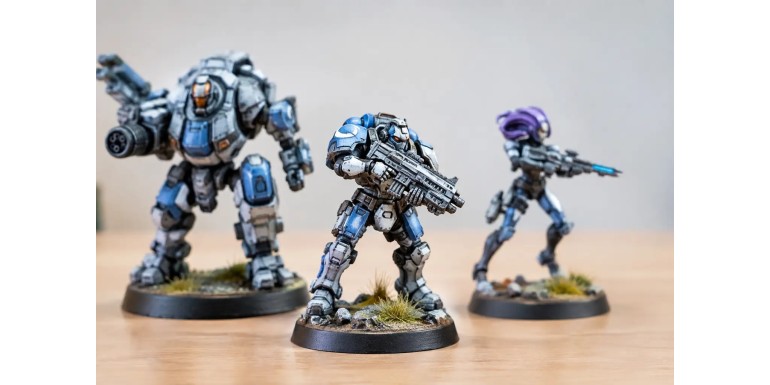
A squad can feature a breathtaking sculpt and still fail to click in your project. The best sci-fi miniatures aren’t necessarily the biggest, the most detailed, or the ones with the highest part counts—they are the ones that match your tabletop scale, your faction’s tone, and the actual time you want to invest in building and painting them. Whether you play games, collect, or build dioramas, that distinction matters far more than any generic ranking.
The sci-fi genre embraces a wide range of aesthetics. From infantry troops with industrial gear to alien explorers, combat robots, antigravity vehicles, and remote colony civilians, making the right choice ensures every figure adds value to the board and prevents a visually scattered collection. Excellent individual miniatures often look unconvincing when they share the same stage without cohesion.
What Defines the Best Sci-Fi Miniatures?
The first criterion is function. A miniature leading a skirmish warband needs a readable silhouette and strong close-up personality. Conversely, a wargame platoon must allow players to easily identify weapons, specialists, and commanders without awkward movement on the board. In a diorama, however, you can afford a more narrative, dramatic pose—even if it is fragile or features delicate details.
Scale is the second filter. The 28mm and 32mm ranges offer endless options, but they do not all share the same proportions. Some product lines feature oversized heads, hands, and weapons to improve tabletop readability; others aim for realistic anatomy. Mixing them can work if they belong to distinct factions or if the lore justifies the contrast, but a human unit built from incompatible heights will quickly break visual coherence.
You should also check the base before purchasing. A base is never just a neutral accessory: it defines the miniature’s footprint, affects lines of sight, and contributes heavily to the atmosphere. A heavy-armored figure on a 32mm industrial base feels entirely different from the same model on a 25mm desert base. If you are expanding an existing army or warband, sticking to consistent base diameters and styles is a practical decision.
Finally, consider the material. Plastic is usually the most convenient option for building armies, kitbashing, and making repairs. Resin delivers ultra-fine details, though it requires washing components, checking for warps, and handling with care. Metal adds weight and durability to thin elements, but may require flash removal, pinning, or reinforced joints. There is no universally superior material—it all depends on whether you prioritize production speed, detail level, conversion potential, or gaming durability.
Choose Miniatures Based on Your Tabletop Environment
A great selection starts with imagining where your models live and fight. Sci-fi shines brightest when miniatures and scenery look like they belong to the same world.
Military and Industrial Sci-Fi
For futuristic war zones, troops with recognizable gear, modular armor, energy weapons, or consistent rifle designs work exceptionally well. Look for units that include clear specialists—medics, communications operators, heavy weapon specialists, scouts, or commanders—because they add variety without forcing you to rely on overly complex paint schemes to tell them apart.
This miniature style thrives on vertical terrain: containers, catwalks, factories, bulkheads, barricades, and technological ruins. If your board features tall elements, avoid overly open poses or excessively long rifles that stick out too far. They might look stunning in a display cabinet, but they will constantly snag when moved between buildings and railings.
Vehicles serve as fantastic focal points, provided their utility is practical. A compact transport or support drone pulls double duty in gameplay and as scenic scatter terrain. A massive tank might be the centerpiece of an army, but it requires a table with wide streets and proportionate cover. Consider your usual terrain density before buying.
Colonies, Exploration, and Deep Space Frontiers
Miners, colonists, technicians, mercenaries, and explorers are among the most versatile miniatures in the genre. They double as campaign protagonists, rescue objectives, spaceship crews, or frontier civilians. Furthermore, they paint up quickly because they combine work clothes, tools, and light weapons with surfaces that respond brilliantly to washes, weathering, and dust.
Visual scale matters just as much as rules here. Everyday civilian clothing standing next to armored soldiers makes the latter look much more intimidating. Adding pack animals, utility robots, or small drones helps sell the idea that an economy and daily life exist beyond the conflict.
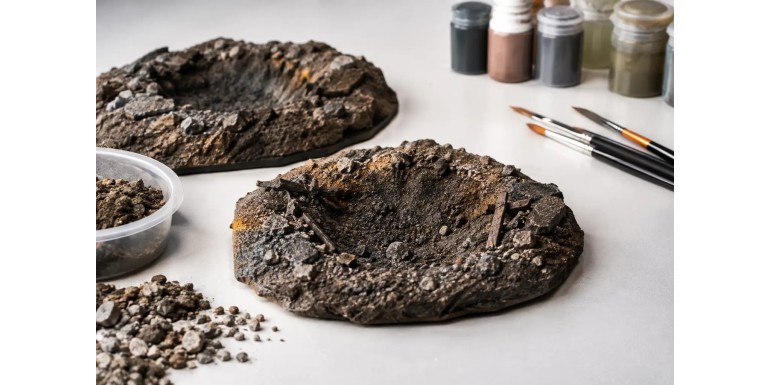
To keep the scene from looking too sterile, integrate textures like sand, reddish earth, fine gravel, or snow depending on the chosen planet. Pigments and environmental effects should be applied consistently across figures, vehicles, and bases alike. A touch of dust on the boots, vehicle undercarriages, and barricade edges ties the whole scene together without obscuring your paint job.
Aliens, Biotechnology, and Strange Worlds
Alien factions let you step away from the classic military color palette. Organic exoskeletons, translucent skin, tentacles, chitinous shells, and living weapons create striking contrasts, but they require a clear plan to avoid becoming an unstructured color clash.
An effective solution is choosing a dominant color for the skin or armor, a secondary color for plates, fabrics, or weapons, and an accent color for eyes, energy glow, or fluids. Acid green, turquoise, or magenta can look incredible in small doses, but splashing them across the entire miniature flattens its silhouette contrast. If the sculpt features heavy detailing, washes and thin layering usually outperform thick opaque coats.
Your scenery should participate, too. Alien flora, contaminated pools, crystals, membrane structures, or wet surfaces create a convincing atmosphere—just stick to one or two hero effects. Too many flashy elements will compete with the miniatures and clutter table readability during a match.
Assembly: Where Options Are Won or Lost
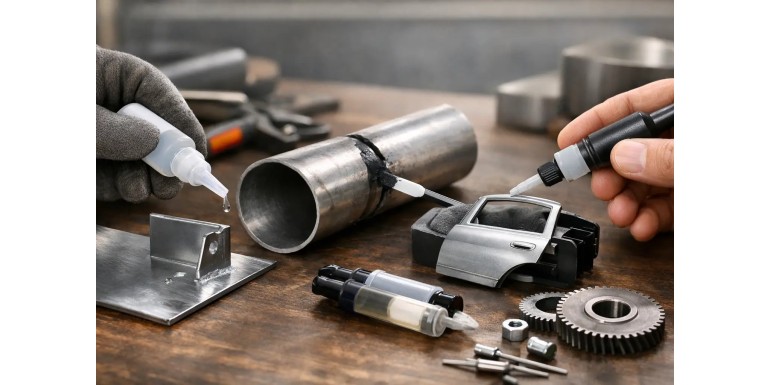
Never rush to glue a sci-fi miniature straight out of the box. Always dry-fit the components first, especially weapon arms, backpacks, cloaks, and heads. A slight angle adjustment on a rifle can make a unit look like it is actively firing, advancing, or holding a corner.
For multi-part kits, save your spare bits. Extra heads, weapons, sensors, and pouches are invaluable for easy conversions and breaking up repetitive profiles. Swapping a head, adding a comms backpack, or altering a weapon angle is enough to turn a standard trooper into a distinct specialist. It’s an efficient way to customize a collection from scratch.
Also, check your connection points before priming. Heavy resin or metal pieces often require pinning to withstand regular handling. For delicate elements like antennae or power swords, reinforcing the joint is worth the effort if your miniatures travel frequently. A discreet repair during assembly prevents a broken model after the first game.
Paint Jobs: Tabletop Readable and Display-Worthy
The best paint style for sci-fi miniatures depends on the viewing distance. On the tabletop, the priority is instantly reading faction, function, and orientation. That is why infantry units benefit from consistent armor, weapon, and base colors, paired with distinct squad markings on shoulder pads, helmets, or visors. From three feet away, that visual cue beats ten invisible micro-details.
On characters and monsters, you can push the contrast further. Sharper highlights, localized weathering, glowing lenses, and energy effects draw the eye where it counts. The classic trap is spending the exact same effort on twenty rank-and-file troopers as you do on a commander. Reserving your most time-consuming techniques for key centerpiece models keeps your project moving while reinforcing army hierarchy.
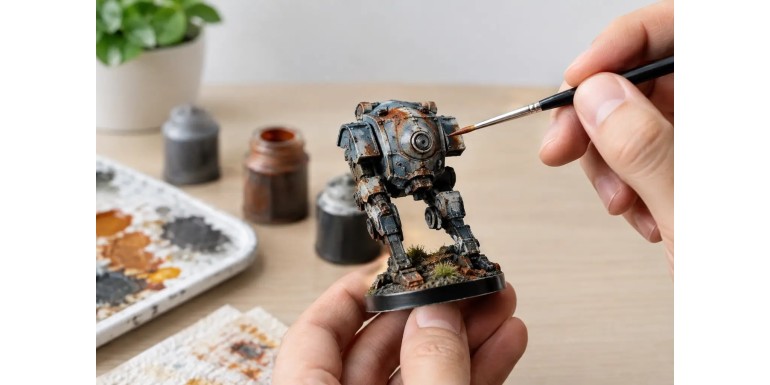
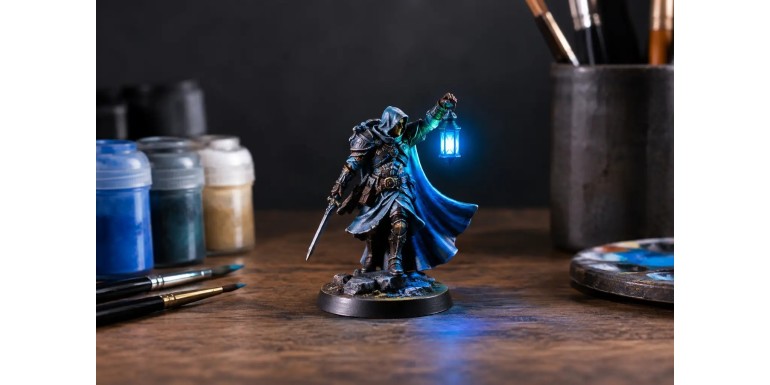
Environmental lighting effects work best in moderation. A plasma glow should credibly illuminate nearby surfaces, not bathe half the model in blue or green. Similarly, chipping and wear should appear where friction naturally occurs: armor edges, vehicle steps, weapon corners, and maintenance hatches. Random chipping looks like texture; purposeful chipping tells a story.
Buy for a Project, Not on Impulse
Before picking out your sci-fi miniatures, define a core focus: a warband of ten to fifteen figures, a monthly painting squad, or a diorama cast. Afterward, add support pieces that serve a concrete role. A leader, a specialist, a light vehicle, or a civilian element usually unlocks more gameplay and modeling potential than buying another box of generic infantry.
It is also wise to check real-world compatibilities: base sizes, figure proportions, weapon styles, vehicle heights, and available tabletop space.
The right miniature is the one that makes you excited to build the next one—and place it on a table that does it justice. Start with a clear faction or scene concept, let your scenery reinforce that vision, and give every new figure a recognizable role inside that universe.