Español

Realistic crop terrain for model making
- 05/09/2026 08:56:43
- Home , Tabletop Terrain
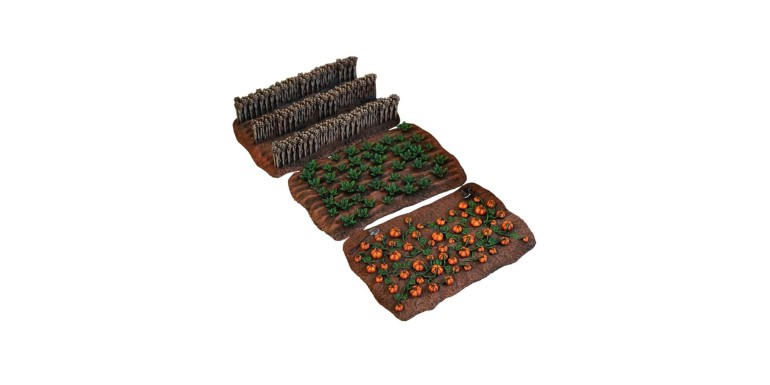
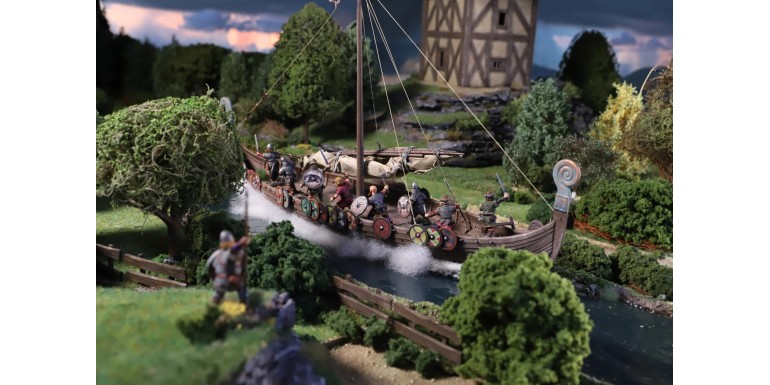
You can have a beautifully painted house, a convincing fence, and meticulously finished bases, but if the soil looks like a carpet and the wheat looks like a trimmed brush, the entire scene loses its impact. Model crop terrrain works precisely in those details that turn a "decent" table into an environment that feels lived-in.
When working with miniature agricultural terrain, the goal isn't just to "add greenery." You have to consider pattern, scale, color, density, and functionality. A field intended for a static diorama shouldn't be handled the same way as one designed for a gaming table where units, templates, and modular scenery will be constantly moving.
What Makes Model Crops Look Credible?
A real field is never a uniform mass. It has furrows, slight tonal variations, trampled areas, drier edges, and transitions into paths, ditches, or fences. In modeling, this controlled irregularity is what differentiates a mere decorative element from a piece that truly fits the board.
Context matters just as much. A cereal field next to a historical farmhouse requires a different texture and height than a plantation used in fantasy skirmishes or a post-apocalyptic wasteland. A common mistake is building "generic crops" without considering the era, climate, or narrative of the terrain. If your table has a defined visual language, the crops must speak it too.
Scale rules more than you think. At 28mm, an oversized stalk is immediately noticeable. In smaller scales, the problem is usually the opposite: adding fibers and tufts with too much volume, making the field look like a jungle. Adjusting the texture to the actual size of the miniature saves a lot of corrective work later.
Materials That Work Based on Crop Type
Not all materials are universal; it pays to be practical here. For plowed fields or fallow land, a good mix of fine earth texture, pigments, and subtle gravel variations usually yields better results than trying to solve it with paint alone. The base needs relief, however subtle.
For tall grain, natural fibers, certain vegetable bristles, and long static grass tufts work well if placed in patches rather than as a continuous blanket. If the material is too thick, save it for 54mm or stylized scenery. At 20mm or 15mm, it can ruin the proportions.
Corn, sunflowers, or crops with defined stalks usually require repetitive pieces—whether commercial, 3D printed, or handcrafted. There is a clear balance here between realism and time. Making every plant from scratch gives you control, but for a full gaming table, it’s rarely worth the effort. For a centerpiece diorama, however, it’s a different story.
Low-lying crops, such as vegetable gardens, vineyards, or young plantations, benefit greatly from alignment. In these cases: less volume, more structure. Straight rows, consistent spacing, and a well-painted base do more for the final result than piling on extra foliage.
How to Build a Field Without It Looking Like a Green Block
The first step is defining the shape of the terrain. A field rarely ends in a perfect line unless you are going for a very clean or modular style. A slightly broken edge with "wild" grass or exposed soil helps integrate the piece with the rest of the board.
Next comes the base. It’s best to work on a rigid surface if the piece is for gaming, as tall crops suffer during transport. A layer of texture paste or fine sand fixed with adhesive allows you to create slight undulations. Don't overdo it—a subtle variation in level is often more credible than dramatic relief.
The base paint should follow the logic of the ground, not the color of the crop. Beneath a wheat field, there is still soil. Beneath a garden, there is moisture, shadows, and footprints. If the base is well-executed, any vegetation gains depth. If it’s poor, even the best foliage won't save it.
When placing the crop, work in patches or lines depending on the type. For cereal, alternating densities creates a more natural look. For vineyards or plantations, orderly repetition is key to the visual effect. Applying the same material with the same density from end to end rarely works.
Common Scales and Necessary Adjustments
-
28mm - 32mm: This is where most wargaming and skirmish hobbies live. Crops must look good at standard gaming distance and withstand handling. This means simplifying certain details and reinforcing the structure. A spectacular but fragile field won't last long on the table.
-
15mm - 20mm: Visual "readability" carries more weight than individual detail. It’s better to suggest a crop through texture and color than to try and reproduce every plant. Painted furrows, very fine fibers, and tonal shifts work better than oversized elements.
-
54mm and Large Scale Dioramas: Here you can afford to work on specific plants, visible leaves, and localized damage. But even then, exercise restraint. Too much hand-repeated detail can make everything look "too perfect"—and a real field rarely is.
Color, Season, and Wear
A frequent pitfall in model scenery is using a single dominant color. A real field is a mix of ochres, muted greens, dry yellows, damp browns, and areas bleached by the sun or foot traffic. Even if the primary crop is recognizable, it needs variation to keep it from looking flat.
The season also changes the approach. A field ready for harvest isn't painted the same as a young spring field. An abandoned one needs weeds, bare patches, and height variations. One trampled by battle might include broken furrows, churned mud, and flattened areas. This is where scenery stops being a background and starts telling a story.
Modularity vs. Fixed Pieces: It Depends on the Use
For regular gaming, modular fields are usually the smartest choice. They allow you to move miniatures, reorganize the table, and store the scenery without punishing the vertical elements. Creating several small segments instead of one large piece makes them easier to transport and combine.
The trade-off is that modularity requires more thought regarding edges and visual fit. If every module looks like an island, the field loses continuity. Paths, boundaries, low hedges, or texture transitions help hide the seams between modules.
In a diorama, a fixed piece allows for better integration of slopes, secondary vegetation, and environmental storytelling. You don't need to leave space for bases or worry about durability, allowing you to prioritize a finer, more delicate finish.
Errors to Avoid
-
Oversizing the material: Keep an eye on scale.
-
Over-saturated colors: Real nature is usually more muted.
-
Ignoring the base: The ground beneath the plants matters.
-
Tiling: Avoid making every field look exactly the same.
Also, avoid visible glue. When fibers become clumped or shiny, the artificial effect is ruined. It’s better to work in thin layers, let them dry, and reinforce later.
Finally, consider miniature interaction. If the crops are for gaming, test them with actual bases first. A beautiful field that prevents a unit from standing upright or topples miniatures will rarely be used. In a specialized shop like Terrainandminis.com, this type of practical criteria is more important than a pretty photo.
Choosing the Right Level of Detail
Not every project requires the same effort. If you are setting up a themed table for weekly play, you need reliable, repeatable, and easy-to-repair materials. If you are preparing a display piece, you can invest more time in nuances and individual plants.
The right decision is almost never "maximum possible realism," but rather the best balance between aesthetics, durability, and time. In this hobby, that shows. A well-thought-out field, even if simple, adds more to the table than an ambitious piece that is poorly executed or impossible to maintain.
Well-made crops provide visual order and context. They make an ambush, a patrol, or a rural scene make sense without overcrowding the rest of the terrain. If the scene works, the player will feel it—even if they don't stop to analyze why.