Español

Textures for miniature bases: how to choose
- 05/15/2026 08:24:41
- Home , Assembly and Painting Guides
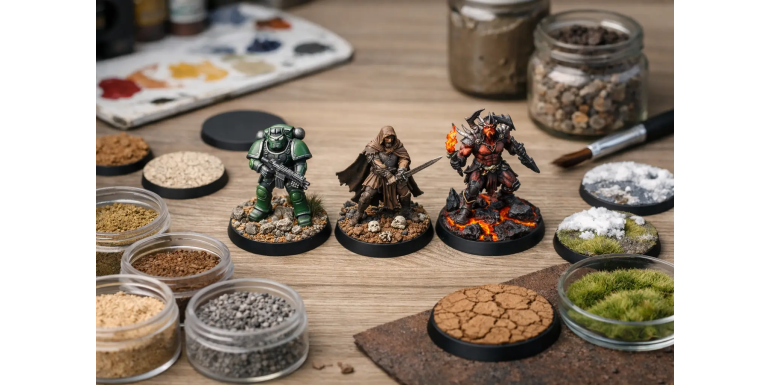
The base can either elevate a perfectly painted miniature or leave it looking incomplete. You don’t need to build a 25mm diorama every time, but choosing the right miniature basing textures is essential to provide context, contrast, and visual clarity on the tabletop. This is often where projects either gain or lose their credibility.
The True Value of Basing Textures
A good texture does more than just fill empty space. It defines the environment, reinforces the miniature's lore, and helps integrate the color palette. An infantry squad on a dark mud base feels entirely different from the same figure on light sand or urban rubble. The base shifts the visual temperature of the piece and conveys a sense of weight, weathering, and movement.
From a gameplay perspective, texture also serves a practical purpose. Well-applied textures protect areas of the base prone to wear, hide messy joins, and eliminate the "bare plastic" look that screams a rushed project. The key is moderation. On small bases, too many elements will compete with the miniature. For 28mm or 32mm scales, the best approach is usually one primary texture, a secondary detail, and a cohesive finish.
Choosing Texture Based on Miniature Type
Not every base requires the same treatment. A skirmish warband allows for more individual personality per model, whereas a large army needs consistency and a repeatable method.
-
Horde Armies: If you are basing a hundred soldiers, use materials that are easy to apply, dry quickly, and can be batch-painted.
-
Characters & Display Pieces: For "centerpiece" models, you can invest more time in layering, verticality, and environmental effects.
Setting and Genre also dictate the visual language:
-
Fantasy: Cracked earth, roots, dry leaves, and jagged rocks work perfectly.
-
Sci-Fi: Industrial plating, scrap metal, toxic dust, ash, or weathered technical floors are the go-to choices.
-
Historical: Less is more. Texture must look like realistic terrain rather than decoration; scale is critical here.
Pro Tip: Scale matters more than you think. A grain of sand that is too coarse can look like a massive boulder next to a 28mm miniature. Always check the proportions before gluing.
Top-Performing Texture Types
-
Texture Pastes: These are among the most versatile options. They cover quickly, adhere well, and allow you to create earth, mud, snow, or parched ground with minimal effort. Their strength is speed, though they can sometimes level out or lose volume as they dry.
-
Sand and Aggregates: A timeless classic. By mixing different granulometries (grain sizes), you can achieve natural-looking terrain. A fine sand base mixed with a few small stones is much more convincing than a single uniform grain size. Note: Always seal them well with a specialized adhesive or a scenic cement to avoid losing your base texture in your transport foam.
-
Cork and Bark: Excellent for adding height and breaking up flat surfaces. These are perfect for heroes or monsters that need a "tactical rock" for a more dominant pose.
-
Specific Effects: Static grass, tufts, wet mud, puddles, and snow are the final touches that add character. Remember: a few strategic tufts usually look better than a base completely overgrown with grass.
How to Combine Materials Without Overcrowding
The safest way to build a base is to think in layers:
1. General Topography: The basic shape of the ground.
2. Primary Texture: The main "ground" material.
3. Accent Details: One or two elements (like a skull, a tuft, or a piece of debris) to break the repetition.
Color is the final bridge. You can mix different materials, but if they aren't painted with a unified palette, the base will look disjointed. Using washes, drybrushing, and pigments helps integrate sand, stones, and vegetation into a singular, believable scene.
Common Basing Mistakes to Avoid
1. Neglecting the Rim: You can create a masterpiece on the surface, but a messy, paint-streaked rim will ruin the effect. A clean, matte black or uniform brown rim makes the whole project look professional.
2. Unstable Footing: If the miniature looks like it’s "floating" on top of the texture or is glued at an awkward angle, it loses realism. Always dry-fit the model before the texture fully sets.
3. Zero Contrast: A dark miniature on a dark base creates a "blob" effect. Ensure there is enough value difference between the feet of the model and the ground so the silhouette remains readable.
4. The "Clone" Effect: In large units, you need cohesion, but avoid making every base identical. Varying the placement of a rock or the direction of a crack prevents the "assembly line" look.
A Systematic Approach for Consistent Results
For a reliable "recipe," work in stages. Decide on the environment, select a primary repeatable texture, and choose a secondary detail. Save the "extra" flair for leaders.
This method saves time and ensures a strong visual identity. It also makes shopping easier—at a specialized store like Terrainandminis.com, you’ll know exactly when to buy a bulk tub of texture paste versus a small pot of specialized "cracked earth" effect.
Choosing a Finish Based on Your Goals
-
Gaming Grade: Prioritize durability and legibility. Use medium textures and well-secured details that won't snap off during a match.
-
Display Grade: Push the boundaries with high-contrast volumes and atmospheric effects like resin water or deep snow.
Choosing between sand, paste, rock, or vegetation isn't about a universal formula; it’s about looking at your miniature, your game system, and the time you have. When the texture fits, the base stops being a chore and becomes the finishing touch that truly gets noticed.