Español

What paint to use on resin without ruining it
- 06/16/2026 09:22:17
- Home , Assembly and Painting Guides
A resin miniature can look spectacular or become a constant battle against chipping paint. When someone asks what paint to use on resin, they are usually asking something else: what combination of preparation, priming, and paint will stick properly without clogging details or causing long-term issues?
The short answer is simple: for miniatures, scenery, and resin modeling pieces, the safest bet is to prepare the piece properly, apply a suitable primer, and then use acrylic paint. It is the most stable option, the easiest to control, and the best match for the high level of detail found in resin pieces. However, there are nuances—and in this hobby, nuances matter.
What Paint to Use on Resin Miniatures and Scenery
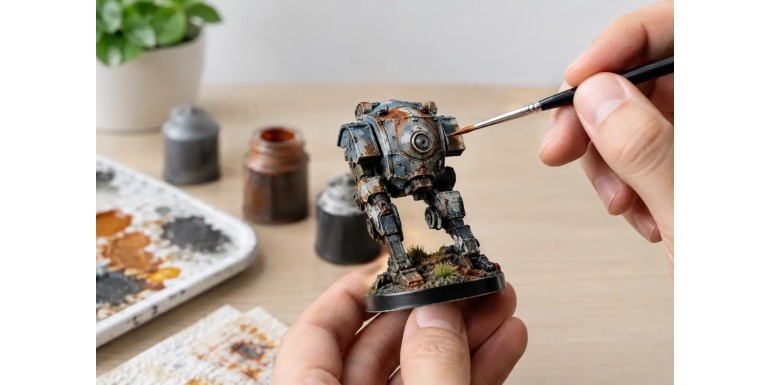
If you are painting figures, bits, busts, vehicles, or terrain features, water-based acrylic paint remains the gold standard. It adheres beautifully over a correct primer, dries fast, allows for thin layers, and does not obscure fine details. For a wargamer or modeler, that outweighs almost any other advantage.
Resin does not absorb paint the way other materials do. The layer sits entirely on the surface, meaning adhesion depends heavily on how the piece is prepared. That is why you shouldn't just think about the final coat of paint. If the resin still carries mold release agent or if the primer hasn't bonded correctly, it won't matter if you use a premium paint range: the paint will peel off on edges, high-friction areas, or heavily handled parts.
For gaming pieces that are touched frequently, the most reliable routine is cleaning, thin priming, and acrylics. This process also works beautifully for display pieces, though there you can afford longer processes and more delicate blends.
The Most Common Mistake Isn't the Paint
Many hobbyists blame the paint when the real culprit is preparation. Resin often comes with leftover mold release agent from the manufacturing process. This creates slick spots where primer or paint can pool, bead up, or easily peel off.
Pro Tip: Before painting, wash the piece in lukewarm water with mild dish soap, scrubbing gently with an old, soft toothbrush. Then, let it dry completely.
If you have also sanded away mold lines, filled bubbles, or glued parts together, even better: you will be working on a fully prepped surface that is ready for primer.
On resin scenery—especially large pieces—this step makes an even bigger difference. A building facade, a ruin, or a terrain block might look clean to the naked eye, but if grease remains in the recesses, paint failures will pop up exactly where they are hardest to touch up.
The Primer Matters More Than You Think
If you want to get it right when choosing what paint to use on resin, we need to talk about primer. Because even the best paint over a bad primer still sits on a poor foundation.
Primer creates the micro-textured surface that the paint actually clings to. For resin, an acrylic miniature primer works exceptionally well, whether applied via aerosol spray or airbrush. Brush-on primers are also useful for quick touch-ups or specific small parts, but on larger surfaces, they tend to leave a less even coat unless applied with extreme care.
-
Rattle Cans (Spray Paint): Practical and fast, though heavily dependent on ambient humidity and temperature.
-
Airbrush: Offers maximum control and works beautifully on highly detailed resin.
-
Brush-on: Useful in a pinch, but thick layers must be avoided.
Resin rewards subtlety: if you over-apply product, you will soften sharp edges and fill in textures.
When it comes to colors, black, grey, and white serve different purposes. Black helps with dark schemes and metallic parts. Grey is the most versatile all-rounder for most miniatures and scenery. White or bone makes vivid colors, pale skin tones, or bright schemes pop. There isn't one "best" color for everything, but there is a right tool for each specific project.
Acrylic, Enamel, or Oil: Which One Is Worth It?
While acrylic paint is the primary choice, it isn't the only option. Even so, for most wargaming and modeling enthusiasts, it helps to distinguish between what works and what is actually practical.
| Paint Type | Best Used For | Pros | Cons |
| Acrylics | Base coating, layering, glazing, drybrushing | Fast drying, low odor, easy cleanup, maximum control | Requires multiple coats for full opacity |
| Enamels | Weathering, washes, filters, expert finishes | Highly durable, smooth blending | Requires mineral spirits, strong fumes, long drying times |
| Oils | Smooth transitions, realistic weathering, shading | Unmatched blending, perfect for busts/vehicles | Adds extra steps, requires varnishing, very slow drying |
For everyday gaming pieces where you want to make progress without losing control, acrylics are the logical choice. Enamels and oils yield incredible results in expert hands, but as a primary base coat, they are rarely the first recommendation for resin miniatures. They work best as a complement rather than a complete system.
What About Colored Spray Paints?
Colored sprays can work on resin, but only if the surface is properly prepared and the product is specifically formulated for scale modeling. Some hardware-store sprays offer high coverage and seem convenient, but they are often too thick, eating up fine detail or leaving an unwanted texture.
On resin miniatures with fine features, cloth folds, rivets, or engravings, a heavy-handed spray coat is instantly noticeable. You can get away with a bit more on terrain, but don't push your luck. A thin, controlled coat always leaves more room for error than trying to cover everything in a single pass.
If you are using a colored hobby spray as your main base coat, treat it like a colored primer: light passes, correct distance, and a quick test spray beforehand.
Brushing Paint on Resin: Thin and Steady Wins the Race
Resin is prized for its crisp details. Because of this, thick paints applied straight from the bottle are a recipe for disaster. You don't need to turn your paint into water, but it must be fluid enough to flow smoothly without creating artificial texture.
This is especially noticeable on faces, armor plates, iconography, and fine terrain textures. Two thin coats will almost always look better than one thick one. They also improve mechanical adhesion because the paint dries more evenly with less pooling around the edges.
If you work with Contrast paints, Speedpaints, or high-capillary paints, they can also perform beautifully on resin, provided your primer coat is smooth and solid. They speed up army painting drastically, though they can be less predictable on large, flat surfaces of display pieces.
To Varnish or Not to Varnish?
If your resin piece is going to be played with, handled, or transported, varnishing is no longer optional—it is highly recommended. Resin isn't inherently problematic once painted, but sharp edges, weapons, wings, banners, and protruding details will always bear the brunt of friction.
A matte or satin varnish protects the paint and unifies the final finish. Gloss varnish makes sense for specific areas—like drool, glass, fluids, or wet surfaces—but on an entire miniature, it is usually avoided unless aiming for a specific effect.
Again, it depends on the project. A display bust that is only touched when placed in a glass cabinet needs far less protection than a gaming unit that goes in and out of a transport case every weekend.
Exceptions to the Rule
Not all resin is created equal, and not all pieces should be painted using the exact same logic.
-
3D Printed Resin: A 3D-printed resin miniature might require an extra pass to clean up support marks and layer lines before priming. If you don't fix the surface texture first, the best paint in the world won't hide structural defects.
-
Large Scenery Pieces: For massive terrain, it pays to combine techniques. Prime and airbrush (or spray) your base colors, then switch to a traditional brush for acrylic details, chipping, grime, and highlights. This saves hours of time without sacrificing the finish.
-
Clear Resin: Here, the rules change completely. You rarely want to cover clear resin with opaque paint. Instead, inks, glazes, or translucent effects work best to simulate energy weapons, crystals, water, or magical elements.
The Safest Formula for Success
If you want a practical, foolproof roadmap, this is the safest route:
1. Wash the piece to remove oils.
2. Clean up mold lines and defects.
3. Apply a thin primer designed for miniatures.
4. Paint with thinned acrylics in controlled layers.
5. Protect your hard work with a varnish if the piece will be handled.
It is not the only way to do it, but it is the one that causes the fewest headaches in the hobby. Furthermore, it perfectly aligns with the materials most miniature painters and terrain builders already have on their desks. In a specialized hobby shop like Terrainandminis.com, this kind of compatibility is exactly what you look for: products designed to work seamlessly together within the same hobby workflow.
Ultimately, knowing what paint to use on resin isn't just about picking a bottle off the shelf. It’s about respecting the material, preserving the detail, and setting up a process that withstands actual use. Do it right, and resin stops being intimidating and becomes one of the most rewarding surfaces you will ever paint.