Español

Miniature bases: How to Choose the Right One
- 06/04/2026 08:44:48
- Home , Assembly and Painting Guides
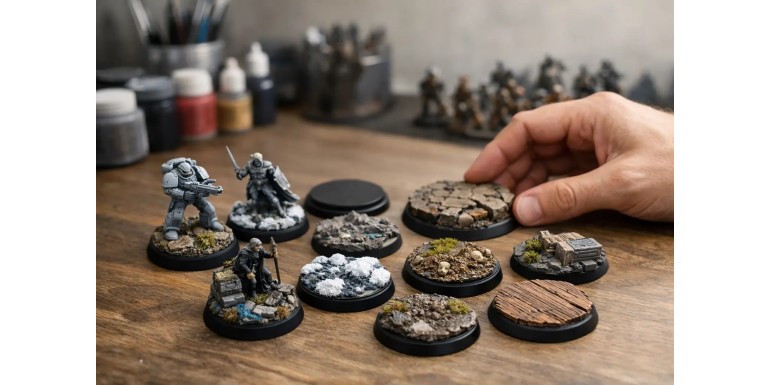
A beautifully painted miniature can lose its impact in seconds if the base doesn't match the quality. On the tabletop, it affects stability, unit cohesion, and how well the model blends with the terrain. In a display cabinet, it’s even more noticeable. That is why miniature bases are not just a minor detail—they determine the final look, durability during gameplay, and the overall coherence of your hobby project.
Choosing a base is about more than just keeping your figure standing. It defines the silhouette, provides a canvas for weathering, and establishes the sense of scale. Infantry on a completely bare base can look unfinished, while a base with too much clutter can look messy and hinder movement in formation. When choosing, you need to think like both a player and a modeler.
What Purpose Do Miniature Bases Serve?
1. The Practical Function
First and foremost, a base is functional. It provides support, protects the miniature's contact points, and makes it easier to move the model during a game without touching the paint job. This reduces wear and tear on delicate areas like weapons, capes, or banners. Additionally, if you magnetize your bases, you will significantly improve transport and storage.
2. The Visual Function
The base frames the miniature. Just like a high-quality frame enhances a painting, a well-executed base gives a figure presence. The color of the terrain, texture, and height all influence how the model is perceived. You don’t need to turn every single base into a complex diorama, but you should provide a visually coherent foundation.
3. The Functional Purpose
Your choice depends entirely on use:
-
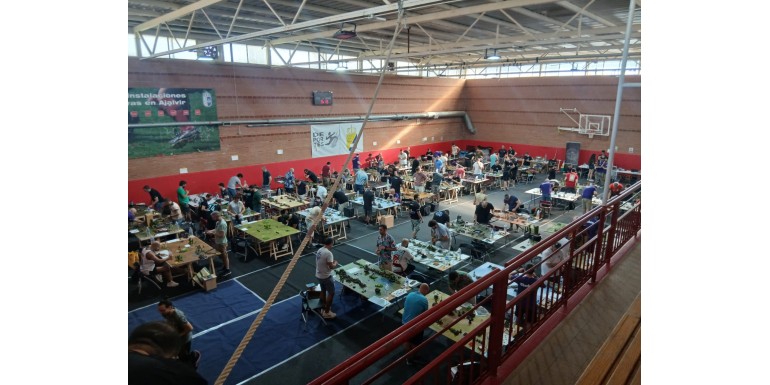
For gaming: Compatibility with rulebooks, precise measurements, and ease of moving units are what matter most.
-
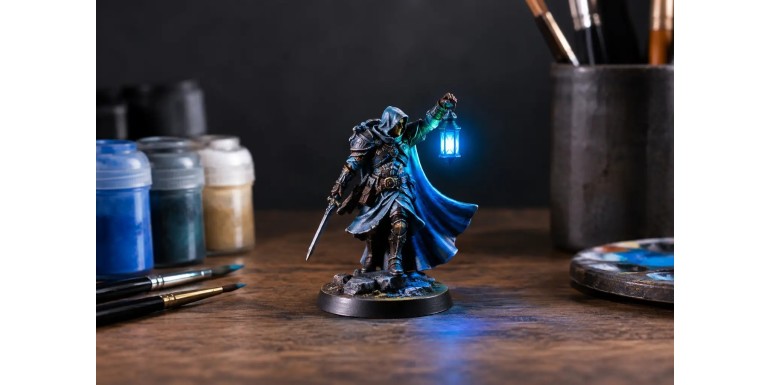
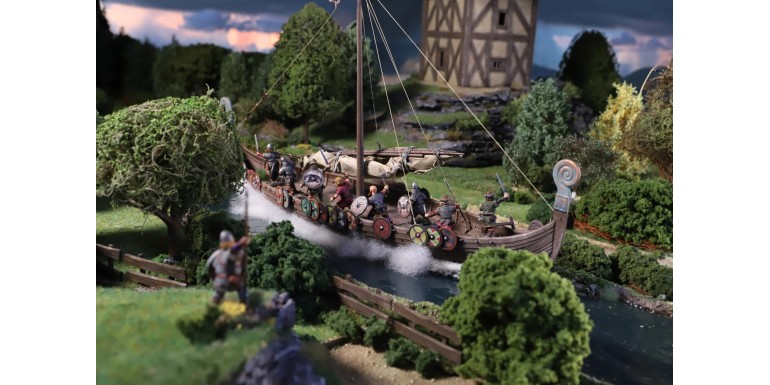
For display: You can afford more verticality, intricate scenic details, and compositions that aren’t meant for heavy handling.
Neither option is better than the other; it just depends on what you are building the miniature for.
Size and Shape: The Vital First Step
If the miniature is meant for the tabletop, the wisest choice is to respect the base size required by the rulebook or the system's current standard. Changing the diameter or shape can alter lines of sight, enemy base contact, board space, and unit cohesion. In wargaming, this isn’t just an aesthetic tweak—it’s a gameplay mechanic.
If the miniature is purely for painting, collecting, or display, you have more freedom. A slightly larger base can give the composition breathing room, allowing you to create a simple scene with rocks, ruins, or foliage. However, don't overdo it. When the base steals the spotlight from the figure, the overall project loses focus.
-
Round bases: Work excellently for skirmish games, characters, and cinematic systems.
-
Square/Rectangular bases: Make the most sense for rank-and-file systems or armies that move in blocks.
-
Oval bases: Are the standard choice for large creatures, mounts, or miniatures with wide, dynamic poses.
Materials for Miniature Bases and When to Use Them
-
Standard Plastic Bases: Still the most practical choice for most hobbyists. They are lightweight, durable, and easy to modify. They easily accept textures, putties, sand, cork, and bits. For high-frequency gaming projects, plastic remains the most balanced option.
-
Resin Bases: Offer incredible out-of-the-box detail. They are perfect if you want a quick scenic finish or a highly specific theme, such as sci-fi ruins, industrial metal, or gothic flooring. The downside is that you have less freedom to customize the terrain, and you must carefully test-fit the miniature. Some poses might require cutting, pinning, or gap-filling.
-
MDF or Wooden Bases: Highly useful in certain historical or rank-and-file systems, especially for movement trays or budget-friendly basing. While they aren't usually the first choice for a single display miniature, they are great for large army projects where uniformity and cost-efficiency are key.
-
Clear/Acrylic Bases: Designed for players who don't want to obscure the gaming mat or prefer a neutral aesthetic. They have their place, particularly in specific board games or for flying miniatures. However, they require pristine cleanliness, as they easily show dust, scratches, or glue residue.
Deciding on Your Basing Style
This is where many projects either shine or miss the mark. The base should support the narrative of the miniature. If you paint desert troops, a snow base might look striking due to the contrast, but it will break the army's coherence unless the entire concept revolves around that theme. Generally, the environment should reinforce the faction, the campaign, or your gaming table.
An urban street, a muddy trench, a frozen tundra, or a dense jungle completely changes how a model is read. You don’t need to overcomplicate it. Often, a well-chosen texture paste, the right earth tone, and one or two details—like a couple of tufts or small rocks—are more than enough. The most common mistake is trying to fit too much into a tiny space.
For an army, consistency matters more than individual virtuosity. A unit with twenty simple but cohesive bases will always look better on the tabletop than one with twenty different ideas competing for attention. Save the high-level scenic work for characters, heroes, or monsters.
Textures, Volume, and Rim Finishes
Texture is the most cost-effective way to upgrade a base. Texture pastes, fine sand, gravel, cork, or hobby putty allow you to build realistic terrain without spending hours on it. Scale is crucial here. A rock texture that looks great at 54mm might look like a massive boulder at 28mm. When it comes to miniature bases, grain size changes everything.
Volume must also be carefully managed. A slight slope or uneven ground adds visual interest and breaks flatness, but too much height can cause stability issues or make a miniature look like it’s standing on a pedestal. For gaming models, less is usually more. For display pieces, you can push the limits—provided the composition still makes sense.
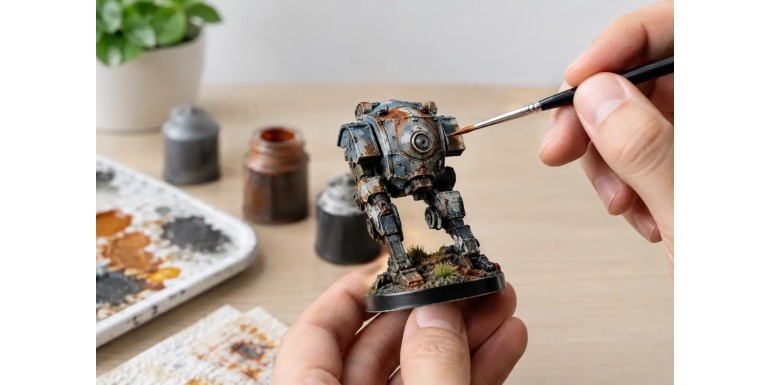
Hobby Tip: The finish of the base rim deserves more attention than it usually gets. A clean, uniform coat of black, dark brown, or a neutral tone makes the entire project look finished. A messy or streaky rim gives an unfinished impression, even if the top of the base is a masterpiece.
Common Mistakes to Avoid When Basing
-
Leaving the base as an afterthought: If you rush it at the very end, it shows. You often end up with unrealistic texture mixes, colors that don’t match the model, or poorly glued materials. Planning the base from the start saves time and fixes later.
-
Overcrowding the space: On a small base, every element counts. If you cram in rocks, skulls, tufts, mud, pigments, and ruined pillars, the eye won't know where to focus. A base works best when it communicates one clear idea.
-
Physical inconsistencies: Grass growing on clean industrial metal, snow resting on surfaces that wouldn't realistically hold it, or glossy mud in a bone-dry desert can ruin the immersion. You don't need a degree in geology, but you should maintain basic environmental logic.
-
Weak structural bonds: If the model isn't securely attached, the best-looking base in the world won't matter. For heavy models or miniatures with tiny contact points, pinning the model with hobby wire is highly recommended.
How to Choose the Right Basing Materials
The smartest approach is to buy for specific projects rather than on impulse. If you want to build a ruined city army, look for materials that work together: mineral textures, fine rubble, some industrial debris, and sparse urban tufts. If you prefer a winter force, prioritize snow products, cold mud effects, dark rocks, and muted tones.
Shopping at a specialized hobby store prevents you from mixing generic craft supplies with products properly scaled for miniatures and scenery. In a dedicated hobby catalog like Terrainandminis.com, it is much easier to find materials that are compatible with each other and with standard gaming scales. This reduces trial-and-error and guarantees better results from day one.
You don’t need twenty different products to start. With a good selection of texture pastes, a few tufts, some cork for volume, and a solid paint scheme, you can create high-quality bases for any system. From there, you can expand your collection based on your next faction, environment, or wargame.
Well-thought-out miniature bases do something very simple yet incredibly valuable: they make the figure look exactly where it belongs. When that happens, your miniature looks its best—in your hand, on the tabletop, and in the display case.