Español

Tabletop miniatures: how to choose wisely
- 06/09/2026 08:03:38
- Home , Miniature Wargames
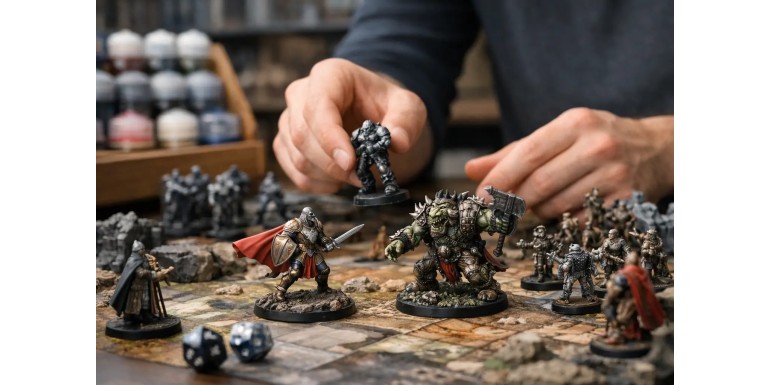
There is a world of difference between buying tabletop miniatures on impulse and building a collection that actually works on the tabletop. The former fills up drawers; the latter fits your game system, gets painted with purpose, and withstands games, transport, and roster changes without giving you grief by the third session.
That is why it pays to look beyond aesthetics. A miniature might look spectacular in photos but still not be the best choice for your project. Material, scale, assembly level, pose, base compatibility, and surrounding terrain availability matter just as much as the design itself. Whether you play, paint, or do both, choosing wisely from the start saves you money, time, and frustration.
What You Should Look For When Buying Tabletop Miniatures
The first real decision is not which faction you like best, but what you are going to use the miniature for. A skirmish warband, where every single figure takes center stage, requires a different approach than a horde army, where unit cost, ease of assembly, and batch-painting speed carry more weight. Similarly, a display piece demands different qualities than a model meant to travel in a carry case every single week.
Scale dictates more than it seems. In tabletop gaming, minor size discrepancies drastically alter how things look on the table. A 28mm range can somewhat coexist with another, but they do not always blend naturally. The issue is rarely just height; it is bulk, the size of weapons, heads, and hands, or the overall volume of the base. If you mix ranges, it is best to check comparison photos and consider your terrain. A door, a barricade, or a vehicle that is out of scale stands out immediately.
The material also shapes the final result. Plastic is usually the most convenient option for assembling large quantities, kitbashing, and fixing mistakes. Resin offers incredible detail but requires a bit more care during cleaning and prep work. Metal still has its loyal fanbase due to its weight and tabletop presence, though it can complicate assembly when dealing with thin parts or small joints. There is no perfect material; it depends on the use case, your experience level, and how much prep work you want to put into each miniature before painting it.
Tabletop Miniatures for Gaming, Painting, or Collecting
Many people enter the hobby thinking these three aspects are virtually identical, but they are not. They overlap, of course, but each focus demands different priorities.
-
If your priority is gaming: You need durable miniatures that are easy to identify on the table and practical to batch-paint. In this case, over-extended poses, ultra-thin parts, or excessively delicate details can become a liability. A gaming miniature needs to look good from a tabletop distance, not just in a macro photo. A clear silhouette, recognizable wargear, and a solid base are usually worth more than ten intricate details that are invisible during gameplay.
-
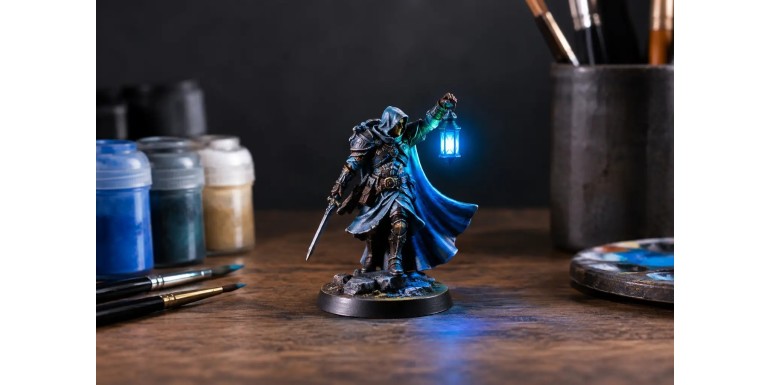
If you paint mostly as a hobby: The criteria shift. Here, you want a sculpt with well-defined volumes, rewarding textures, and areas where you can work on highlights, weathering, fabrics, skin, or metals. Some tabletop miniatures stand out precisely because they let you practice techniques without requiring a display-level piece. They are highly playable yet incredibly satisfying to paint.
-
If you collect: Other factors come into play. The aesthetic coherence of the range, the rarity of the model, display-case value, or lore accuracy carry more weight. In this realm, it might be well worth dealing with more delicate materials or frustrating assemblies if the final result pays off.
Assembly Is Not a Chore
One of the most common mistakes is treating assembly as a minor chore. It isn’t. A poorly cleaned miniature—complete with visible gaps or unresolved mold lines—will haunt you throughout the entire painting process. And fixing it later always takes more effort.
It is always wise to dry-fit every piece before gluing anything down. Check the fit and plan your assembly order. On many figures, leaving shields, backpacks, large weapons, or capes unattached makes brush access much easier. You do not need to turn every miniature into a puzzle of sub-assemblies, but you should avoid making quick decisions that block off entire areas you will want to paint properly later.
The base deserves just as much attention. On the tabletop, a good base does more than decorate; it helps integrate the miniature into its environment and provides visual coherence to your army or warband. Fine sand, textures, cork, static grass, mud, snow, or rubble completely transform a model's presence. Furthermore, a well-executed base makes even a simple paint scheme look far more accomplished.
Painting: Less Epic, More Method
You do not need to paint like a Golden Demon winner to make a tabletop look spectacular. In fact, for most players, the best approach is a method that balances speed, cleanliness, and consistency. A complete, cohesive army is far better than five perfect miniatures and forty left in bare grey.
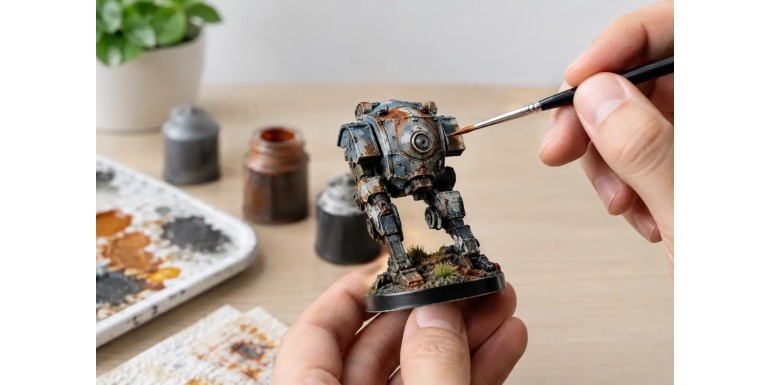
The right primer gets half the job done for you. After that, a well-thought-out color scheme simplifies the process immensely. Two or three main colors, a consistent shade, and an accent color are usually enough to give your force a distinct identity. If you also repeat the same basing criteria, unit markings, or weathering effects, the whole collection ties together beautifully.
The trick here is not adding more steps, but doing the right steps. A well-placed wash, drybrushing specific textures, and a few selective edge highlights can yield better results than slower techniques applied without a plan. And when we talk about tabletop miniatures, that matters. The piece needs to look good at actual gaming distance, under room lighting, and surrounded by terrain—not just under a hobby lamp.
Terrain Elevates Tabletop Miniatures
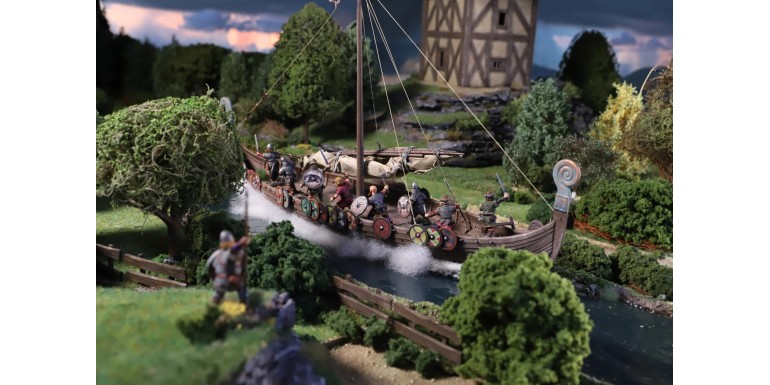
Decent armies can look excellent on a beautifully set up table. That is what terrain does. It does not replace a well-painted miniature, but it frames it, gives it context, and multiplies immersion. More often than not, it is what turns a functional game into a memorable one.
The key is consistency. If your miniatures feature an industrial aesthetic, gothic ruins, desert, jungle, or a winter environment, the table should match. You do not need to build a display board for every faction, but you should avoid mixes that break immersion for no reason. A few well-chosen pieces with varied heights, useful cover, and rich surface details do more for the gaming experience than an empty table with four hastily placed obstacles.
It is also smart to view terrain as part of your hobby workflow. If you are already working on desert bases, it makes sense for your rocks, pigments, tufts, or dust effects to follow the same style. If you are building an urban table, the paint chips, rust, posters, rubble, and miniature repair elements can bridge both worlds. This visual continuity makes everything look intentional.
Choosing by Game System vs. by Project
Not everyone buys the same way, and that changes what you should look for.
-
Buying by game system: You need specific units, compatible options, and scales that align with the rulebook and the table. In this case, practicality rules. You must think about availability, replacements, future expansions, and visual consistency.
-
Buying by project: You are building a campaign warband, a diorama, a painting squad, or a self-contained themed table. Here, you can fine-tune your choices in design, poses, and setting. Sometimes it pays off to mix manufacturers if the final look fits, even if it requires checking sizes, styles, and accessories carefully.
This is exactly where a specialized catalog shines. Searching a generalist store is not the same as browsing one focused entirely on the miniature hobby, where paint, bases, textures, water/snow/desert effects, and terrain are all part of the same ecosystem. For anyone looking to assemble a project without jumping between disconnected categories, that specialization saves a lot of time.
Common Mistakes When Starting with Tabletop Miniatures
The most common mistake is buying too many boxes too soon. The initial excitement is real, but so is the hobby backlog. If you accumulate more plastic or resin than you can assemble and paint within a reasonable timeframe, the hobby turns into visual debt. It is always better to start with a manageable block and finish it.
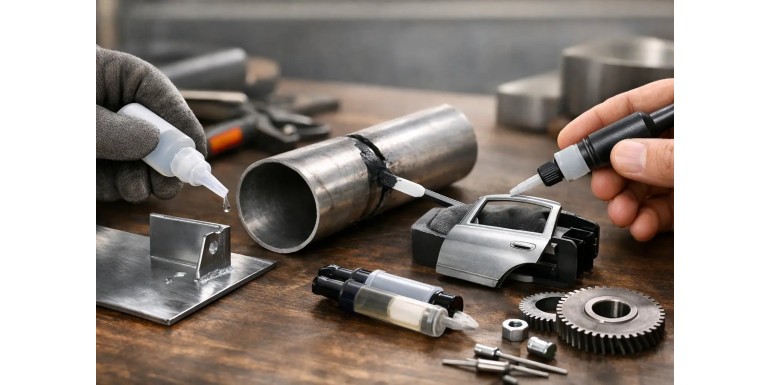
Another mistake is underestimating tools and finishing materials. Good paints help, yes, but so do the right glue, gap-filling putty, basing materials, and texture products that save you labor. These are not optional extras; they are part of the final result.
Finally, do not get obsessed with a single "correct" way of doing things. There are projects where magnetizing, kitbashing, and working in sub-assemblies are well worth the effort, and others where that only delays a unit that simply needs to be ready for the tabletop. In this hobby, many decisions are contextual. The best option is usually the one that fits your time, your skill level, and what you expect to see on the table two weeks from now—not two years from now.
If you are evaluating your next tabletop miniatures, think about the bigger picture before making a single purchase. Figure, base, paint, and terrain work best when chosen as parts of the very same project. That is where the hobby stops feeling like hoarding and starts feeling truly complete.