Español

Medieval RPG Terrain That Actually Works
- 06/05/2026 09:27:32
- Home , Tabletop Terrain
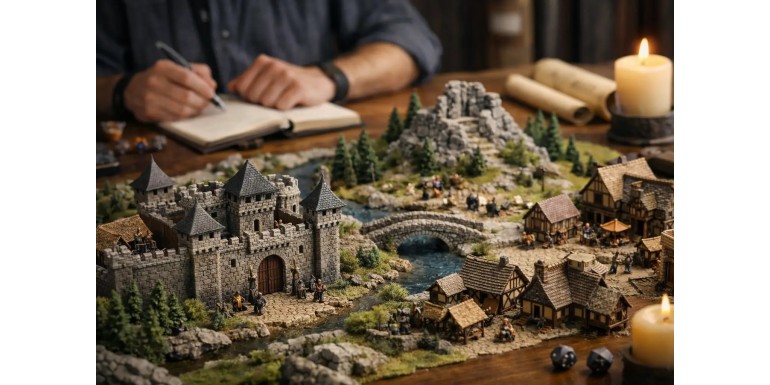
A poorly placed tavern can ruin a scene faster than a bad dice roll. In a game, medieval RPG terrain does more than just decorate the table: it marks distances, suggests cover, defines entry points, and turns a generic combat encounter into a bridge ambush, a chase through narrow alleys, or a raid on a crypt. If the table looks great but hinders gameplay, it fails. If it is practical but lacks atmosphere, it falls short. The sweet spot is right in the middle.
What Medieval RPG Terrain Should Bring to the Table
When discussing terrain for campaigns or skirmishes set in classic fantasy, the first step isn't thinking about spectacular centerpiece pieces. The first step is thinking about utility. A medieval table needs a clear layout. Players must understand at a glance what constitutes difficult terrain, what blocks line of sight, where entry points are, and which areas hold narrative interest.
This means that a good terrain selection doesn't start with the largest castle in the catalog. It starts with versatile elements: small houses, walls, fences, ruins, wells, roads, bridges, and forests. These are pieces that appear time and time again, in both urban and rural scenes. Furthermore, they allow you to reconfigure the table so that no two games feel exactly the same.
It is also wise to separate two needs that sometimes get mixed up: visual immersion and playability. A ruined cathedral looks spectacular, but if it takes up half the table and doesn't allow miniatures to move inside, it will end up being used far less than modular ruins or a set of buildings with accessible interiors. For frequent gaming, your table will thank you for pieces that are durable, clear, and easy to reposition.
How to Set Up a Medieval Table Without Crowding It with Useless Pieces
The most common mistake is impulse buying and ending up with terrain that looks great in photos but rarely makes it into an actual game. In RPGs and miniature wargames, it works best to build your collection in layers.
-
The First Layer: This is the basic structure of the table. Here come the pieces that define the overall setting: buildings, ruins, hills, roads, and forested areas. With just this, you can already represent a village, a roadside stop, a trade crossroads, or a border zone.
-
The Second Layer: This adds playable detail. Barrels, crates, carts, palisades, tables, bookshelves, graves, statues, or lanterns don't just change the look—they also create cover, points of interest, and narrative objectives. An empty square is just a square. A square with a market stall, a fountain, and an overturned cart already suggests a story.
-
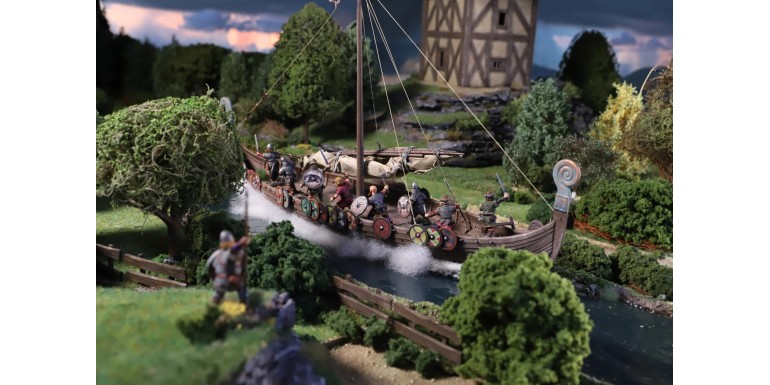
The Third Layer: This consists of surface effects and finishing touches. Textures for mud, snow, vegetation, stagnant water, or arid ground are what prevent the table from looking like a random collection of loose pieces. This is where many projects truly level up. A mill next to a well-textured ground and well-integrated hedges is far more convincing than an excellent building placed on a flat, contextless gaming mat.
Tip: If you are just starting out, it pays off more to have ten highly combinable medium-sized pieces than two grand, spectacular ones that are difficult to fit into a layout. The most rewarding tables are usually built on modularity, not accumulation.
Scale, Compatibility, and Proportions
There is no single right answer here, as it depends on the system, the manufacturer, and even the sculpting style of your miniatures. However, one thing is certain: in medieval scenery, the sense of scale matters much more than it appears on a product datasheet.
A door that is too low or an exaggeratedly large table breaks immersion immediately. The same happens with walls designed for display that look tiny next to heroic-scale miniatures, or oversized furniture that makes it difficult to fit bases inside a tavern.
Therefore, before buying, it is worth considering three types of compatibility:
1. Nominal Scale: The standard size rating (e.g., 28mm, 32mm).
2. True Visual Scale: How it actually looks right next to your specific miniatures.
3. Base and Movement Compatibility: Often forgotten. If you use wide bases, tightly enclosed interiors or narrow staircases can become more of a hindrance than a feature.
On RPG tables, where representing the scene is often more important than measuring to the exact millimeter, you can afford a bit more flexibility. In tactical skirmish games, not so much. There, you will truly appreciate openable doors, accessible floors, and heights that allow you to place figures without a balancing act.
The Highest-Yield Pieces in Medieval Fantasy
Not all terrain pieces contribute equally. If the goal is to get real value out of your collection, certain types of pieces almost always pay off:
-
Small and Medium Buildings: These are the foundation. Houses, stables, huts, chapels, or inns allow you to build urban hubs or scattered settlements, and they work well on both open tables and enclosed scenarios. They are even better if they feature interior access or removable roofs.
-
Ruins: Probably the most cost-effective pieces of all. They fit seamlessly into villages, graveyards, fortresses, monasteries, or war zones. Plus, they offer clear cover and do not demand as much scale precision as an intact building.
-
Walls, Palisades, and Fences: These do a massive amount of heavy lifting while taking up very little space. They divide zones, channel movement, and help the table make sense. The same goes for roads, bridges, and rivers—they connect elements and make the board look like a real place, not a display shelf.
-
Scatter Terrain and Minor Accessories: These greatly elevate the atmosphere. A well, a cart, some crates, a gallows, an altar, or a few gravestones can turn a decent table into a memorable scene without forcing you to redesign everything.
Materials and Finishes: What is Worth It Based on Use
Not everyone needs the same thing. Some prioritize a table that is instantly ready to play, while others enjoy the building process just as much as the gaming. This difference completely changes which material is most rewarding.
-
Resin and Rigid Materials: These usually offer a higher level of detail, which is highly welcome in medieval elements featuring stone, wood, roof tiles, or carvings. On the downside, they can require more care and are heavier to transport. They work beautifully for display pieces or table centerpieces.
-
Lightweight or Easy-Assembly Materials: These are usually more practical for large collections and frequent use. They might lose a bit of presence in fine details, but they win in terms of maneuverability, storage, and setup speed. If you set up different tables every week, you will definitely notice the difference.
Then there is the finish. A beautifully sculpted piece that is poorly painted falls short. In fantasy medieval settings, the finish relies heavily on three things: variation in the stone, wood tones that don't look flat, and realistic weathering. Too clean, and it looks like a toy. Too dark, and the entire table becomes unreadable. The balance usually lies in moderate contrasts and selective effects of wear, moss, dirt, or moisture.
How to Mix Medieval RPG Scenery Without Making the Table Look Chaotic
A convincing table doesn't just depend on the individual pieces, but on how they dialogue with one another. If you mix too many styles, scales, or finishes, the overall result suffers—even if each element looks good on its own.
It helps immensely to work within a common color palette. Not everything needs to share the exact same shade, but there should be a certain coherence. Cool grey stone, weathered wood, muted earth tones, and natural vegetation typically work in almost any medieval environment. If you decide to add snow, lava, or water, it is better if it is a deliberate choice for the entire table rather than an accidental feature scattered across random pieces.
It is also wise to think about the logic of the setting. A well belongs where it makes sense for a population to get water. A marketplace needs room for foot traffic. An isolated chapel calls for a path or a graveyard. A military ruin near a bridge holds much more narrative weight than random placement. When the table follows an internal logic, players read it better, and the Game Master can utilize it more effectively.
Remember, less can be more. A cluttered table forces you to push pieces aside, hinders miniature movement, and blocks the players' view. If a piece of terrain does not provide cover, verticality, narrative value, or space definition, it might be better to leave it out of that session.
Common Mistakes When Buying Medieval Terrain
One of the most frequent mistakes is focusing solely on large centerpiece pieces. They look spectacular, yes, but a functional collection is sustained by small and medium elements. Another mistake is failing to think about storage. A massive fortress might thrill you the day it arrives, only to become a storage nightmare the following month.
It is also common to buy terrain that is too specific. A gigantic demonic altar or a highly unique tower might look incredible in one specific mission, but they will see far less table time than ruins, a bridge, or a set of houses. It’s not that these special pieces aren't worth it; it’s a matter of when to buy them. Typically, this should be after you have your core layout well covered.
Finally, there is a classic trap for hobbyists with plenty of painting experience but less focus on actual gameplay: prioritizing extreme detail over interaction. In a real game, being able to move figures, check lines of sight, and clearly understand heights matters much more than an ultra-fine carving in a corner that no one will ever touch.
A Collection Designed to Play Better
If you want your terrain to truly rotate through your games, think in terms of scenes rather than individual pieces. A village center, a roadside area with a bridge, some ruins with a graveyard, and a forest with a ritual clearing already give you four completely different configurations using reusable elements. This approach to purchasing yields a higher return, costs less in the long run, and prevents shelves from filling up with pieces that only come out for a photo.
In a specialized shop like Terrainandminis.com, featuring a wide catalog of scenery, paints, textures, and effects, the most useful approach is not to buy a lot without a plan. It is knowing exactly what function each element will serve on the table. When that decision is clear, the immersion improves, the game flows, and every single piece truly works for the game.
Good medieval terrain doesn't have to impress from a display cabinet. It has to ensure that the moment you place the very first miniature on the table, the setting is already telling a story.