Español

How Long Does Varnish Take to Dry on Miniatures?
- 06/13/2026 10:52:58
- Home , Assembly and Painting Guides
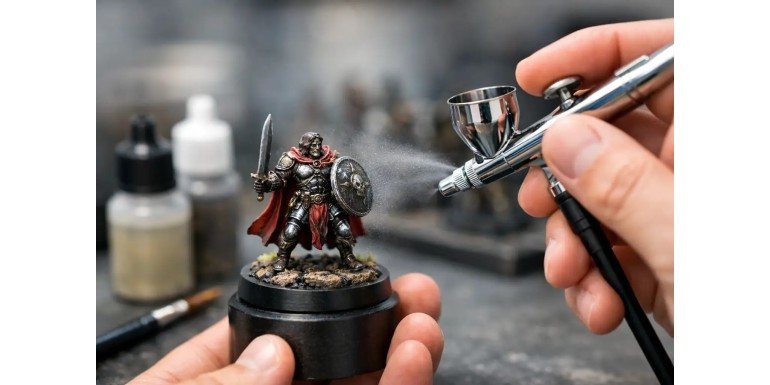
If you’ve just finished a miniature, applied the varnish, and are wondering how long it actually takes to dry, here is the short answer: it almost never matches the time printed on the bottle. In the miniature painting and terrain hobby, real drying times depend on the type of varnish, layer thickness, humidity, and, above all, whether you are talking about "dry to the touch" or "fully cured."
This distinction matters more than it seems. A mini can feel dry on the outside within half an hour while remaining soft underneath for several hours—or even a whole day. If you handle it too soon, you’ll end up with fingerprints, unwanted satin patches, or an uneven finish that ruins your hard work.
How Long Varnish Takes to Dry by Type
Not all varnishes behave the same way. In miniature and terrain painting, we generally work with acrylic water-based varnishes, spray varnishes, and tougher polyurethane or enamel-based products.
-
Acrylic Water-Based Varnish: Applied via brush or airbrush, this type usually dries to the touch in 15 to 45 minutes. However, that doesn't mean it’s ready for the tabletop. To handle the piece safely, it is best to wait 6 to 12 hours. For a heavy-duty cure—especially on miniatures that will see a lot of handling during games—giving it 24 hours is the smartest move.
-
Spray Varnish (Aerosol): This usually dries on the surface much faster, often in 10 to 20 minutes, because the layer is thinner and the solvent evaporates rapidly. Even so, a spray-varnished miniature still benefits from several hours of rest. If you pack it away into foam transport cases or place it on a tray too soon, you might be in for an unpleasant surprise.
-
Polyurethane or Heavy-Duty Varnishes: These tougher products take longer to cure. Many will feel dry to the touch relatively quickly, but they don't reach their maximum hardness until 24 to 48 hours have passed. For large terrain pieces, heavily textured bases, or elements subject to constant friction, this extra time is well worth it.
Dry to the Touch vs. Fully Cured
This is the classic mistake. You touch a corner of the base, it isn't sticky, and you assume the mini is good to go. Then you grab it for a game, pack it into your army case, and the varnish ends up stamped with the texture of the foam. That isn't bad luck—it's because the product hadn't fully cured yet.
Dry to the touch means the surface is no longer noticeably wet.
Fully cured means the varnish film has reached its ultimate chemical stability and hardness. Several hours or even days can pass between these two stages.
For display pieces, rushing the process might not be a tragedy. But for gaming miniatures, skirmish bands, armies that travel from tournament to tournament, or stackable modular terrain, you should always target a full cure rather than a simple surface dry.
Key Factors That Change Varnish Drying Times
This is where universal answers fly out the window. Two hobbyists using the exact same bottle can experience vastly different results based on these variables:
1. Layer Thickness
The more product you apply, the longer it takes to dry and cure. A thin, even coat behaves much better than a heavy, overloaded one. On miniatures, pooling is instantly noticeable in recesses, fabric folds, textured armor, or anywhere the varnish naturally collects.
On large terrain pieces, you have a bit more visual leeway, but you run a higher risk of puddles forming in corners, brickwork, beams, or textured floors. If you see a wet gloss pooling anywhere, do not expect a quick dry time.
2. Ambient Humidity
High humidity drags out drying times and can completely ruin your finish—especially with matte sprays. This is the primary culprit behind the dreaded white frosting or clouding effect. If the air is thick with moisture, the varnish cannot evaporate properly, leaving you with a ruined finish even if your application technique was flawless.
3. Temperature
Cold weather slows the drying process to a crawl. On the flip side, extreme heat can cause the product to dry way too fast on the surface, compromising the integrity of the final protective film. The sweet spot is a stable, temperate room temperature. Nothing extreme: avoid both freezing balconies and hobby workshops turned into ovens.
4. Ventilation
A well-ventilated space helps immensely, particularly when using sprays. You don't need a massive draft, but you should avoid closed rooms where the air is completely stagnant. Be careful, though: airborne dust and strong winds are a bad mix. Nobody wants to varnish a miniature only to find a piece of lint permanently fossilized on a shoulder pad.
5. Material and Undercoats
A miniature with too many previous layers, recent washes, uncured oils, or freshly fixed pigments can alter your drying times. The same applies to terrain made from porous materials. Varnish reacts differently on a smooth plastic surface than it does on a base made of cork, sand, texture paste, or plaster that is still setting.
Estimated Timeline for Miniatures and Terrain
As a handy rule of thumb, a thin layer of acrylic varnish on miniatures generally follows this schedule:
| Stage | Estimated Time |
| Dry to the Touch | 15 to 45 minutes |
| Light Handling | 6 to 12 hours |
| Normal Gaming / Safe Transport | Around 24 hours |
| Heavy-Duty / Polyurethane Curing | 24 to 48 hours |
For large terrain pieces, the physical size doesn't necessarily slow things down, but the texture and amount of product used will. A flat MDF ruin with a thin coat might be ready in no time. A piece covered in putty, sand, flock, and multiple passes of varnish will require significantly more resting time than you think.
How to Tell If the Varnish Is Ready
You don't have to guess. Look for these clear signs:
-
The Visual Check: The finish stabilizes and stops looking wet or unevenly shiny.
-
The Touch Test: When you gently touch an inconspicuous area (like the bottom of the base), the surface shouldn't feel rubbery, tacky, or excessively cold.
-
The Practical Test: The miniature doesn’t leave a smudge or stick to your fingers when handled gently.
If you are in doubt, wait a little longer. In the world of varnishing, patience pays off—especially if you plan to apply weathering pigments, snow effects, artificial water, or handle highly detailed bases afterward.
Common Mistakes That Delay Drying
-
Overloading the coat: Usually driven by the desire to protect the mini in a single pass. In reality, two thin coats will always perform better than one thick one.
-
Varnishing over wet paint: The surface looks ready, but trapped moisture underneath will compromise the entire curing process.
-
Spraying too close to the piece: The layer goes on way too heavy, pools instantly, and takes ages to dry.
-
The Silent Mistake: Packing the mini away into a box or case the second it looks dry. This exact habit is responsible for sticky finishes and ugly foam marks on flat surfaces.
Need to Speed Up the Process?
You can speed it up, but don't force it. The most effective way to save time is to apply thin layers, work in a temperate environment, and ensure good ventilation. Using a drying rack or support that elevates the piece helps air circulate evenly around it.
Avoid blasting direct heat with a hairdryer, especially on resin miniatures or delicate plastic parts. Doing so can warp the material, blow dust onto the wet surface, and cause the outer layer to dry incorrectly. If you must use a hairdryer, use a low, cool setting from a safe distance. Ultimately, the best way to save time is not to overload the varnish in the first place.
Matte, Satin, and Gloss: Does the Finish Matter?
Yes, the type of finish slightly changes how the product behaves. Gloss varnishes tend to form harder, more chemically stable protective shells, though visually they aren't always ideal for miniatures. Matte varnishes can be much more temperamental if applied too heavily or in poor weather conditions. Because of this, many painters protect their minis with a coat of gloss first, and then finish with a coat of matte to kill the shine.
On terrain—where minor visual imperfections matter less than on a character mini—a satin finish often offers the perfect practical balance between solid protection and a realistic look.
How Long to Wait Between Multiple Coats
If you plan to apply more than one layer, let the previous one settle completely. You don't need to wait a full day between thin coats of the exact same product, but you do need to wait long enough so you don't tear or drag the underlying film. In most environments, waiting between 30 minutes and 2 hours is a safe bet.
However, if you are switching finishes (e.g., going from gloss to matte) or if the piece has ultra-fine details, give it extra time. It is much better to lose an afternoon waiting than to spend days fixing clouding, strange glossy patches, or clogged details.
Final Verdict
For gaming miniatures, treat varnishing as the final serious step of your project. Give it the time it deserves. Just like you wouldn't flock a base over wet PVA glue, you shouldn't pack a freshly varnished squad into a case just because it "looks dry."
When in doubt, stick to this simple rule: touch less, wait longer than your impulses tell you to, and allow a full 24 hours before bringing your pieces to the tabletop. In this hobby, the best finishes rarely come from a secret technique—they come from letting each layer do its job.