Español

How to make realistic mud for bases and terrain
- 06/08/2026 08:53:09
- Home , Assembly and Painting Guides
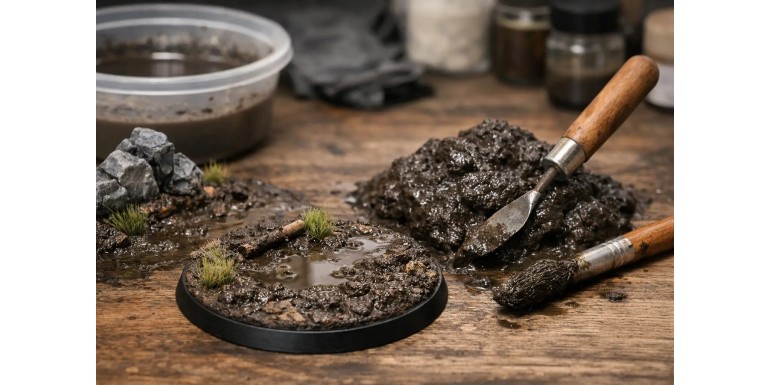
There comes a point in almost any basing or terrain project where the piece simply cries out for mud. Not just plain brown earth, but real mud: with volume, moisture, texture variance, and that gritty look that transforms a miniature from looking like it’s just standing on a base to actually being part of its environment. If you are looking for how to make realistic mud, the secret rarely lies in a single miracle product; rather, it's about successfully combining texture, color, and finish.
How to Make Realistic Mud Without Looking Flat
The most common mistake is thinking that mud is just a brown mixture with a glossy finish. On the tabletop, that approach usually translates into a uniform, dark, and unbelievable base. Real mud changes tone depending on its moisture levels, accumulates in some areas more than others, and almost never has the same density across the entire surface.
To make it work for miniatures and terrain, it is best to break the effect down into three layers: the shape of the mud, its color, and the illusion of moisture. If one of these elements fails, the whole effect falls apart:
-
An excellent texture with poor coloring looks like painted putty.
-
Well-worked color on a completely flat surface just looks like brown paint.
-
Improperly placed gloss varnish creates a cheap, plastic-puddle effect.
Furthermore, not all mud is created equal. The mud in a trench, on a forest path, or on a war-torn street will not share the same tone or consistency. If you want a convincing result, it pays to decide first exactly what kind of terrain you are representing.
Materials That Actually Make a Difference
You don't need to overcomplicate things, but you do need to use materials that serve a specific purpose:
-
For the texture base: The most practical approach is usually a texturing paste, acrylic putty, or a homemade mix using fine sand and acrylic medium. If you want clumps, add coarser sand, crushed cork, or small bits of gravel. For more pasty areas, the mixture must have enough body to hold its shape without cracking as it dries.
-
For the color: Medium and dark browns are your starting point, but realistic mud is rarely achieved with a single bottle. You need at least a deep shadow tone, a base tone, and a lighter or earthier brown for nuance. Washes help, but they cannot replace true tonal variation.
-
For the wet finish: This is typically achieved with gloss varnish, clear acrylic gel, or small amounts of water effects. Be careful here. On 28mm bases, too much product instantly looks artificial. On larger terrain pieces, you can afford a bit more buildup, but it is still best to build the shine using thin layers.
The Base Mix for Believable Mud
If you want a reliable recipe, start with a texturing paste mixed with a little fine sand and dark brown acrylic paint or pigment. It is vital to tint the mixture from the very beginning. This ensures that if an edge chips or an area is thinly covered, the bright white or grey of the raw material won't show through.
Apply the mixture irregularly. On a base, leave some areas heavily caked and others almost clean. Mud settles where it makes sense: around boots, in hollows, next to stones, in tire tracks, or at the foot of terrain features. If you cover the entire surface uniformly, the effect loses its realism.
Before it dries completely, you can press in small footprints, track marks, or ridges. There is no need to over-sculpt. In fact, at smaller scales, less is usually more. An exaggerated texture might look spectacular in a macro photo but will appear completely out of proportion on the tabletop.
When to Use Fine vs. Thick Texture
-
Fine texture works best on small bases, infantry, packed dirt paths, and terrains where the mud has been trampled and blended with earth.
-
Thick texture fits better in trenches, churned-up riverbanks, bombarded zones, or on heavy vehicles.
Tip: If you are in doubt, lean toward fine texture. At gaming scales, excessive texture tends to age worse visually than a more controlled application.
You can also combine both. A fine base with a few localized clumps adds great depth and prevents a uniform look. This combination is usually much more realistic than using a coarse material across the entire piece.
Color is What Sells the Effect
Once the texture is dry, it’s time to paint with intent. Start with a dark brown as your general base coat. Next, introduce variation with reddish-browns, earth tones, and perhaps a touch of grey if the environment calls for it. Natural mud collects sediment, dust, water, and debris, so a single shade of brown is rarely enough.
Drybrushing has its place here, but use it with moderation. If you raise the highlights too much, the mud stops looking wet and starts looking like dry dirt. It is better to use soft highlights restricted to high edges or specific clumps. To enrich the surface, localized washes and translucent filters usually yield much better results than aggressive drybrushing.
If you are working on a base that is already integrated with the miniature, consider the overall color scheme. A very red mud might clash with warm uniforms. A very black mud can visually swallow up a dark figure. It’s not just about geological realism; it’s about making sure the miniature remains legible on the tabletop.
How to Recreate Wet, Realistic Mud
Moisture does not reflect light the same way across the entire surface. Depressions, recesses, accumulated areas, and sections close to puddles should shine the most. High or exposed areas should remain satin or even matte. This contrast in finishes is what makes the mud look alive.
Apply the gloss at the very end in small amounts, and evaluate the piece from a tabletop gaming distance. Up close, a glossy spot might look subtle; from two feet away, it can dominate the entire base.
-
If you want fresh, near-liquid mud, increase the contrast between the matte and glossy parts.
-
If you are looking for older mud, use a satin finish rather than pure gloss.
A useful trick is to mix a bit of heavily thinned brown paint or pigment into the gloss gel in the deepest areas. Muddy water is rarely completely transparent, and this slight tint helps avoid the look of clean resin sitting on top of painted dirt.
Splatters, Stains, and Mud on the Miniature
The mud shouldn’t stop at the ground. If there is movement, wheels, or boots, part of the effect needs to climb onto the miniature itself:
-
Infantry: It works well on the hems of cloaks, boots, greaves, and the lower edges of gear.
-
Vehicles: Target the mudguards, tracks, and lower panels.
-
Creatures: Apply it to the paws, hooves, and underbelly.
Restraint is key here. A few well-placed splatters integrate the model beautifully with its base. However, too much mud on the figure can obscure your hard work on the paint job or look like an improvised patch. For fine splatters, you can flick a loaded, old toothbrush or paintbrush using your finger or a tool. For heavy accumulations, it is better to precisely apply a thick mixture into logical recesses.
The most important thing is maintaining consistency. If the base is soaking wet but the miniature is pristine, something feels off. Conversely, if the figure is caked in mud but the ground looks bone dry, the illusion is broken.
Common Mistakes When Creating Realistic Mud
1. Using only dark brown and gloss varnish: The result usually ends up looking like oil or chocolate, not mud.
2. Applying the exact same finish everywhere: Even in a swampland, some areas are drier than others.
3. Ignoring scale: Huge rocks, oversized clumps, or overly deep puddles break the illusion instantly. On miniatures, every millimeter carries weight. Always check your piece in your hand and at gaming distance, not just through a zoomed-in camera lens.
4. Impatience: If you apply washes, pigments, and gloss without letting each layer dry thoroughly, the colors will mix into a messy sludge and you will lose control over the finish. Mud rewards a step-by-step process, even if the end goal is an effect that looks chaotic.
Tailoring Mud to Your Specific Project
On individual bases, the mud should support the miniature, not compete with it. It usually works best to concentrate the effect on one part of the base, leaving visual breathing room elsewhere. For units, aim for a certain level of consistency across the squad, even if each base features unique variations.
On terrain pieces and dioramas, you can afford to be more ambitious. This is where you can introduce tire tracks, transitions between mud and standing water, accumulations against wooden planks, sandbags, or ruins, and even layers of dry dust sitting on top of old mud. On large projects, it pays to think of the terrain as a surface with a story, rather than a repeated texture.
If you work across different gaming systems or scales, always adjust the effect accordingly. What looks convincing on a display diorama might look excessive on a gaming table where durability and quick visual recognition are required.
Because of this, many hobbyists prefer having dedicated texture pastes, pigments, and special effects on hand—they cut out unnecessary experimentation and allow you to replicate controlled results. This is exactly where a specialized hobby shop like Terrainandminis.com becomes much more valuable than a generic craft store.
Good Mud Doesn't Shout for Attention
When done right, mud is rarely the first thing your eyes gravitate toward. Instead, its job is to anchor the scene, give weight to the miniature, and convince the viewer that the ground beneath it truly exists. If you finish your project and feel that the base or terrain breathes better, that there is moisture where it belongs, and grime where it makes sense, you are on the right track.
The next time you prepare a base, don't just think about adding brown paint and gloss. Think about footprints, drainage, relief, and wear and tear. That is where truly realistic mud comes from.