Español

Barbarian Terrain printed in PLA for your table
- 05/28/2026 15:25:30
- Home , Tabletop Terrain
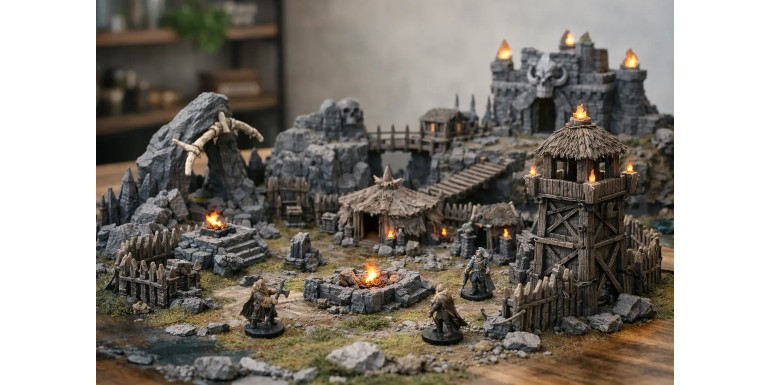
Imagine your DnD barbarian stepping onto a blood-stained stone altar, or your Warhammer Fantasy hordes marching past a camp of fur tents right before charging. Scenery isn’t just filler; it’s what breathes life into the story. But anyone who sets up tables regularly knows the struggle: it’s hard to find thematic pieces that endure game after game, feature great detail, and don’t blow your budget.
That is exactly where PLA-printed barbarian terrain comes in. It’s a highly practical option to bring a brutal, northern, and tribal aesthetic to your tabletop without struggling with fragile materials or poor finishes.
For anyone who regularly plays, paints, or builds terrain, the interest goes beyond a piece just "looking good." It’s also about how it behaves on the board—how much it blocks line of sight, whether it takes paint without a fight, and if it works for more than one game system. In that regard, PLA makes perfect sense, especially for tables built for real action rather than just display cases.
Why Choose PLA for Barbarian Terrain
The main advantage of PLA for this type of terrain is simple: it just works on the tabletop. A totem, a palisade, or an altar printed in PLA handles transport, handling, and accidental drops much better than more delicate alternatives. If you play with metal miniatures, heavy dice, or terrain that goes in and out of storage boxes every week, you will notice that durability instantly.
It also delivers a level of detail that fits the barbarian aesthetic beautifully. Rough rock surfaces, splintered wood, stretched hides, or crude runes don’t need extreme precision to look fantastic. In fact, this visual style heavily favors PLA because the material's minor layer lines or irregularities usually blend right into the design. While they might be distracting on a smooth Imperial column, on a tribal menhir or a Norse palisade, they actually add character.
Another clear advantage is how easy it is to customize. These pieces take primer, drybrushing, washes, and pigments exceptionally well. You don’t need a complex paint scheme to get a great result. With a brown or gray base, a dark wash, and a couple of drybrush highlights, the scenery instantly gains tabletop presence. For many hobbyists, that means less time working and a finished table much sooner.
A quick note: PLA is not indestructible, and not all prints are created equal. The final quality depends on the design, wall thickness, and print settings. Very thin parts or long spikes might have exposed areas. Even so, for heavy-use scenery, it remains a highly balanced option regarding cost, durability, and visual results.
One Barbarian Camp, Multiple Game Systems
One of the reasons this type of scenery is so appealing is its versatility. A barbarian camp isn’t locked into a single rulebook. Swap a few miniatures, tweak the board layout, and the exact same table fits into completely different settings.
DnD and RPGs
In Dungeons & Dragons, a table featuring altars, fur tents, monoliths, and palisades does much more than decorate. It sets the tone of the encounter before anyone rolls for initiative. It could be a tundra tribe's settlement, the ancestral sanctuary of a Path of the Totem barbarian, or a sacrificial site where a shaman protects an ancient idol. In roleplaying games, these pieces also help players visualize cover, elevated areas, ritual spots, and choke points without the DM having to explain everything verbally.
Warhammer Fantasy and Age of Sigmar
In Warhammer Fantasy or Age of Sigmar, the barbarian aesthetic fits right in. It’s perfect for Northern invader camps, Chaos Warrior settlements, frontier outposts, or ritual sites for more savage factions. Palisades and huts provide cover and block line of sight, while menhirs and altars work brilliantly as objectives, control points, or terrain features with special rules.
Frostgrave, Saga, and Warcry
Outside of the mainstream systems, this scenery remains incredibly useful. In Frostgrave, tribal ruins and a frozen camp fit perfectly into the outskirts of the Frozen City. In Saga—especially for Viking or historical fantasy settings—tents and runic posts heavily reinforce the historical feel of the table. In Warcry, the combination of harsh structures, rugged terrain, and ritual elements delivers that chaotic, brutal vibe that so many warbands need to truly shine.
If you are looking for pieces that rotate between games without looking out of place, barbarian scenery printed in PLA has a clear edge over faction-specific terrain.
Must-Have Pieces for an Authentic Barbarian Table
You don’t need to clutter the board to make it work. In fact, a few well-chosen pieces usually yield better results than an excess of small scatter terrain that lacks visual impact or tactical utility.
-
Totems and Menhirs: These are the kinds of pieces that always find a spot. Visually, they anchor the table's identity; mechanically, they serve as objectives, deployment markers, sacred zones, or simple line-of-sight blockers. Engraved runes, skulls, chains, or crude reliefs give them an imposing presence without requiring a complex paint job.
-
Fur Tents and Huts: Gameplay-wise, these are some of the most useful pieces. They block line of sight, provide clear cover, and help break up open spaces. In RPGs, they instantly show where the tribe lives, where the chieftain sleeps, or where the loot is guarded. In wargames, they work best when they have enough volume to feel like true obstacles rather than mere decoration.
-
Splintered Wood Palisades: Few things sell the idea of a barbarian camp better than a solid line of irregular stakes. Palisades organize the table, create movement bottlenecks, and give the impression of defended territory. They are also incredibly rewarding to paint; using dark browns, black washes, and a touch of weathered gray easily delivers a convincing finish.
-
Sacrificial Altars: The altar inevitably becomes the centerpiece of the table. It draws the eye, provides narrative context, and allows you to set up highly recognizable scenes. In an RPG campaign, it can be the core of the encounter. In skirmishes or battles, it can serve as the primary objective or a scenic piece with unique rules. Populated with skulls, torches, or ceremonial stones, it gains even more visual weight.
How to Paint PLA Terrain Without Wasting Time
The good news about PLA is that it doesn’t demand a complex process to look great on the table. The bad news—if you can call it that—is that you shouldn’t skip the prep work. A piece that is well-primed and painted fast will almost always look better than one heavily worked on over a poor base.
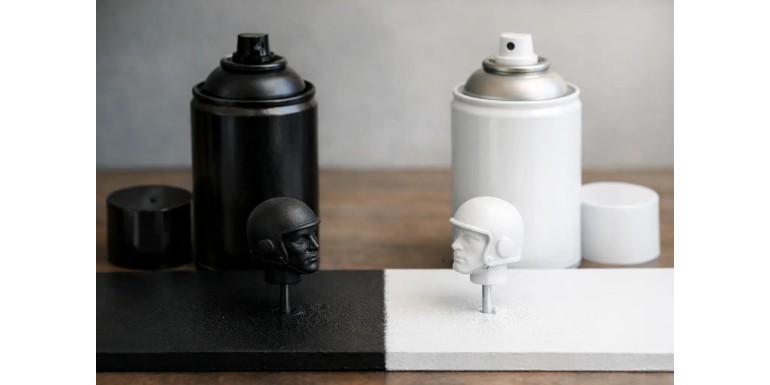
1. Prime: Start with a gray, brown, or black spray primer, depending on the finish you want. Gray works beautifully for stone and cold tones; brown is a massive help for wood, leather, and natural terrain. If the piece has visible print lines, a light textured primer can mask part of that effect, though be careful not to overdo it and clog the details.
2. Drybrush: This remains the ultimate high-efficiency technique for terrain. For menhirs and altars, a dark gray base followed by one or two drybrushes of medium gray and light bone works every time. For palisades, try dark browns, a black or sepia wash, and highlights of light brown or weathered wood-gray. On fur tents, earth tones with a hint of reddish or beige tones keep things from looking too flat.
3. Wash: An ink wash finishes off deep recesses and engraved runes perfectly. No need to drown the piece; a controlled wash in cracks, joints, and reliefs is usually enough to separate volumes. Afterward, you can bring back the highlights with a soft drybrush or some edge highlights on highly exposed corners.
4. Flock and Detail: To integrate the scenery into your gaming mat, the final touches matter. A bit of static grass, powder snow, tufts, or mud pigment in the crevices stops the piece from looking like an isolated object and makes it part of the world. If you play in cold environments, a small accumulation of snow on bases and cracks adds massive atmosphere with very little effort.
When is This Aesthetic Worth Investing In?
Barbarian terrain works exceptionally well when you want a table with a strong identity and real utility in-game. It isn’t bound to a specific faction, nor does it require a massive collection to get started. With just a few large pieces and two or three support elements, you can host RPG encounters, skirmishes, or narrative games packed with character.
It is also an excellent purchase for hobbyists looking to expand their terrain pool without duplicating functions. An altar isn’t just decorative. A menhir doesn’t just take up space. If a piece can serve as an objective, cover, a ritual point, or a narrative centerpiece, you get way more value out of your hobby budget.
In a specialized shop like Terrainandminis.com, where the value lies precisely in finding functional scenery for specific games rather than generic craft materials, this category perfectly matches what real tabletop players look for.
If you are ready to claim the northern lands, visit our PLA-printed terrain section and equip your table for the next session. And if you already play with this aesthetic, it’s always worth asking yourself: what would elevate your games next? A central altar, a palisade to break up the battlefield, or a full camp ready for the next charge?