Español

Realistic water for flawless dioramas
- 05/19/2026 07:33:10
- Home , Assembly and Painting Guides
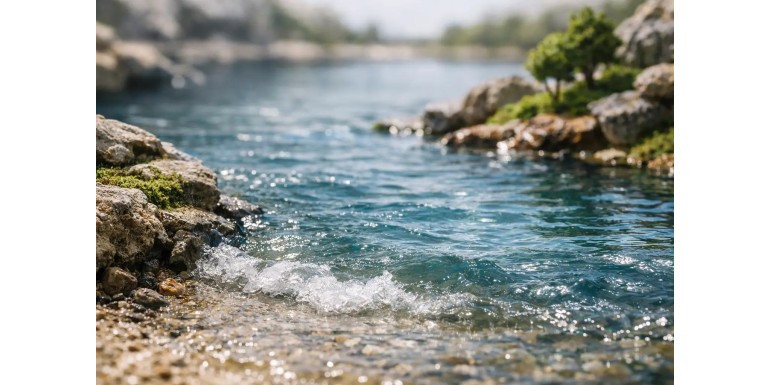
There are two things that usually ruin a good water effect at the end of a project: rushing and choosing a product that doesn't fit the scene. If you are looking for realistic water for dioramas, the result doesn't just depend on the material turning out crystal clear. The layer thickness, background color, terrain sealing, and whether you want still, running, or foaming water all play a crucial role.
In scenery making and miniature scale modeling, water works best when it is planned as just another part of the terrain, rather than a last-minute finish. A swamp for miniature bases, a canal on a historical gaming table, or a river in a fantasy diorama all require different solutions. The typical mistake is thinking that a single product works for everything. Sometimes it does, but often it doesn’t.
Which Product to Use for Realistic Water in Dioramas
When people talk about realistic water for dioramas, they are actually lumping quite different materials into the same category. The most common ones are pouring resins, clear acrylic gels, and ready-to-use water effect products. Each one solves a specific problem.
-
Pouring resin is the most common option when you need visual depth. It works great for rivers, canals, large ponds, or areas where you want to see the bottom clearly. It is usually self-leveling and leaves a smooth surface, but it requires more control. If the mix isn't done right, if the ambient humidity works against you, or if you pour too thick a layer at once, bubbles, tacky areas, or even yellowing over time can occur.
-
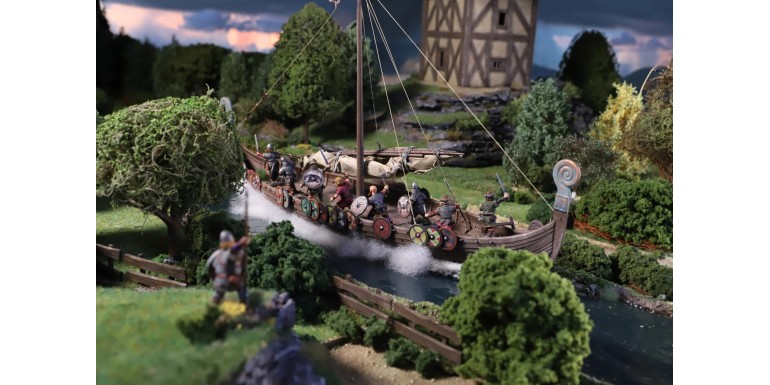
Clear acrylic gels are more forgiving for small surfaces and moving water. They don't usually give you as convincing a false depth as resin, but they allow you to model waves, splashes, and texture. For a waterfall, a wake behind a boat, or a mountain stream, they are usually more practical than liquid resin.
-
Ready-to-use water effects occupy a middle ground. They are convenient for hobbyists who want something more straightforward and controllable, especially on small to medium-sized projects. Not all of them are meant for high-volume pouring, so it’s wise to check the recommended use before applying them to a finished piece.
The Background Matters More Than the Shine
One of the most undervalued secrets is that water isn't painted from the top as much as it is from underneath. If the riverbed, pond, or shoreline is poorly executed, no clear product will fix it. In fact, the clearer and cleaner the top layer turns out, the more that flaw will show.
Tip: For deep water, it's best to darken the center and slightly lighten the edges. You don't need to overdo it, but you do need to create a smooth transition.
In a stagnant pond, a greenish-brown base works well, with darker areas near logs, rocks, or vegetation. In clean mountain water, the base can lean toward cool earth tones or grays, with a very subtle greenish or bluish tint.
It also helps to add small details to the bottom before pouring: fine stones, twigs, submerged vegetation, debris in urban scenes, or accumulated mud on the banks. This provides scale and avoids the "clear plastic over paint" effect.
How to Prepare the Terrain Before the Pour
If the surface is not sealed, the mixture can leak through tiny joints that are invisible to the naked eye. This happens a lot with terrain made from cork, foam, plaster, or 3D-printed pieces. Before applying any liquid product, you must check seams, cracks, and perimeters.
The safest approach is to seal first with PVA glue, acrylic varnish, or a thin coat of a proper primer to close the pores. After that, it’s smart to run a water-tightness test if the volume is going to be large. It might seem like a waste of time, but it’s much better to discover a leak beforehand than to watch your resin drain out from under a beautifully painted breakwater.
On vertical edges or temporary molds, leaks aren't the only issue. You can also end up with an ugly mark on the side if the material sticks too much or if you remove the containment barrier too early. Here, it pays to work calmly and respect the actual curing time, not just when it "looks dry enough."
Thin Layers Almost Always Yield Better Results
The temptation is always to fill the riverbed all at once and forget about it. On small pieces, this sometimes works, but with many products, the wisest move is to work in thin layers. This gives you better control over the drying process, reduces the risk of excessive heat (exothermic reaction), minimizes bubbles, and allows you to correct color or depth between stages.
Furthermore, layering allows you to add nuance. A darker first base can be followed by a clear layer with a slight tint, finishing with surface texture only in certain areas. This approach feels much more natural than a single, uniform mass.
If you want to cloud the water slightly, do it in moderation. Too much ink or paint inside the mix usually kills the transparency and leaves an unrealistic, milky look. It’s better for most of the color to come from the background and submerged elements. The water material should complement the scene, not do all the work.
Bubbles, Shrinkage, and Other Common Problems
Small bubbles are the usual enemy. Some appear when mixing, others when pouring, and some escape from the porous terrain itself. To avoid them, mix slowly, don't whip the product, and seal the base thoroughly. In many cases, just letting the mixture sit for a few minutes before using it does the trick, provided the product's working time allows it.
Shrinkage can also bring surprises. Some water effects shrink in volume as they dry, leaving a sunken center or raised edges. This isn't necessarily a defect, but it means you must plan for more than one application if you want a perfectly flat surface.
Another common issue is a finish that looks too perfect. A natural river rarely looks like polished glass. Even still water has tiny variations. If the scene calls for realism, the final surface usually benefits from a light texture or a point of visual tension near rocks, pilings, vegetation, or crossing miniatures.
Still, Running, or Crashing Water
Not every scene needs the same finish, and this is where choosing the right material stands out the most.
-
For still water: You want a clean surface with barely any ripples and good visual depth. This fits perfectly for ponds, harbors, sewers, or quiet marshes.
-
For a gentle current: You need to work on the direction of the flow. The ripples must follow the riverbed and react to actual obstacles in the terrain. If the texture goes one way and the rocks suggest another, the eye notices immediately.
-
For rapids, waterfalls, or foaming coastlines: Transparency takes a back seat. Here, shape is king. Acrylic gels and mediums allow you to build up crests, pull water strands, and place foam in specific spots. Foam works best when used sparingly; if it appears everywhere, it just looks like misplaced snow.
Scale and Gaming Use: Dioramas vs. Wargaming Tables
On a display piece, you can afford more delicate details and fragile surfaces. On tabletop gaming scenery—especially if it’s going to endure constant handling—you need to think about durability. A surface texture that is too high can catch on things, snap off, or end up with a strange scuff mark after a few games.
The level of realism worth chasing also changes. On a gaming table, a pond or a river needs to be easily readable from a distance. In a display diorama, the viewer is going to get much closer, so tiny background details, color variations, and shoreline transitions become far more important.
That’s why it’s not always worth using the exact same system for both. Sometimes a simpler, sturdier solution works better for modular terrain than a spectacular but delicate technique.
When Is It Worth Taking the Hard Road?
There are projects where a basic effect is enough, and others where the water is the main focal point. If the visual center of your diorama is a dock, a swamp, an urban flood, or a naval scene, it is absolutely worth investing time in advance testing. You don’t need to build a full trial piece, but do test the color, thickness, and texture on a separate scrap piece.
This prevents expensive mistakes and, above all, tells you if the result matches the scale. A very bright blue water might work in a fantasy scene but look artificial in a historical canal. A wave texture that is too pronounced might look great at 75mm scale but look exaggerated at 28mm.
In a specialized shop like Terrainandminis, it makes perfect sense to look for water materials designed specifically for scenery and miniatures, because scale and final use matter much more here than in general arts and crafts. It’s not just a matter of transparency—it’s about compatibility with bases, terrain, paint, and the overall finish of your tabletop or display case.
What to Check Before Buying
Instead of just looking at the picture on the bottle, check three things:
1. The recommended thickness per layer.
2. The final finish (gloss, matte, satin).
3. Whether it is designed for pouring or texturing.
It sounds obvious, but many problems stem from using the right product for the wrong job.
It’s also wise to consider the working time. If you are working on a large surface, a product that cures too fast can work against you. If you just want to finish off a fountain or a few miniature bases, you probably don’t need a complex two-component mix or demanding processes.
The best realistic water for dioramas isn't the most expensive one or the clearest one in the abstract. It’s the one that fits your scene, your scale, and the way you build. Once you have that clear, everything else flows much better. And if you have doubts, it’s always better to do a small test today than to repaint an entire river tomorrow.