Español

Why choose a bard in DnD
- 05/23/2026 08:10:30
- Home , Tabletop Miniatures

There are classes that hit hard, others that can tank half a dungeon without breaking a sweat, and then there’s the Bard: a class that seems simple until you see how a well-placed roll can completely turn the tide of an entire game. If you’re wondering why you should choose a Bard as your D&D character—its strengths and weaknesses, features, attributes, synergies, best and worst spells, weapon and armor proficiencies, and combat style—the short answer is this: because few classes offer so much flexibility while remaining incredibly useful in almost any party.
The Bard is not just "the guy who plays the lute." Played well, they are a controller, support, the face of the party, a versatile caster, and, depending on the subclass you choose, can even hold their own quite well on the front lines. It is a highly rewarding class for players who enjoy constant tactical decision-making, improvising solutions, and having something relevant to do both in and out of combat.
Why Choose a Bard in DnD?
The biggest advantage of the Bard is that they are rarely redundant at the table. In a campaign heavy on social interaction, they shine bright thanks to high Charisma, skills, and expertise. In an exploration campaign, they provide utility through spells, skills, and short-rest recovery via Song of Rest. In combat, they usually don't compete with the Barbarian for raw damage or the Wizard for pure control, but they can tilt entire encounters in the party's favor.
However, it’s not an "autopilot" class. A poorly planned Bard can end up stranded in no man's land: not dealing enough damage, not controlling enough, and wasting spell slots on low-impact effects. That’s why it’s an excellent class for players who love maximizing synergies, reading the battlefield, and adapting turn by turn.
Bard Strengths and Weaknesses
The Bard's primary strength is real versatility, not just the marketing kind. They can heal, support, control, negotiate, investigate, and fill gaps in the party without losing their identity. Furthermore, they have access to a spell list that is incredibly annoying for enemies: enchantments, illusions, mind control, mobility, and defensive tools that shine much brighter in practice than they might look on paper.
Another massive strength is indirect action economy. Bardic Inspiration turns potential failures into successes, impacting attack rolls, crucial ability checks, or saving throws. It might not always look as flashy as a Fireball, but over the course of a session, it can be far more decisive.
Their weaknesses, however, are quite clear. They are relatively fragile compared to martial classes, rely heavily on concentration, and have a direct damage spell list that is far less explosive than other casters. Additionally, if your campaign leans heavily on enemies immune to being charmed, deaf to certain effects, or straightforward slugfests, part of your toolkit loses its luster. You won't be useless, but it will force you to be much sharper with your spell selection.
Best Attributes and Class Features
The king attribute for the Bard is Charisma. It dictates your spell save DC, your spell attack bonus, and many of the social encounters where this class excels. If you're going to play a Bard, a high Charisma score is non-negotiable.
Next comes Dexterity for most builds. It improves your Armor Class (AC) if you wear light armor, boosts your initiative, and helps with ranged or finesse weapons. Constitution also matters much more than many beginners realize, because maintaining concentration is half of a Bard's life insurance policy.
Wisdom, Intelligence, and Strength depend largely on your build's focus. A social support Bard can easily afford to dump Strength. A College of Valor or College of Swords Bard will want solid Dexterity and decent Constitution to avoid dropping in two hits. In general, a sensible priority is Charisma first, followed by Dexterity or Constitution, and the rest based on your concept.
When it comes to class features, three define the Bard perfectly:
-
Bardic Inspiration: Your main tactical engine.
-
Expertise: Ensures you truly excel at specific skills, rather than just being "okay" at them.
-
Magical Secrets: When these kick in, they break the class's toolkit wide open by letting you steal spells from any other class's list.
Weapon and Armor Proficiencies
By default, Bards can use light armor, simple weapons, hand crossbows, longswords, rapiers, and shortswords. This already gives them significantly more leeway than other pure spellcasters. A rapier paired with good Dexterity, for example, fits perfectly for characters who don't want to rely constantly on burning spell slots.
Light armor is usually enough for a standard Bard playing from the back lines. They aren't built to trade blows for multiple rounds, though certain Colleges change this dynamic entirely. The College of Valor grants proficiency with medium armor, shields, and martial weapons, heavily boosting survivability. The College of Swords also pushes you toward a more mobile, martial style, though it still rewards clever positioning over pure tanking.
If you want a character to hold down the center of melee combat for an entire campaign, the Bard isn't the most direct choice. But if you want someone who can step in, support, control, and slip away with plenty of resources left to contribute, they are perfect.
What is the Bard's Combat Style?
The Bard's combat style isn't about repeating a fixed routine; it’s about reading what the party needs on any given turn. Sometimes you will open with control, other times with support, and sometimes you will simply finish off an enemy with a reliable attack while maintaining your concentration.
A well-played Bard usually functions best from the second line. From there, you hand out Inspiration, drop control spells, and punish enemy mistakes. They aren't typically the best damage dealers, but they are among the best at amplifying everyone else. If the Fighter already hits hard, the Bard ensures they miss less. If the Rogue needs tactical advantage, the Bard creates it. If the fight goes sideways, the Bard has the tools to stabilize it.
With more martial subclasses, the style shifts toward skirmishing. You move in, apply pressure, use your mobility, support, and reposition. You aren't a brute duelist like a Paladin or a dedicated Fighter, but you can be surprisingly disruptive to the enemy.
Best Bard Synergies
While the Bard fits in well with almost anyone, certain combinations are exceptionally strong:
-
With Rogues: They work beautifully together because both exploit positioning, skills, and crowd control. Any buff that improves accuracy or creates tactical openings multiplies the Rogue's Sneak Attack potential.
-
With Paladins: A highly solid synergy. Both share Charisma as a primary attribute. The Bard can handle utility, control, and healing while the Paladin focuses on frontline presence and explosive burst damage. A party with both commands massive social influence without sacrificing firepower.
-
With Hard Casters (Wizards/Sorcerers): The Bard brings flexibility and utility where the other brings raw power or specialization.
-
With Pure Martial Classes: They directly boost overall party performance. The Bard rarely wants to be the entire plan; they shine brightest when making everyone else perform way above their character sheet.
Best Bard Spells
The best Bard spells aren't always the flashiest, but rather the ones that alter the scene. Vicious Mockery is incredibly useful early on for imposing disadvantage and acting as a decent cantrip, though it loses steam later. Healing Word remains top-tier because it revives allies at a distance using a bonus action. Dissonant Whispers is one of those spells that punches above its weight due to forced enemy movement and the opportunity attacks it triggers.
At mid-levels, spells like Calm Emotions, Suggestion, Hypnotic Pattern, and Dispel Magic often win encounters more effectively than damage spells. Hypnotic Pattern, in particular, is one of the main reasons to respect a Bard at the table: if it lands well, it splits the encounter completely in half.
There are also utility gems like Greater Invisibility, Dimension Door, or Polymorph, depending on your level. And once Magical Secrets arrives, the ceiling goes through the roof. That’s when the Bard transitions from versatile to dangerously adaptable.
Spells to Avoid or Choose Wisely
It’s not that there are inherently "bad" spells, but rather that some simply don't fit the Bard’s identity. Mediocre direct-damage spells rarely perform well when competing with superior control options. Spending a valuable spell slot just to deal average damage is almost never the best move for this class.
You should also watch out for highly situational spells if they don't match your campaign style. Powerful social effects can be gold in an urban intrigue campaign but dead weight in a gritty survival setting. Similarly, spells that require concentration but compete with core staples like Hypnotic Pattern or Greater Invisibility might end up rarely cast.
A common mistake is filling your spell list with "funny gimmick" options and running short on decisive tools. The Bard welcomes creativity, yes, but performs best when balancing tricks with practical control and utility.
Which College to Choose Based on Your Playstyle
-
College of Lore: If you want the ultimate, all-around Bard for magic and utility, this remains a very safe bet. You gain extra skill proficiencies, versatility, and early access to Magical Secrets, turning you into a true Swiss Army knife.
-
College of Valor: If you prefer a sturdier profile fit for a classic adventuring party, this works great. It brings you closer to the mid-line of combat and makes balancing weapons, armor, and support feel natural.
-
College of Swords: If you are looking for a mobile, martial flair, this offers a clear and fun fantasy—especially for players who love a visually impressive character on the tabletop.
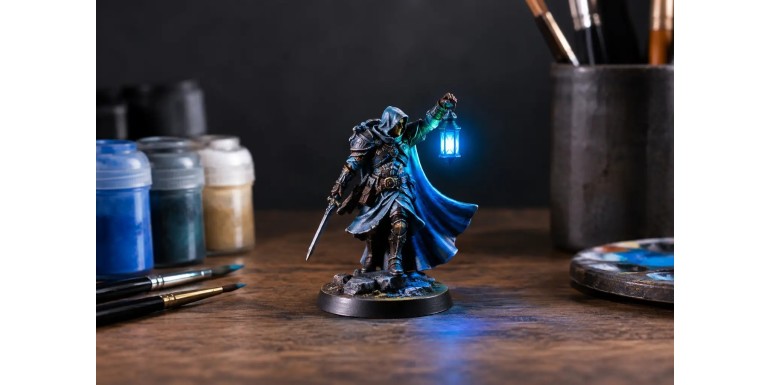
This brings up a detail that many hobbyists love: the Bard accommodates incredibly diverse visual concepts. From elegant duelists to dark storytellers, war troubadours, or arcane tricksters, it’s a fantastic class for assembling, painting, and themes for miniatures within a party. For players who care as much about the tabletop aesthetic as the stats on their sheet, this adds more value than it seems.
Conclusion
If you want a rigid class with an obvious rotation and a fixed role, the Bard isn't your best choice. But if you prefer a class that always has something useful to do, rewards tactical thinking, and can save social scenes, combats, and logistical nightmares all with the same character sheet, you will rarely regret rolling a Bard.